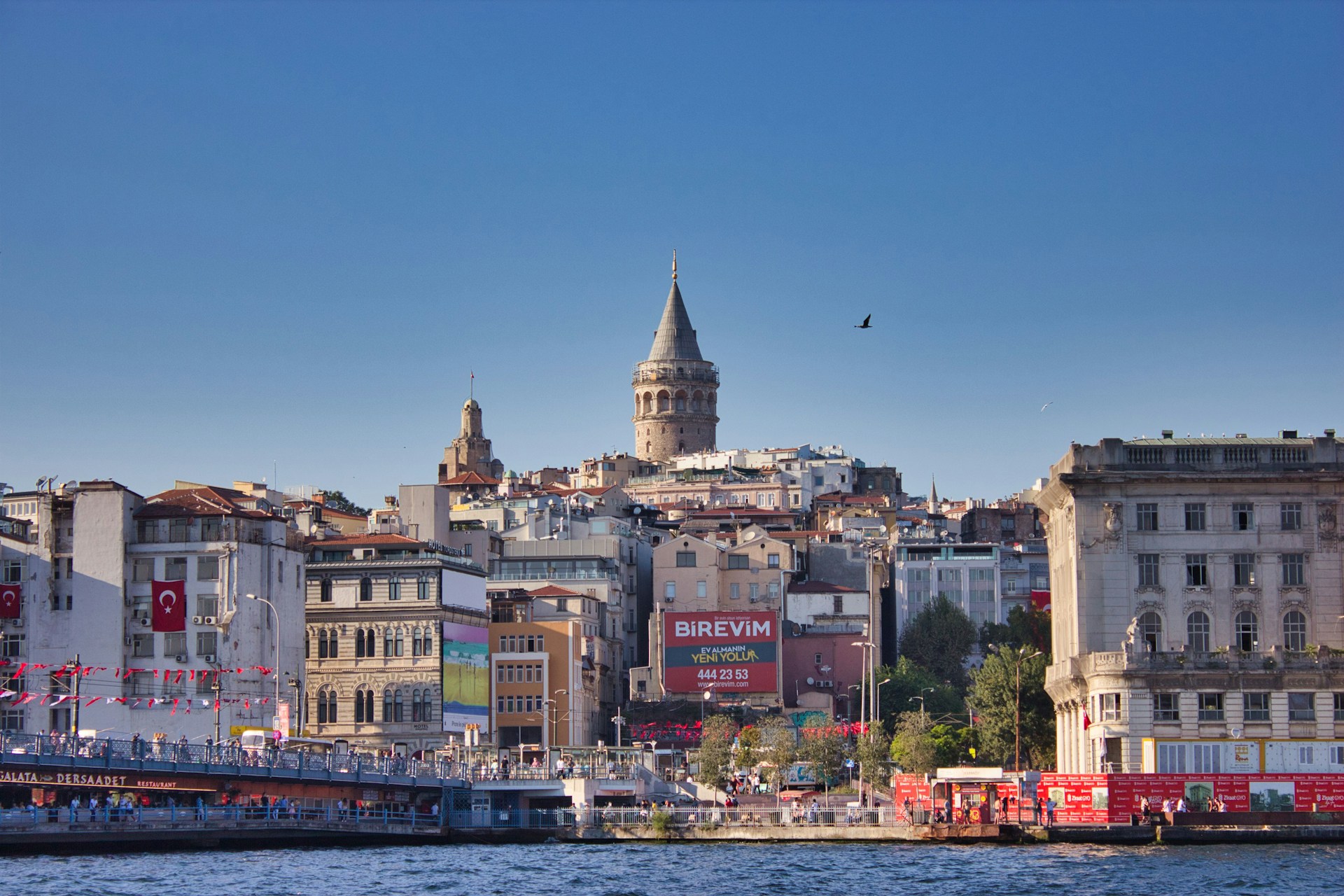
If Sultanahmet is Istanbul’s ancient core, the districts across the Golden Horn — Beyoğlu, Galata, and Beşiktaş — are where the city actually lives. Historically known as Pera, this side of the water was the cosmopolitan European quarter of the late Ottoman Empire, home to embassies, Levantine merchants, and mixed Greek, Armenian, and Italian communities. The neoclassical facades and 19th-century arcades are still standing — now filled with coffee shops, galleries, and nightlife instead of consulates and trading houses. This is where Istanbulites actually live, work, and go out — not a preserved museum district.
What Beyoğlu, Galata & Beşiktaş Each Bring to the Table
- Beyoğlu: The cultural engine — İstiklal Avenue’s crowds, hidden meyhanes, and the bohemian pocket of Cihangir.
- Galata: The hinge between old and new — steep cobbled streets, the tower, and a dense creative scene.
- Beşiktaş: The working neighborhood — Ottoman palaces next to a working fish market, with a fiercely local, football-mad identity.
How Long Should You Spend Here?
Give this side of the city at least two full days. One day covers İstiklal Avenue, Galata, and a Karaköy sunset. A second lets you do Dolmabahçe or Çırağan, the Bosphorus walk to Ortaköy, and café time in Nişantaşı or Cihangir. Trying to compress it into a single afternoon means you’ll see landmarks but miss the neighborhood texture that’s the actual point of visiting.
Orientation — Mapping the Modern European Side
Where Does the Old City End and Modern Istanbul Begin?
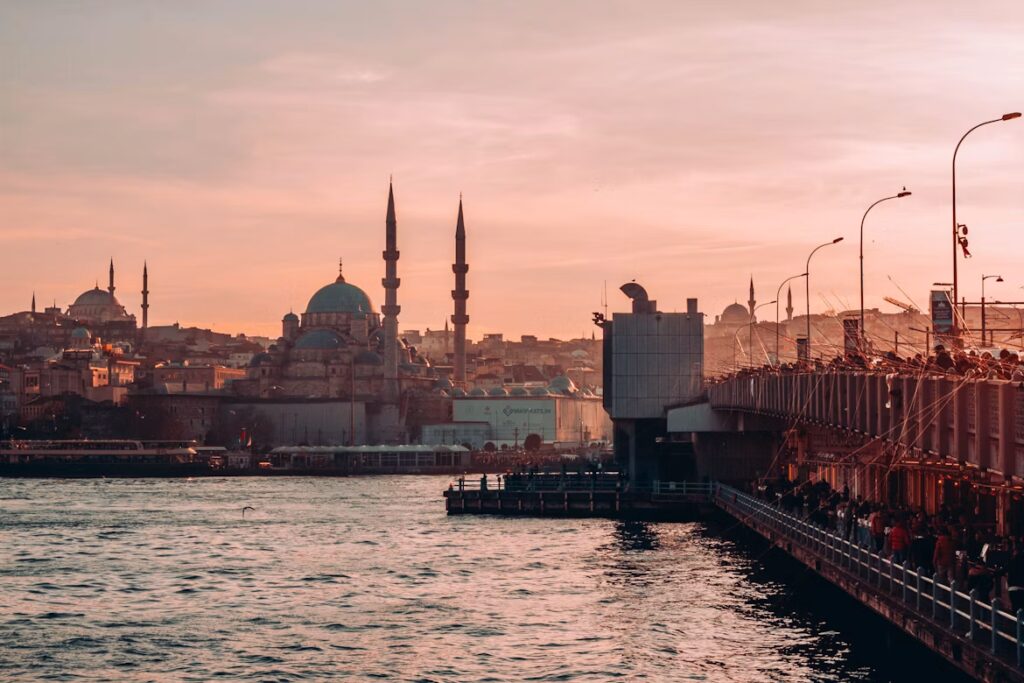
The dividing line is the Golden Horn (Haliç) — technically the world’s largest natural harbor, not just a river mouth. Sultanahmet and Fatih sit on the southern bank (the Old City). Cross the Galata Bridge or the Atatürk Bridge to the northern bank, and you’re in what locals and guidebooks alike call “Modern” European Istanbul.
Understanding the Geography — Hills, Valleys & the Bosphorus Shore
Like the Old City, this side is steep. Karaköy and Beşiktaş sit flat against the waterfront, but the ground rises sharply just a block or two inland. Getting from the water up to Galata or İstiklal Avenue means either a genuinely steep, winding climb on foot, or using one of the city’s historic funiculars — more on those in the Getting Around section.
The Golden Horn — The Waterway That Divides Two Worlds
Ferries cross it constantly, and walking its shores gives you some of the best views back toward the minaret-studded Old City skyline. It’s also the reason this side of Istanbul developed so differently: a natural harbor meant trade, and trade meant the international merchant and diplomatic community that shaped Beyoğlu and Galata for centuries.
Key Landmarks as Your Navigation Anchors
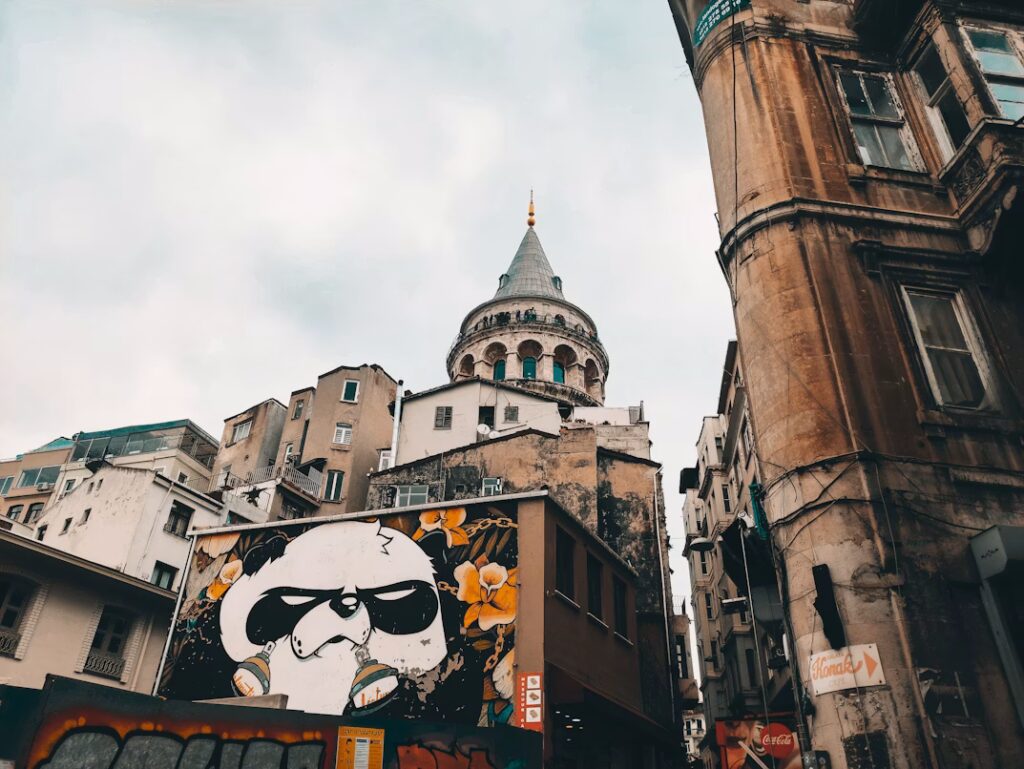
- Galata Tower: The stone cylinder that dominates the skyline — if you’re lost in Beyoğlu, look up.
- Taksim Square: The open plaza at the top of the hill, where İstiklal Avenue begins.
- Dolmabahçe Palace: The white marble palace marking the start of the Beşiktaş waterfront.
Beyoğlu — Istanbul’s Cultural & Creative Powerhouse
A Brief History of Beyoğlu — From Pera to the Present
The name comes from Greek — “Péra” means “across” or “beyond,” referring to its position seen from the old city across the Golden Horn. Here’s the nuance most guides blur: Galata itself, down by the water, was the walled Genoese trading colony. Beyoğlu — the hillside above it — was largely open ground until the 19th century, when it filled in with embassies, grand apartment blocks, and the European diplomatic community that gave the area its cosmopolitan reputation. That’s why you’ll see Art Nouveau apartment blocks, Gothic churches, and grand former-embassy buildings standing in obvious contrast to the domes of the Old City — this side of the water was being built to European tastes at exactly the moment the Old City was staying Ottoman.
The Soul of Beyoğlu — What Kind of Neighborhood Is This Really?
Beyoğlu is a neighborhood of contrasts. Loud and relentless on its main avenues, but surprisingly intimate in the back alleys — the kind of place where a century-old lokum shop sits two doors down from an underground club.
[IMAGE: Art Nouveau apartment facade on a Beyoğlu side street]
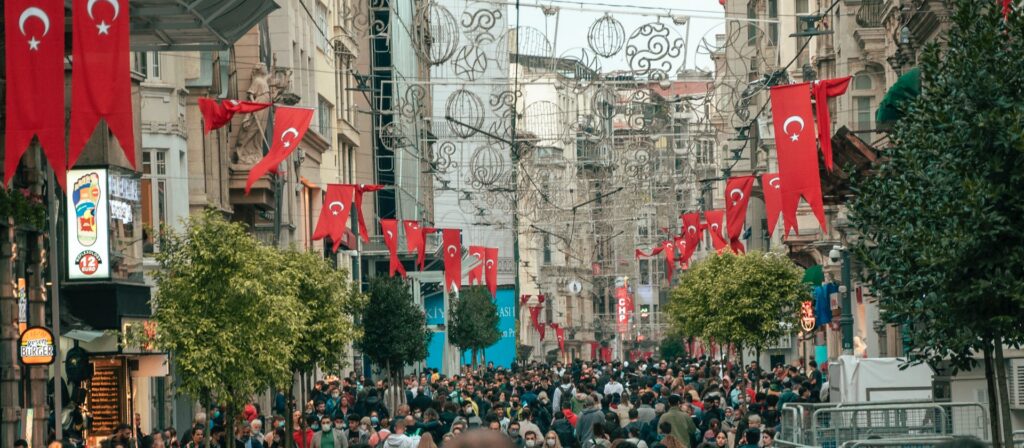
İstiklal Avenue — Istanbul’s Most Famous Street
Walking İstiklal From Taksim to Galata — What You’ll Pass
This 1.4-kilometer pedestrianized boulevard is the spine of Beyoğlu. From Taksim, you’ll pass the gates of Galatasaray High School roughly at the midpoint, St. Anthony of Padua — the largest Catholic church in Istanbul — set back in its own courtyard, several foreign consulates behind high walls, and historic arcades (pasajlar) leading into hidden courtyards.
The Nostalgic Tram — Icon, Tourist Attraction or Actual Transit?
The red vintage T2 tram trundles down the middle of İstiklal. It’s a beloved photo subject, but it moves at walking pace — treat it as a five-minute novelty ride, not a way to actually get anywhere faster than your own feet.
Side Streets Off İstiklal — Where the Real Magic Hides
Don’t just walk the main drag. Duck into Çiçek Pasajı (Flower Passage) for the architecture, or Hazzopulo Pasajı for tea on tiny wooden stools next to university students.
İstiklal at Night — Atmosphere, Crowds & What to Expect
By evening, İstiklal fills with street musicians and thousands of people heading out. It’s well-lit and busy enough to feel safe, though — as covered later in Practical Tips — busy crowds are exactly where pickpockets work.
Taksim Square — The Political & Social Heartbeat of Istanbul
The History and Significance of Taksim Square
Taksim isn’t Istanbul’s prettiest square, but it’s arguably its most important — the traditional site of public celebrations and protests, anchored by the Republic Monument.
Atatürk Cultural Center (AKM) — The Reborn Landmark
The AKM’s story is worth knowing before you visit: the original 1969 building was demolished in 2018 and rebuilt, reopening on October 29, 2021, with a striking new 2,500-seat opera house housed inside a dark red sphere clad in handmade ceramic tiles that’s visible right from the square. It now hosts opera, ballet, and classical concerts.
Gezi Park — Green Lungs and Layered History
Next to the square, Gezi Park is a small patch of green in an otherwise concrete-heavy area — a quiet place to sit with a coffee, though it’s globally known as the site of the 2013 protests.
Cihangir — Bohemian, Hilly & Deeply Liveable
The Cihangir Café Culture That Writers & Artists Love
Cihangir has long drawn actors, writers, and expats. Its streets are lined with French-style cafes where locals sit outside for hours.
Cihangir’s Best Streets for a Sunday Morning Wander
Walk Akarsu Yokuşu and Sıraselviler Avenue. The neighborhood is known for its well-cared-for street cats and pastel wooden houses.
Bosphorus Views From Cihangir’s Terraced Perches
Because Cihangir sits on a steep hillside, cafes and stairwells here often open onto sudden Bosphorus views.
Çukurcuma — The Antique Quarter That Feeds the Soul
Hunting for Treasures in Çukurcuma’s Antique Shops
Just below Cihangir, Çukurcuma is a maze of streets packed with antique shops — Ottoman-era maps, vintage lamps, 19th-century photographs, furniture spilling onto the pavement.
Museum of Innocence — Orhan Pamuk’s Love Letter to Istanbul
Created by Nobel laureate Orhan Pamuk, this museum displays everyday objects from 1970s and 80s Istanbul, arranged across 83 display cases — one for each chapter of his novel of the same name. It’s not essential to have read the book first, but it deepens the visit considerably.
Practical info (2026): Open Tuesday to Sunday, 10 AM–6 PM, closed Mondays. Entry runs about 750 TL for foreign visitors (roughly €20), with an audio guide available for an extra fee — worth it if you haven’t read the novel. Note: the museum was the subject of a Netflix limited series that premiered in February 2026, so expect slightly bigger crowds than in past years. Allow an hour to ninety minutes, and know that only the ground floor is wheelchair accessible — the upper floors are reached by narrow, steep stairs.
The Best Cafés Hiding Among the Curio Shops
Between antique hunting, stop at Cuma Café for its plant-filled terrace — a quiet break from the antique-hunting crowds.
Where to Stay in Beyoğlu, Galata & Beşiktaş
Best Budget & Boutique Hostels in Beyoğlu
The side streets near Galata Tower and Cihangir host excellent boutique hostels — great communal spaces, rooftop terraces, and a more social, nightlife-friendly vibe than Sultanahmet.
Mid-Range Hotels With the Best Neighborhood Feel
Look for restored 19th-century apartment buildings in Galata or Karaköy — high ceilings, historical charm, and easy walking distance to the best cafes and transit hubs.
Luxury Stays — Bosphorus Views & Design Hotels
For historic grandeur, the restored palace hotels along the Beşiktaş waterfront (Çırağan Palace Kempinski, Four Seasons Bosphorus) are unmatched. For a newer, design-forward option, The Peninsula Istanbul — which opened in February 2023 inside restored early-1900s Galataport buildings — set a new benchmark for the city and won a “One to Watch” award from World’s 50 Best Hotels in 2024.
Serviced Apartments for Longer Stays
Cihangir and Nişantaşı work well for Airbnb or serviced apartments — highly walkable neighborhoods with good grocery access and café culture.
Is Beyoğlu or Beşiktaş a Better Base Than Sultanahmet?
- Base yourself here if: You care about food, nightlife, contemporary culture, and want to experience how modern locals actually live.
- Base yourself in Sultanahmet if: You’re only in Istanbul for 48 hours and your sole focus is ancient history and the major mosques.
Sample Itineraries for Modern European Istanbul
One Perfect Day — Galata to Ortaköy on Foot
- Morning: Climb the Galata Tower right at opening to beat the crowds, then wander the surrounding streets.
- Midday: Walk down to Karaköy for brunch and baklava.
- Afternoon: Tram to Kabataş, tour Dolmabahçe Palace (book the guided tour slot in advance), then walk the Bosphorus to Beşiktaş.
- Evening: Continue to Ortaköy for sunset kumpir, then back to Beşiktaş for drinks.
Two Days — Diving Deep Into Beyoğlu & Beşiktaş
- Day 1: Taksim, the length of İstiklal Avenue, Çukurcuma antiques, and dinner in an Asmalımescit or Nevizade meyhane.
- Day 2: İstanbul Modern in the morning, Dolmabahçe Palace in the afternoon, dinner at a Bosphorus-view restaurant.
Three Days — Art, Food, History & Bosphorus Life
Add a day for the upscale side of the city: Nişantaşı’s boutiques (and its hidden archery-stone history), Maçka Park, the Military Museum, and a late-afternoon ferry to quieter Bosphorus villages like Arnavutköy.
The Night Owl’s Istanbul — A Late-Start Itinerary
Sleep in. A 1:00 PM Turkish breakfast in Cihangir. Contemporary art galleries in the afternoon. Sunset from the Galata Bridge. A 9:00 PM rakı-fish dinner in Karaköy, then jazz clubs or Bosphorus nightlife until the early hours.
Practical Tips for Visiting This Part of Istanbul
Best Time of Year for Beyoğlu & Beşiktaş
Spring (May) and autumn (September) are ideal — rooftop bars are open, the Bosphorus breeze is refreshing, and coastal walks stay comfortable.
Best Time of Day for Key Sights & Streets
- İstiklal Avenue: Late afternoon/early evening for the best energy.
- Galata Tower: Right at opening (08:30) to avoid the worst lines.
- Dolmabahçe Palace: First guided tour of the morning.
- Ortaköy: Late afternoon as the sun sets behind the bridge.
Safety Reminders for İstiklal & Taksim at Night
The area is genuinely safe thanks to crowds and visible police presence, but it’s also where Istanbul’s most notorious scam operates. Here’s how it plays out: a well-dressed, English-speaking stranger strikes up a friendly conversation near Taksim or on İstiklal, then suggests a “great local bar” that “tourists never find.” Once you’re seated, drinks arrive quickly, and the bill can run into the hundreds or thousands of euros — with exits blocked by security until you pay. The simplest test: if a new “friend” insists on going to their bar and resists any alternative you suggest, walk away. Beyond that, standard pickpocket precautions apply in dense crowds.
Accessibility — Steep Hills, Cobblestones & Lifts
This side of Istanbul is genuinely challenging for those with mobility issues — the hills connecting the water to Beyoğlu are steep, and much of Galata is cobblestone. Lean on the F1 and F2 funiculars, the metro, and taxis to manage the elevation changes.
Photography Spots — The Ultimate Shot List
- The red T2 tram running down İstiklal Avenue.
- Galata Tower framed by the cobbled Büyük Hendek Street.
- Ortaköy Mosque with the Bosphorus Bridge behind it.
- Fishermen silhouetted at sunset on Galata Bridge.
Why Visit Beşiktaş & Nişantaşı?
Why For many visitors, Istanbul is defined by the Blue Mosque, Hagia Sophia, and the Grand Bazaar. Yet the city where most Istanbulites actually spend their daily lives looks very different. Beşiktaş and Nişantaşı offer a glimpse into contemporary Istanbul, where historic palaces stand beside busy ferry terminals, luxury boutiques share streets with neighborhood bakeries, and students, business professionals, artists, and football fans all occupy the same urban landscape.
Located on the European side of the Bosphorus, these neighboring districts combine two distinct sides of modern Istanbul. Beşiktaş is one of the city’s busiest transportation hubs and home to the famous Beşiktaş JK football club. Every day, thousands of commuters arrive by ferry from the Asian side, creating an atmosphere that feels energetic from morning until late at night.
Key numbers:
- Distance Beşiktaş ↔ Nişantaşı: ~1.5–2 km (15–20 min walk uphill, 10–12 min downhill)
- Distance to Taksim Square: ~1.5 km from Nişantaşı, ~2.5 km from Beşiktaş
- Distance to Sultanahmet: ~6–7 km (20-25 min by tram+ferry/bus, longer by taxi in traffic)
Just uphill, Nişantaşı presents a more refined character. Developed during the late Ottoman period as an upscale residential quarter, it remains one of Istanbul’s most prestigious addresses. Elegant apartment buildings, designer boutiques, independent fashion labels, art galleries, and stylish cafés give the area a distinctly European feel while maintaining its Turkish identity.
Together, Beşiktaş and Nişantaşı showcase a side of Istanbul that many tourists never experience: a city that is modern, sophisticated, fast-paced, and deeply connected to everyday local life.
Who Will Love This Area?
Urban Explorers
If you enjoy discovering neighborhoods on foot, Beşiktaş and Nişantaşı are among Istanbul’s most rewarding districts. The route between the Bosphorus waterfront, Akaretler, Maçka Park, and Teşvikiye offers constantly changing architecture, cafés, and local street life.
Food Lovers
Beşiktaş is famous for traditional Turkish breakfasts, seafood restaurants, street food, and casual eateries frequented by students and office workers. Nişantaşı complements this with upscale dining, modern Turkish cuisine, and some of the city’s most fashionable brunch venues.
Luxury Shoppers
Nişantaşı is Istanbul’s premier luxury shopping district. International brands such as Louis Vuitton, Gucci, Prada, and Chanel operate flagship stores along Abdi İpekçi Street, alongside leading Turkish fashion designers.
Couples
The combination of Bosphorus views, historic palaces, elegant cafés, rooftop restaurants, and evening cocktail bars makes this area one of the city’s most appealing destinations for couples.
Repeat Visitors
Travelers returning to Istanbul for a second or third visit often find Beşiktaş and Nişantaşı more rewarding than revisiting the major tourist landmarks. The districts provide a deeper understanding of contemporary city life and local culture.
Getting There & Getting Around
The easiest way to understand the area is to think vertically. Beşiktaş occupies the Bosphorus shoreline and centers around its ferry terminal, fish market, and waterfront squares. Moving inland, the historic Akaretler row houses climb toward Maçka. Beyond Maçka Park begins Nişantaşı, where Teşvikiye, Abdi İpekçi Street, and Osmanbey form the heart of Istanbul’s luxury shopping and dining scene.
A typical visit naturally progresses uphill: starting with breakfast in Beşiktaş, continuing through Akaretler and Maçka Park, and ending with shopping, cafés, or dinner in Nişantaşı.
Location: Both districts sit on the European side, directly north of Taksim Square and the Golden Horn. Beşiktaş is the waterfront district; Nişantaşı is on the hill to its northeast, in the Şişli municipality.
To Beşiktaş:
- From Sultanahmet/Eminönü: T1 tram to Kabataş, then a 15-minute walk north along the waterfront
- By ferry: direct Şehir Hatları services connect Beşiktaş to Kadıköy (~25–35 min, ~59 TL) and to Üsküdar (~10 min, very frequent, runs until roughly 00:45)
- Ferries are the most reliable option at rush hour, since the coastal road (Barbaros Bulvarı) backs up badly
To Nişantaşı:
- Take the M2 (Green Line) metro to Osmanbey station, then walk 5–7 minutes into the neighborhood (flat walk, no hill)
- Alternative: Şişli-Mecidiyeköy station is a slightly longer walk but puts you closer to Teşvikiye
Metro correction worth knowing: The M7 line does not yet have a station at the Beşiktaş waterfront. As of 2026, M7 runs as far as Yıldız (extended from Mecidiyeköy in January 2023), which sits inland/uphill from Beşiktaş proper — useful if you’re headed to Yıldız Park, less useful for the ferry terminal or the fish market. The extension that will actually add a “Beşiktaş” and “Kabataş” metro station is under construction and not expected to open until 2028. Until then, buses and ferries are the practical way to reach the Beşiktaş waterfront itself.
Walking between the two:
- Downhill (Nişantaşı → Beşiktaş): ~20 minutes through Maçka Park and Akaretler, easy grade
- Uphill (Beşiktaş → Nişantaşı): ~25–30 minutes, noticeably steeper — budget more time and wear real shoes
- The park has a small cable car (teleferik) that shortens part of the climb if you want to skip the steepest stretch
Taxi/rideshare: BiTaksi and Uber both work. Between 5–7:30pm, Barbaros Bulvarı traffic around Beşiktaş Square can make a 10-minute drive take 30+ minutes — walking is often genuinely faster over short distances at that hour.
Beşiktaş: Waterfront, Market, and Football
What it actually is: A dense, sea-level district built around a ferry terminal and a covered fish market, with a large student population and one of Turkey’s most famous football clubs. It’s the least “curated” part of this guide — narrow market streets, plastic stools outside meyhanes, and a general lack of anything built for tourists.
Student population: Yıldız Technical University’s central campus and Bahçeşehir University’s main campus are both located in Beşiktaş, which is a big part of why the district stays cheap, busy, and open late. This isn’t a vague “multiple campuses” claim — these are two specific, sizeable institutions within a few minutes of the market.
The Çarşı (market district): A pedestrian zone centered on a statue of an eagle (Beşiktaş J.K.’s symbol) with the covered fish market (Balık Pazarı) at its core — small, wet, loud, and surrounded by cheap seafood restaurants. Come hungry rather than for photos; the appeal is functional, not picturesque.
Beşiktaş J.K. and the stadium: The club’s stadium — officially Tüpraş Stadyumu (formerly Vodafone Park/Arena, renamed under sponsorship deals; capacity ~42,700) — sits directly next to Dolmabahçe Palace on the waterfront. The attached Beşiktaş JK Museum covers the club’s history (founded 1903, Turkey’s oldest football club) and is open daily except Mondays; stadium tours also run most days (no tours on match days). Check current prices before visiting — sponsorship changes and ticket prices shift year to year.
Waterfront and ferry terminal: The terminal functions as the neighborhood’s public square as much as a transit hub — benches facing the water, tea vendors, and a constant flow of ferries to Kadıköy and Üsküdar (see Getting There section above for schedules).
Quieter side: Walk uphill on Barbaros Bulvarı away from the market to find calmer residential streets — this is a legitimate way to de-densify if the Çarşı gets overwhelming, not just flavor text.
Things to Do in Beşiktaş
Street Food Experiences
You cannot leave Beşiktaş without eating a döner wrap from Karadeniz Döner Asım Usta (just look for the massive line) or grabbing a paper cone of fried mussels (midye tava) from a vendor near the fish market.
Breakfast Culture (Kahvaltı)
Beşiktaş is synonymous with “Kahvaltıcılar Sokağı” (Breakfast Street). This narrow alley is packed shoulder-to-shoulder with cafes serving massive, multi-plate traditional Turkish breakfasts. It is a mandatory weekend ritual for locals.
Cafés & Tea Gardens
Head to the waterfront to find sprawling, open-air tea gardens. Drinking a hot glass of black tea (çay) while feeling the breeze off the Bosphorus is a daily necessity here.
Bars & Nightlife
The Çarşı area transforms at night. The streets fill with high-top tables, and the local pubs offer cheap draft beer, loud rock music, and an incredibly social, welcoming atmosphere.
Cultural Spots
Visit the Naval Museum (Deniz Müzesi) right on the water to see massive, incredibly ornate 19th-century imperial rowboats used by the Ottoman Sultans.
Explore Beşiktaş Çarşı
The heart of local life is Beşiktaş Çarşı, a dense network of pedestrian streets packed with cafés, bakeries, bookstores, fish restaurants, and street food vendors.
Unlike the commercialized atmosphere found in some tourist districts, Beşiktaş Çarşı remains heavily used by local residents, students, and office workers.
Visit the Naval Museum
One of Istanbul’s most overlooked museums is the Istanbul Naval Museum.
Highlights include:
- Ottoman imperial boats
- Historic naval artifacts
- Magnificent royal caiques used by Ottoman sultans
The collection provides valuable context for understanding Istanbul’s long relationship with the Bosphorus.
See Dolmabahçe Palace
No visit to Beşiktaş is complete without exploring Dolmabahçe Palace.
Built in the mid-19th century, it replaced Topkapı Palace as the administrative center of the Ottoman Empire and showcases enormous European influence in architecture and interior design.
Travel Tip:
Arrive early. Palace ticket lines can become very long, especially from April through October.
Watch the Ferries
One of the simplest but most enjoyable experiences in Beşiktaş is sitting near the ferry terminal with a tea and watching the constant movement of ferries crossing between Europe and Asia.
This is one of the best places in Istanbul to observe everyday city life.
Experience Match-Day Atmosphere
Beşiktaş is home to Beşiktaş J.K..
Even if you are not a football fan, the atmosphere around match days can be remarkable, with thousands of supporters filling surrounding streets and waterfront cafés.
Akaretler: Istanbul’s Most Elegant Historic Row Houses
Connecting Beşiktaş with Maçka and Nişantaşı, Akaretler is one of Istanbul’s most architecturally distinctive streets.
Constructed in the late 19th century during the reign of Sultan Abdülaziz, the terrace houses were originally built to generate revenue for nearby Dolmabahçe Palace.
Today, the beautifully restored buildings house stylish cafés, restaurants, galleries, offices, and boutique businesses.
The area is particularly photogenic thanks to its uniform facades, wide sidewalks, and European-inspired urban design, making it one of the most attractive walking routes between the Bosphorus and Nişantaşı.
Nişantaşı: From Archery Range to Fashion Capital
Actual history, not just “old-money elegance”: The name literally means “target stone.” Until the early 19th century this was open ground where Ottoman sultans and their archers practiced and competed — target stones marking record shots are the origin of the neighborhood’s name, and two of them still stand in the courtyard of Teşvikiye Mosque (dated 1790 and 1811). Sultan Selim III built a small wooden mosque here around 1794 for his entourage during archery sessions; it was rebuilt in stone between 1801–1854 under Mahmud II and Abdülmecid I, becoming the neo-baroque Teşvikiye Mosque that still anchors the district. Abdülmecid I formally opened the area to residential settlement in the mid-1800s, and it became Ottoman elite housing from that point on — which is the real basis for the neighborhood’s “old money” reputation, not just current wealth.
Abdi İpekçi Caddesi: Named after a Turkish journalist (former editor-in-chief of the newspaper Milliyet) who was assassinated in 1979. It’s the district’s primary luxury retail street, lined with international flagship stores (Chanel, Louis Vuitton, Hermès, Prada among them) alongside high-end Turkish jewelers.
City’s Nişantaşı: The area’s main shopping mall, roughly 52,000 m² with 150+ stores — a useful one-stop option if you want air conditioning and a concentrated mix of brands rather than street-hopping.
Nearby institutions: Faculty buildings for Istanbul Technical University and Marmara University are located in the district, along with several private schools with long histories (Işık Schools traces back to 1885). This gives the area a quieter, more residential daytime rhythm than the shopping streets suggest.
Art scene: Independent galleries (Dirimart and others) occupy upper floors of older residential buildings rather than purpose-built exhibition spaces — worth checking current listings since shows rotate.
Ihlamur Pavilion: A genuinely distinct sight, not just a footnote — built 1849–1855 as a summer residence for Abdülmecid I, tucked into a small valley a short walk from the main shopping streets. Two ceremonial pavilions surrounded by gardens; a legitimate break from retail if you want it.
Abdi İpekçi Street
Abdi İpekçi Street is Istanbul’s premier luxury shopping avenue and consistently ranks among the most expensive retail streets in Turkey.
International brands including Louis Vuitton, Chanel, Prada, Gucci, Dior, Hermès, Cartier, and Rolex operate flagship stores here alongside leading Turkish fashion houses.
Yet the appeal of the street extends beyond shopping. Wide sidewalks, outdoor cafés, elegant storefronts, and well-maintained public spaces create an atmosphere rarely found elsewhere in Istanbul.
Even travelers with no intention of buying luxury goods often enjoy strolling the avenue to observe the city’s fashion culture and people-watch from one of the many cafés lining the street.
The best time to visit is late afternoon and early evening, when residents emerge for shopping, coffee, and dinner reservations.
Things to Do in Nişantaşı
Shopping Experiences
Even if you aren’t buying, window shopping in Nişantaşı is an experience. Explore the City’s Nişantaşı shopping mall for a highly curated selection of premium international and domestic brands.
Designer Boutiques
Wander down Teşvikiye Caddesi and its intersecting side streets to find independent Turkish designers offering incredible leather goods, bespoke tailoring, and unique contemporary fashion.
Cafés & Brunch Spots
Secure a sidewalk table at Delicatessen or Kruvasan. The café culture here is deeply rooted in seeing and being seen, offering flawless French pastries, poached eggs, and excellent people-watching.
Fine Dining
Nişantaşı boasts several of Istanbul’s most acclaimed upscale restaurants, offering everything from refined “New Anatolian” tasting menus to world-class sushi.
Galleries & Cultural Spaces
Spend an afternoon gallery hopping. Look for spaces like Dirimart or Bozlu Art Project, which regularly host fascinating exhibitions in beautifully restored historic spaces.
Top Attractions in the Area
Dolmabahçe Palace: The one true “must-see monument” in this whole area — a 285-room, 46-hall palace built in the 1850s–60s as the Ottoman Empire’s shift toward European-style architecture, sitting directly on the Bosphorus next to the football stadium.
- Hours: 09:00–17:00, closed Mondays (ticket counter closes at 16:00)
- Also closed on New Year’s Day and the first days of Ramadan and Kurban Bayramı
- Entrance: combined ticket (~2,000 TL as of 2026) covering the Selamlık, Harem, and Painting Museum, with a free multilingual audio guide included
- Photography is now permitted inside (no flash, no tripods)
- Realistic visit time: 1.5–2 hours for a normal pace; check current prices before you go, since these are revised periodically
Akaretler Sıraevler: A row of 19th-century townhouses originally built for palace staff, now housing cafes, boutiques, and the W Hotel — the physical link between Beşiktaş and Nişantaşı and worth a slow walk rather than a quick pass-through.
Maçka Park: The green connector between the two districts, with a small cable car (teleferik) that carries you over part of the steep climb between Beşiktaş and Nişantaşı if you don’t want to walk the whole hill.
Yıldız Park: A large wooded park that was once private Ottoman hunting grounds, with lakes and historic pavilions — genuinely quiet given how central it is, and a good counterpoint if the market/shopping streets get overwhelming.
Harbiye Cemil Topuzlu Open-Air Theatre: A real, currently-operating venue, not just background atmosphere — opened in 1947, renamed in 1958 after a former Istanbul mayor, holds roughly 4,000 people, and runs a season (typically May through October) with major Turkish and international touring acts. Worth checking the current schedule if your visit overlaps with the season, since a concert here is a genuinely good way to spend an evening in the area.
Where to Eat & Drink
Spago (rooftop of the St. Regis, Nişantaşı — not Beşiktaş, worth correcting: the original guide implied a Beşiktaş location, but it’s actually at Mim Kemal Öke Caddesi No:35 in Nişantaşı/Şişli) — Wolfgang Puck’s Istanbul outpost, still open, listed in the Michelin Guide.
Çakmak Kahvaltı Salonu (Beşiktaş, Kahvaltıcılar Sokağı) — running since 2002, family-run, still one of the street’s most reviewed spots. Address: Sinanpaşa, Çelebioğlu Sk. No:8.
Hünkar (Nişantaşı, Mim Kemal Öke Cad. No:21/1) — traditional Ottoman/esnaf-style cooking, recent reviews confirm it’s active as of mid-2026.
Traditional Turkish Breakfast
While Beşiktaş may receive more attention for breakfast culture, Nişantaşı offers numerous high-quality kahvaltı venues serving:
- Turkish cheeses
- Village jams
- Clotted cream (kaymak)
- Menemen
- Fresh simit
- Seasonal produce
Modern Turkish Cuisine
Nişantaşı has become a showcase for contemporary Turkish cooking, where chefs reinterpret regional Anatolian dishes using modern techniques and presentation.
Fine Dining
Many of Istanbul’s most acclaimed restaurants operate within or near Nişantaşı, making the district one of the city’s strongest dining destinations after dark.
Shopping Guide
Luxury Shopping in Nişantaşı
Stick to Abdi İpekçi and Mim Kemal Öke streets for the highest concentration of global luxury flags (Chanel, Dior, Gucci) and premium Turkish jewelers like Gilan.
Local Markets in Beşiktaş
The Beşiktaş Saturday Market (Cumartesi Pazarı) is a multi-story, chaotic, and brilliant local bazaar. You can buy fresh produce on the first floor and hunt for export-overrun clothing and cheap textiles on the upper floors.
Independent Boutiques
Nişantaşı’s backstreets (like Atiye Sokak) are full of independent Turkish designers. Look for high-quality leather shoes, bespoke tailoring, and contemporary evening wear that rivals European design houses.
Shopping Streets Overview
- High-End: Abdi İpekçi (Nişantaşı)
- Trendy/Boutique: Teşvikiye Caddesi (Nişantaşı)
- Everyday Local/Budget: Sinanpaşa Shopping Center and the streets radiating from the Beşiktaş Eagle Statue.
Nightlife & Evening Scene
Nişantaşı transforms after sunset.
The neighborhood’s restaurants fill with residents meeting friends after work, couples gathering for dinner, and groups beginning their evenings before heading elsewhere in the city.
Unlike the intense nightlife found in Taksim or Karaköy, evenings here feel more sophisticated and relaxed. Conversations linger over wine, cocktails, and long dinners rather than loud music and crowded dance floors.
For travelers seeking an upscale evening without the chaos often associated with Istanbul nightlife, Nişantaşı is one of the city’s best choices.
Beşiktaş Bars & Pubs
The nightlife here is incredibly unpretentious. Kazan is an institution for drinking beer and watching football, while Craft Beer Lab offers an excellent selection of local and international brews in a massive beer garden.
Upscale Lounges in Nişantaşı
Nightlife in Nişantaşı is about cocktails and conversation. Divine Brasserie & Jazz Club offers sophisticated live music, while the bars lining Atiye Street are perfect for late-night cocktails and mingling with the fashion crowd.
Late-Night Dining
After the pubs close in Beşiktaş, head straight to a Çorbacı (soup kitchen) for a restorative bowl of lentil soup, or grab a late-night wet burger (ıslak hamburger) near the ferry docks.
Date Night Ideas
Start with a sunset walk through Maçka Park, enjoy an upscale dinner at Hünkâr in Nişantaşı, and finish with rooftop cocktails at Spago, looking out over the illuminated Bosphorus.
Where to Stay in Beşiktaş & Nişantaşı
Best Areas to Stay
- Stay in Beşiktaş if: You want to be close to the water, use the ferries constantly, and love a young, energetic pub scene.
- Stay in Nişantaşı if: You have a higher budget, want immaculate, quiet streets, and plan to shop luxury brands.
Budget Options
Beşiktaş has excellent, clean hostels and budget-friendly guesthouses clustered around the Çarşı, catering to young backpackers and students.
Mid-Range Hotels
Look to the residential streets slightly uphill from the Beşiktaş center (like the Abbasağa area) for comfortable, modern, and reasonably priced local hotels.
Luxury & Boutique Hotels
- The St. Regis (Nişantaşı): The pinnacle of modern luxury, offering butler service and a flawless art collection.
- Shangri-La Bosphorus (Beşiktaş): Opulent, Asian-inspired luxury sitting literally steps from the Bosphorus water.
- W Istanbul (Akaretler): Housed in the historic rowhouses, offering a trendy, moody, and design-centric boutique experience.
Apartment Rentals
Nişantaşı is highly recommended for apartment rentals. Staying in a 19th-century building with high ceilings and wrought-iron balconies allows you to truly feel like an upscale Istanbulite.
Sample Itineraries
Half-Day Exploration
Start at 9:00 AM with a tour of Dolmabahçe Palace. By 11:30 AM, walk up into the Beşiktaş Çarşı for an early seafood lunch. Spend the early afternoon wandering up through Akaretler to window-shop.
A Perfect One-Day Beşiktaş & Nişantaşı Itinerary
If you only have one day to explore Beşiktaş and Nişantaşı, this itinerary combines local food, Bosphorus views, Ottoman history, green spaces, and modern Istanbul culture without feeling rushed.
9:00 AM — Turkish Breakfast in Beşiktaş
Start your morning in Beşiktaş Çarşı, where dozens of cafés serve traditional Turkish breakfast. Order a classic kahvaltı with cheeses, olives, eggs, fresh bread, honey, kaymak, and endless tea.
Spend some time observing local life as commuters, students, and residents begin their day.
10:30 AM — Explore Beşiktaş Çarşı
Walk through the neighborhood’s lively streets, browse local bakeries and food shops, and visit the fish market area.
This is one of the best places in Istanbul to experience everyday city life beyond the main tourist districts.
11:30 AM — Visit Dolmabahçe Palace
Allow at least 1.5–2 hours to explore Dolmabahçe Palace, one of the Ottoman Empire’s most impressive late-period landmarks.
Focus on the ceremonial halls, crystal staircase, and waterfront gardens overlooking the Bosphorus.
2:00 PM — Walk Through Akaretler
Head uphill via Akaretler, stopping for photographs and coffee along the way.
The historic row houses provide a striking contrast to the palace and showcase Istanbul’s nineteenth-century urban development.
3:00 PM — Stroll Through Maçka Park
Take a break from traffic and crowds with a walk through Maçka Park.
The shaded pathways and green spaces offer a pleasant transition between Beşiktaş and Nişantaşı.
4:00 PM — Explore Teşvikiye & Nişantaşı
Wander through Teşvikiye’s residential streets before reaching Abdi İpekçi Street.
Browse boutiques, admire historic apartment buildings, and stop at a café for coffee and people-watching.
7:00 PM — Dinner in Nişantaşı
End the day with dinner in one of the neighborhood’s restaurants, ranging from modern Turkish cuisine to international fine dining.
9:00 PM — Rooftop Drinks or Evening Walk
Finish your evening with Bosphorus views from a rooftop terrace or enjoy a relaxed stroll through the illuminated streets of Nişantaşı.
Food & Café Route
Start at Minoa in Akaretler for morning coffee. Eat lunch at Karadeniz Döner in Beşiktaş. Take a mid-afternoon dessert break at Mendel’s. Have a refined Ottoman dinner at Hünkâr in Nişantaşı.
Shopping-Focused Day
Dedicate the entire day to Nişantaşı. Start at City’s mall, work your way down Teşvikiye Street for independent boutiques, and finish on Abdi İpekçi for luxury flagships.
Luxury Experience Day
Book a morning spa session at the St. Regis Iridium Spa. Have a champagne lunch at a Nişantaşı brasserie. Spend the afternoon shopping, and finish with a sunset dinner overlooking the water at a high-end Bosphorus restaurant.
Best Time to Visit
Seasonal Differences
Spring (April/May) and Autumn (September/October) are perfect. The tree-lined streets of Nişantaşı are gorgeous, and the waterfront in Beşiktaş offers a refreshing breeze. Summer can be incredibly hot, though the Maçka Park canopy provides great shade.
Weekday vs Weekend Vibes
Weekends in Beşiktaş are chaotic, especially if there is a home football match (the energy is incredible, but the crowds are massive). Sundays in Nişantaşı are traditionally quiet and slow, focused entirely on long, lazy brunches.
Best Time for Shopping & Dining
For shopping in Nişantaşı, mid-morning on a weekday offers the most attentive service. For dining in Beşiktaş, show up before 7:00 PM if you want a table at a popular pub or fish restaurant without waiting.
Practical Tips
Budget Expectations
This is a tale of two budgets. You can eat incredibly well in Beşiktaş for under $10 a day on street food. In Nişantaşı, a standard cafe lunch will easily match London or Paris prices. Set your budget according to your altitude.
Dress Code (Especially for Nişantaşı)
Beşiktaş is highly casual—jeans, t-shirts, and sneakers are the uniform. Nişantaşı requires a step up. Locals dress impeccably here (think smart-casual, tailored clothing, and designer accessories). You won’t be turned away from cafes, but you will feel underdressed in athletic wear.
Safety & Comfort
Both neighborhoods are incredibly safe, boasting very low crime rates. The biggest discomfort is the steep hills and the uneven sidewalks. Wear stylish but highly supportive walking shoes.
Navigating Crowds
If the Beşiktaş market becomes overwhelming, simply walk one block toward the water or up into the residential streets. The density drops dramatically the second you leave the main commercial squares.
Beşiktaş & Nişantaşı vs Other Istanbul Areas
Compared to Sultanahmet
Sultanahmet is ancient, quiet at night, and built for tourists. Beşiktaş/Nişantaşı are modern, lively, and built for locals. Sultanahmet stops at 9:00 PM; this area is just waking up.
Compared to Kadıköy & Moda
Kadıköy (on the Asian side) shares the young, student-heavy, pub-culture vibe of Beşiktaş, but it is more alternative and indie. Nişantaşı has no real equivalent on the Asian side; it is uniquely European in its old-money elegance.
Compared to Taksim & Galata
Taksim/Galata are energetic and historic but can feel gritty and heavily touristed. Beşiktaş feels much more authentic to everyday Turkish life, while Nişantaşı is significantly cleaner and wealthier than Taksim.
Common Mistakes to Avoid
Only Visiting One Area
Do not visit Beşiktaş and look at the steep hill up to Nişantaşı and give up. The juxtaposition between the two neighborhoods is what makes this area so fascinating. You must see both to understand the contrast.
Missing Breakfast Culture in Beşiktaş
Sleeping in and skipping the Turkish breakfast spread on Kahvaltıcılar Sokağı means missing the foundational social experience of the neighborhood.
Underestimating Prices in Nişantaşı
Do not sit down at a sidewalk cafe on Abdi İpekçi Street without looking at the menu. The prices for a simple coffee or glass of wine can be a shock if you are used to Beşiktaş prices.
Skipping Side Streets
In both districts, the main arteries (Barbaros Blvd and Abdi İpekçi) are just the surface. The best local cafes, hidden art galleries, and quietest parks are always tucked two streets back from the main drag.