The Ultimate Istanbul Café Guide: Concept & Artistic Spots

A City That Runs on Tea, Coffee & Conversation
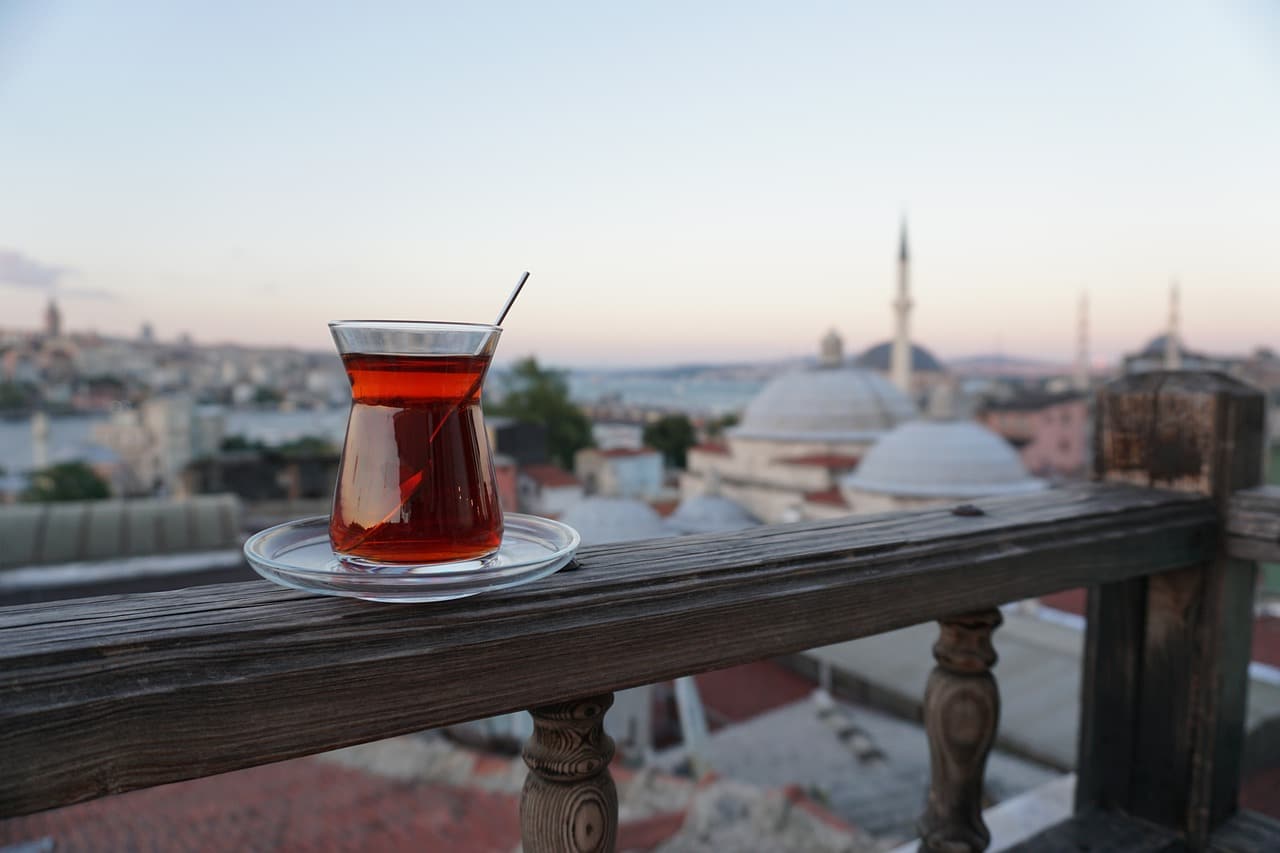
Walk into almost any Istanbul café at 11 AM on a Tuesday and you’ll see it immediately:

a table of businessmen closing a deal over tulip-shaped glasses of black tea, two students hunched over a laptop and a pour-over, and an older man alone with a Turkish coffee and a newspaper, in absolutely no hurry to leave. Nobody’s checking a watch. That’s not a coincidence — it’s the whole point.

Istanbul doesn’t just consume caffeine. It organizes a huge share of its social, political, and creative life around it. If you want to actually understand this city rather than just photograph it, you need to understand its cafés — because that’s genuinely where a lot of Istanbul happens.

How Istanbul’s Café Culture Evolved From Teahouse to Third Wave

For centuries, two institutions dominated: the kıraathane (traditional coffeehouse, historically male-dominated, built around backgammon and reading) and the çay bahçesi (tea garden, more family-oriented, built around long plane-tree-shaded afternoons). Both are still very much alive.

What’s changed is what sits alongside them. Since roughly the early-to-mid 2010s, a “third wave” specialty coffee movement has taken over entire neighborhoods — Karaköy and Kadıköy especially — with imported roasting equipment, single-origin beans, and baristas who treat extraction like a lab discipline. The result is a strange and genuinely interesting layering: a 90-year-old backgammon hall can sit two doors down from a minimalist espresso bar with a $15,000 roaster in the window, and both are doing fine.

What Makes a Café “Concept” or “Artistic” in Istanbul?

These two words get thrown around loosely, so it’s worth being precise, because it changes what you should expect walking in.
A “concept” café

is built around a specific, deliberately curated theme — a retro-futurist interior, an indoor botanical jungle, a hybrid bookstore-café, a chemistry-lab aesthetic. The theme is the product as much as the coffee is.

An “artistic” café

functions as an actual creative hub — rotating gallery walls, live acoustic sets, poetry nights, a real (not decorative) connection to the local creative community.
    The distinction matters for your expectations: a concept café is designed to be photographed. An artistic café is designed to be used by working artists and writers — the coffee and the seating need to hold up over a three-hour sitting, not just look good in a nine-second video.

    How to Use This Guide

    This guide is organized by neighborhood, by aesthetic category (bookshop cafés, gallery cafés, industrial roasteries, plant-filled spaces, and so on), and by practical need (remote work, breakfast, rooftop views). Skip to whichever section matches what you’re actually trying to do today — this isn’t meant to be read start to finish.
    A Brief History of Coffee & Café Culture in Istanbul

    The Ottoman Coffeehouse — Where It All Began

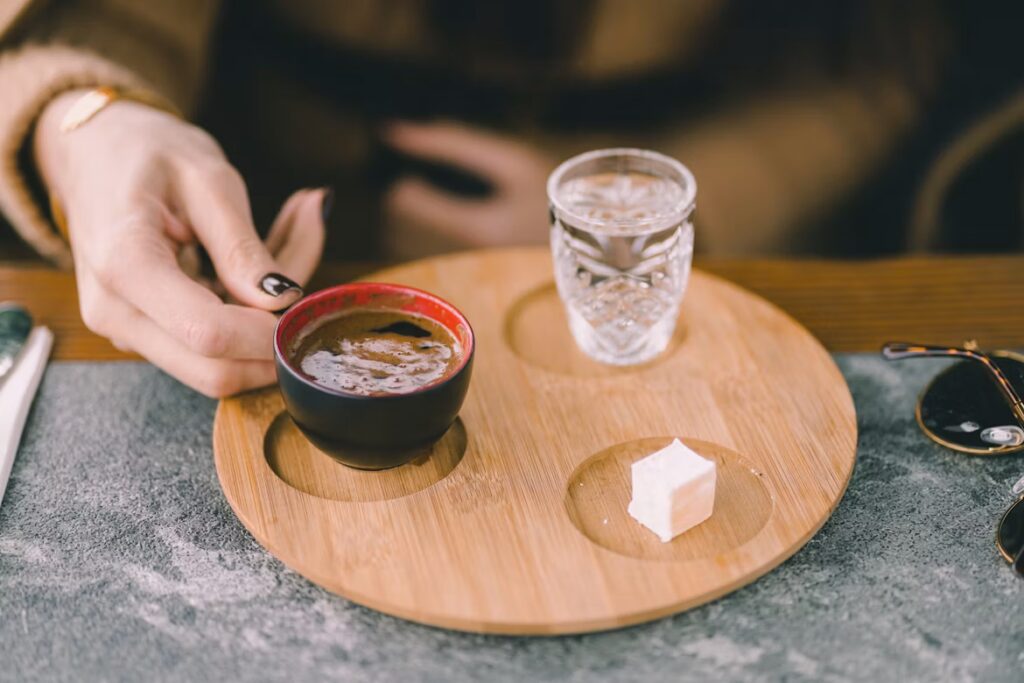
    Coffee reached Istanbul in the mid-16th century, most likely via Yemen, and the story usually credited (by the Ottoman chronicler Peçevi) involves Özdemir Pasha, the Ottoman governor of Yemen, bringing the bean back to the imperial court. It moved fast from there — the palace created a dedicated Chief Coffee Maker role (Kahveci Başı), a position serious enough that a number of its holders went on to become Grand Viziers. Within a few years, coffee had jumped the palace walls entirely.

    The First Coffeehouses in the World Were Here

    The Tahtakale neighborhood is where the jump happened: two merchants — one from Aleppo, one from Damascus — opened Istanbul’s first commercial coffeehouse there around 1554–1555. It’s genuinely considered the birthplace of the coffeehouse as a public institution, not just a local curiosity. These venues quickly became known as informal “schools of knowledge,” where people gathered to read poetry, argue about literature, and — critically — criticize the government. That last part is why several nervous 17th-century sultans tried, and repeatedly failed, to shut coffeehouses down.

    A mistake worth avoiding: don’t assume this history is locked away in a museum. The habit of arguing about politics over coffee is, arguably, still the single most consistent thread running through Istanbul café culture 470 years later.

    From Kıraathane to Hipster Roastery — Centuries of Evolution

    The traditional kıraathane stayed a male-dominated space built around reading and backgammon well into the 20th century. Today’s version is far more mixed and globalized, though the old-school rooms haven’t disappeared — you’ll still find them, mostly unchanged, in older neighborhoods. What’s changed is what sits around them: the same city that once brewed coffee exclusively in a copper cezve now also runs some of the more technically obsessive espresso setups you’ll find anywhere in Europe.

    Turkish Tea Culture — The Quiet Rival to Coffee

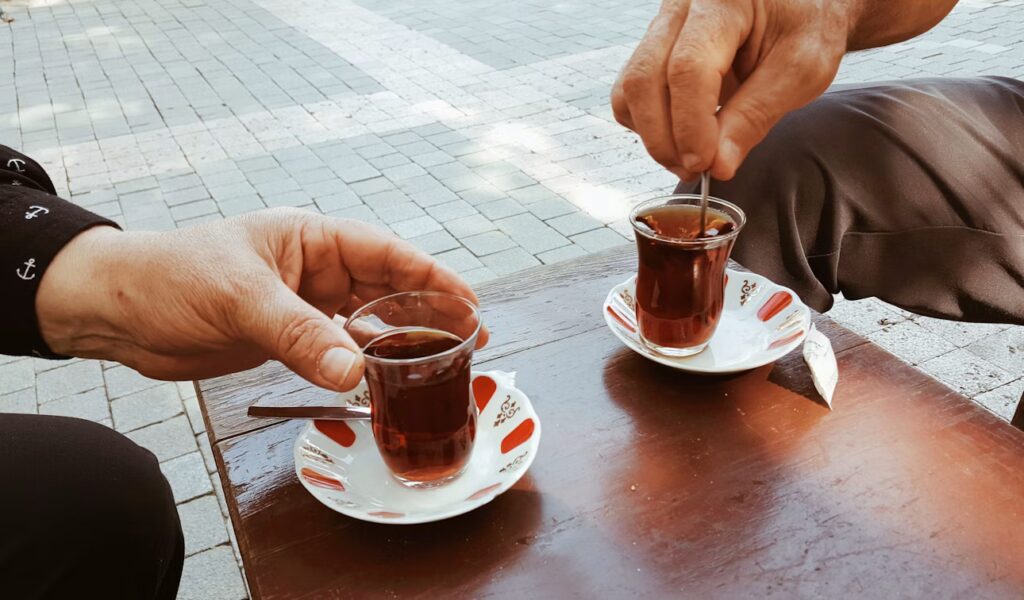
    Here’s the twist that surprises most first-time visitors: despite the global fame of “Turkish coffee,” modern Turkey actually runs on tea. This wasn’t gradual cultural drift — it was largely economic necessity. After the Ottoman Empire’s collapse following WWI, Turkey lost the Yemeni territories where its coffee had traditionally been sourced, and coffee became an expensive import almost overnight. Tea, by contrast, could be grown domestically — cultivation trials began in the Black Sea province of Rize as early as 1912, and the region became the backbone of a state-supported tea industry from the 1920s onward.

    The result: Turkey now has the highest per-capita tea consumption in the world, drinking noticeably more tea per person than famously tea-obsessed countries like the UK or Ireland.
    The Third Wave Coffee Revolution Hits Istanbul

    Starting around the early-to-mid 2010s and accelerating hard through the 2020s, Istanbul caught the global specialty coffee wave. Independent roasters started sourcing direct-trade, single-origin beans, favoring lighter roasts that show off tasting notes rather than mask them, and introducing the city to V60s, Chemexes, and cold brew setups that would look at home in Portland or Melbourne.

    Bahariye Street (Kadıköy)

    Understanding Istanbul’s Café Neighborhoods

    The undisputed epicenter of modern coffee culture. Karaköy leans industrial-chic and high-energy; the backstreets of Beyoğlu, just up the hill, hide quieter, more culturally layered venues one block off the main tourist flow.


    Karaköy’s café identity took shape over the past decade as old ship-chandlery warehouses and hardware shops along its steep, cobbled streets were converted into roasteries and design-forward coffee bars — many of them founded by baristas who trained abroad and came back to build Istanbul’s specialty-coffee scene almost from scratch. Expect exposed brick, concrete counters, single-origin pour-overs, and a crowd that skews design-industry and fashion-adjacent. Weekday mornings are calmer and better for actually tasting the coffee; by Friday evening the sidewalks fill up and tables turn fast. Beyoğlu proper — the grid of streets fanning out from İstiklal Avenue — is a different rhythm entirely. Step one block off the avenue and the crowds thin out into meyhane-lined alleys, art-house cinemas, and small, unmarked cafés that have been serving the same regulars for years. This is where you’ll find the neighborhood’s older, more bohemian coffeehouse tradition sitting right alongside the newer wave — worth the extra ten minutes of wandering, since the venues directly on İstiklal itself are mostly aimed at foot traffic rather than people who actually want to sit down.

    Romantic, steep, and historic. Cafés here are often genuinely tiny — squeezed into 19th-century brick buildings — and serve a mix of tourists climbing to the tower and local musicians who’ve been coming for years.


    Galata’s street plan is Genoese, not Ottoman — the neighborhood grew up around the Galata Tower as a fortified trading colony in the 14th century, and the narrow, sloped lanes radiating from the tower still follow that original medieval layout. That history is exactly why the cafés here feel different from anywhere else in the city: many occupy ground floors of buildings that are two or three centuries old, with low ceilings, uneven floors, and seating for maybe a dozen people at most. It makes for an intimate, slightly cramped charm rather than a spacious one — go in expecting a small table by a window rather than room to spread out with a laptop. The neighborhood has also long had a quiet pull for musicians and instrument makers, and a handful of cafés near the tower still double as informal hangout spots for that crowd, especially in the early evening. Because the tower itself draws a steady stream of visitors, cafés directly on the approach streets tend to be busier and pricier than ones a block or two off the main climb — worth the short detour if you’d rather sit somewhere quieter.

    Istanbul’s closest equivalent to a Left Bank scene. Cihangir is residential, artsy, and full of sidewalk cafés populated by actors, writers, and an unreasonable number of well-fed street cats.


    Cihangir has carried this reputation since at least the 1980s and 90s, when falling rents drew in writers, musicians, and film industry types who wanted to live somewhere central but not quite as chaotic as İstiklal. That crowd never really left, and it shows in the café culture: this is a neighborhood built for sitting for two hours over a single glass of tea, reading, arguing about politics, or just watching the street. Cafés spill out onto sloped sidewalks and steps, and neighbors greet the staff by name. The cat population is not an exaggeration — Cihangir is one of the most cat-dense neighborhoods in a very cat-dense city, and most café owners keep water bowls out and a few house regulars who’ve claimed a favorite chair. Mornings here are unhurried; the real energy builds in the late afternoon and evening, when the neighborhood’s residential population comes home and the café tables become an extension of everyone’s living room.

    Young, alternative, budget-friendly. Kadıköy has the highest concentration of independent roasters and experimental concept spaces in the city — this is where actual coffee people go, not just visitors.


    Kadıköy has always felt a step removed from the tourist-facing European side, partly by geography — you need to cross the Bosphorus by ferry or metro to get there — and partly by temperament: it’s historically more secular, more politically outspoken, and home to a large student and young-professional population that keeps demand for good, affordable coffee high year-round. That’s produced a genuinely different café economy than Beyoğlu’s: more owner-operated roasteries competing on bean sourcing and brew method rather than interior design, and a much lower bar for entry, which means new concepts open (and close) constantly. Prices are noticeably friendlier than on the European side for a comparable cup. The scene isn’t limited to Kadıköy’s central grid around the ferry docks and Bahariye Street — it spreads into the surrounding neighborhoods, which is where Moda and Yeldeğirmeni come in.

    Moda is leafy, upscale, and slow-paced — built for a long Sunday. Right next door, Yeldeğirmeni is the rawer counterpart: a former working-class neighborhood turned mural-covered arts district, where rents are still low enough for genuinely experimental café concepts to take a chance.

    Moda sits right on the Marmara Sea and has functioned as Kadıköy’s genteel, residential answer to the more frantic city center for generations — tree-lined streets, a seafront park good for a slow walk, and a café culture built around long weekend brunches rather than quick coffee stops. Yeldeğirmeni, just inland, tells a different story: it’s one of Kadıköy’s oldest neighborhoods, historically home to Armenian, Greek, and Jewish communities from as far back as the 15th century, and it fell into decline through the 1980s before a municipal revitalization project and, later, an annual street-art festival transformed its walls into an open-air gallery. Today it’s home to dozens of small art studios and galleries tucked between the murals, and rents — while rising — are still low enough that first-time café owners can experiment without the overhead that a Beyoğlu or Nişantaşı lease would demand. The result is a genuinely scrappier, more DIY café scene than its polished neighbor Moda: expect concept spaces run by working artists, unconventional hours, and a much higher tolerance for weird.

    Luxury café society. You come here to see and be seen, drink a flawless flat white, and eat an artisanal French pastry next to Istanbul’s fashion crowd.

    Nişantaşı has been Istanbul’s upscale shopping district since the mid-20th century, and its café scene grew up to match the surrounding boutiques and flagship stores rather than any older neighborhood identity — this isn’t a place with centuries of café history so much as a purpose-built stage for a certain kind of Istanbul lifestyle. Interiors tend to be immaculately styled, staff are polished, and the pastry cases are treated with the same seriousness as the coffee itself. It’s the most expensive café neighborhood on this list by a clear margin, and it’s not really built for lingering solo with a book — it’s built for being seen at a good table with friends. If your idea of a great café experience is more about atmosphere and craft than about price, this is the neighborhood; if you’re budget-conscious, you’ll get more for your money almost anywhere else on this list.

    Historically a Jewish and Greek quarter, now heavily gentrified and extremely photogenic. Cafés here lean colorful, eccentric, and vintage-heavy.

    Balat was settled by Sephardic Jews fleeing Spain after 1492, invited in by the Ottoman sultan, and for centuries it was one of Istanbul’s most religiously mixed neighborhoods — synagogues, churches, and mosques still stand within a few minutes’ walk of one another. Much of that original community left over the course of the 20th century, and the neighborhood spent decades in genuine decline, with crumbling facades and boarded-up shops. The turnaround is recent: over roughly the last ten to fifteen years, Balat’s steep, colorful streets have become one of the most photographed corners of the city, and cafés have followed — many set inside restored Ottoman-era houses, leaning into mismatched vintage furniture, exposed stone, and small-batch roasting. It’s worth knowing going in that this transformation is a real and sometimes contested gentrification story, not just a pretty backdrop — locals and long-time residents have mixed feelings about it, and it’s part of what gives the neighborhood its particular, slightly bittersweet atmosphere alongside the Instagram appeal. Mornings before the day-trip crowds arrive are genuinely the best time to feel that older, slower Balat underneath the color.

    Beşiktaş has a bustling, student-heavy energy and the genuinely famous Kahvaltıcılar Sokağı (“Breakfast Street,” officially Çelebioğlu Sokak in the Sinanpaşa/Akaretler area) — more than 20 breakfast houses lined up shoulder to shoulder. Ortaköy, a short walk north along the water, offers a calmer, classic tea-garden scene right on the Bosphorus.

    Beşiktaş’s energy comes largely from the university crowd and the district’s identity as home to one of Turkey’s biggest football clubs — it’s loud, dense, and unpretentious in a way that’s rare this close to the water. Breakfast Street itself is best tackled with a plan rather than wandering in cold: the houses compete on spread size and price rather than individual specialty, so it rewards going with an appetite and splitting a full Turkish breakfast (kahvaltı) across the table rather than treating it like a single-cup coffee stop. Ortaköy, a short walk or minibus ride north, trades that density for open water views right under the Bosphorus Bridge — its waterfront tea gardens and cafés are built for sitting with a glass of çay and watching the ferries go by, and it’s one of the few spots on this list where the view itself is doing as much work as the coffee.

    Concept Cafés in Istanbul — Design, Theme & Experience First

    What Exactly Is a Concept Café?

    It’s a space that curates a specific lifestyle. You’re not just paying for the latte — you’re paying for the meticulously designed environment, the specific playlist, and often a retail layer bolted right onto the seating area.

    The Bookshop Café — Where Literature Meets Latte

    Robinson Crusoe 389 is Istanbul’s most beloved literary café-bookstore hybrid, running since 1994. After rent pressure forced it off its original İstiklal storefront in 2014, its main location moved into SALT Beyoğlu; it also keeps a smaller branch inside SALT Galata. Either way, expect towering bookshelves and a genuinely intellectual, quiet atmosphere — this isn’t a photo-op bookstore, it’s a working one.

    Pandora Kitabevi is a staple of the Beyoğlu literary scene, combining a large international book selection with a focused, low-key café space.

    Homer Kitabevi Café is the pick for academics and history buffs — strong coffee next to a specialized collection on archaeology and Byzantine history.

    A mistake worth avoiding: don’t expect a large English-language selection at any of these. Turkish stock dominates; English titles are a secondary offering, not the main event.

    The Gallery Café — Art on the Walls, Art in the Cup

    Museum cafés here are genuine destinations, not afterthoughts.

    SALT Galata Café sits inside the former headquarters of the Imperial Ottoman Bank (1892, architect Alexandre Vallaury) — soaring neoclassical-meets-Orientalist architecture, a public research library upstairs, and reliably excellent espresso on the ground floor. Entry to the building itself is free.

    Pera Museum Café carries an Art Deco sensibility that plays off the museum’s Orientalist painting collection, on Tepebaşı Street — a good, sophisticated stop for a mid-afternoon break.

    The Vintage & Antique Café — Stepping Into Another Era

    In the antique district of Çukurcuma, several cafés double as storefronts — you can sip coffee on a velvet Victorian sofa and, genuinely, buy the sofa when you’re done. More broadly, Istanbul’s concept cafés lean hard into nostalgia: stripped-back brick walls, vintage typewriters, analog radios.

    The Plant & Botanical Café — Green Walls & Garden Escapes

    To counter the city’s concrete density, plenty of cafés have gone full indoor-greenhouse — look for monstera- and pothos-heavy interiors in Moda and Nişantaşı. Some of the best courtyard spots in Beyoğlu are invisible from the street entirely, tucked behind long covered arcades (pasajlar) that open suddenly into lush, open-air courtyards.

    The Industrial Concept Café — Raw Concrete, Exposed Brick & Specialty Beans

    Karaköy kept its industrial bones when it flipped from a maritime hardware district to a trendy hub — raw concrete, exposed piping, minimalist steel furniture. It’s a “Berlin-style” look that’s become close to the default aesthetic for third-wave spots citywide, designed to keep the eye on the barista’s workspace.

    The Roastery Concept — Watching Your Coffee Being Born

    Cafés like Petra and Kronotrop roast on-site — the roasting machine is the visual centerpiece, and the smell fills the street. If you want to order well: don’t just say “coffee.” Ask what single-origin beans they’re currently pouring and whether they’d recommend it as a V60 pour-over or a milk-based drink — most baristas speak strong English and genuinely enjoy the question.

    {Image: Close-up of a roasting machine in action inside a Karaköy or Kadıköy roastery}

    Practical Café Guide — Costs, Etiquette & Tips

    {Image: Close-up of a café bill and cash/card payment on a table}

    How Much Does Coffee Cost in Istanbul in 2026?

    Prices are best understood in lira, since that’s what’s on the menu, but here’s the USD context at roughly $1 = 46 TRY (check the live rate before you go — it moves):

    • Traditional Turkish coffee or tea: typically 60–120 TRY (~$1.30–2.60), often less at a neighborhood tea garden
    • Specialty pour-over or flat white at a trendy Karaköy or Kadıköy spot: expect this to run noticeably higher than the mid-range figures above, closer to Western European café pricing once you factor in imported equipment and beans

    A mistake worth avoiding: don’t be alarmed by the lira number on the receipt — Turkey’s inflation means prices in lira look dramatic year over year, but converted to your home currency, Istanbul remains meaningfully cheaper than most European capitals.

    Tipping Culture in Istanbul Cafés

    For counter service, rounding up or dropping small change in the tip jar is enough. For table service, 5–10% left in cash is standard and genuinely appreciated — it’s not obligatory the way it is in the US, but it’s noticed when you skip it entirely at a sit-down café.

    Café Etiquette — Unwritten Rules Every Visitor Should Know

    Never rush. The culture is built on lingering — asking for the check immediately after your coffee arrives reads as slightly odd. You’re expected to relax and stay a while; nobody will hurry you out.

    Opening Hours — When Istanbul Cafés Open and Close

    Most specialty cafés open around 8:00–9:00 AM. Unlike much of Europe, Istanbul cafés often stay open remarkably late — drinking coffee and eating cake at 11:30 PM on a weeknight is completely normal, especially in Beyoğlu, Kadıköy, and Cihangir.

    Dealing With Language Barriers in Non-Tourist Cafés

    In specialty cafés, English is close to universal. In traditional tea gardens or a local kıraathane, a smile and “Bir çay, lütfen” (“One tea, please”) — holding up fingers for quantity — will get you everywhere you need to go.

    Cash vs Card in Istanbul Cafés

    Almost all third-wave and concept cafés accept contactless cards (Visa/Mastercard). Still, carry some small cash — traditional street-side tea vendors and historic spots like Mandabatmaz are far more likely to be cash-only or cash-preferred.

    The Ultimate Istanbul Café Crawl — Neighborhood by Neighborhood

    The Beyoğlu to Galata Café Crawl — Half a Day, Maximum Coffee

    Start at Kronotrop in Cihangir for a morning espresso. Walk down through Çukurcuma to browse the antiques. Stop at Federal near Galata Tower for a flat white and brunch. Finish with a traditional Turkish coffee at Mandabatmaz, tucked in Olivia Geçidi off İstiklal.

    The Balat Café Morning — Art, Color & Slow Sipping

    Arrive by 9:30 AM to beat the Instagram crowds. Have a slow breakfast at Forno Balat, grab a pour-over at Coffee Department, and spend an hour on a cushion at one of the colorful staircase cafés along Merdivenli Yokuş, like İncir Ağacı Kahvesi.

    The Kadıköy Café Afternoon — Asian Side Coffee Culture

    Take the ferry across. Start with traditional coffee at Fazıl Bey’in Türk Kahvesi in the Kadıköy market. Walk the Moda coastline, then bounce between the independent roasters on Moda Caddesi, ending with a novelty cold brew at Walter’s Coffee Roastery.

    The Bosphorus Café Walk — From Beşiktaş to Bebek With Stops

    Start at the energetic Kahvaltıcılar Sokağı (“Breakfast Street”) in Beşiktaş. Walk north along the water to Ortaköy for tea with a view of the Bosphorus Bridge. Continue to Kuruçeşme for an upscale coffee stop, then finish in Bebek at Petra’s garden terrace — the natural endpoint of the walk, not the middle of it.

    The Old City Café Route — History Between Every Sip

    Start near the Grand Bazaar with tea at Şark Kahvesi. Walk toward Sultanahmet and grab a coffee at a rooftop café near the Four Seasons to watch the sunset over Hagia Sophia. End the day with a nargile and mint tea in the historic courtyards of Fatih.

    Frequently Asked Questions

    The Balat staircase cafés along Merdivenli Yokuş get genuinely crowded by mid-morning, which is exactly why this guide’s own Balat itinerary recommends arriving by 9:30 AM to beat the crowd rather than booking ahead — most of these are small, walk-in spots that simply don’t take reservations. Walter’s Coffee Roastery, given its cat-café novelty factor, can mean a real wait for a table on weekends specifically; a weekday visit or an early arrival sidesteps most of it without needing to plan further ahead than that.

    It varies by café and isn’t governed by one citywide rule — plenty of the plant-filled, courtyard-style spots this guide describes in Beyoğlu and Moda welcome well-behaved dogs indoors, especially in more casual, Cihangir-style neighborhoods where street cats already wander freely between tables. More polished concept or gallery cafés, particularly ones with delicate décor or antique furniture like the Çukurcuma sofa-shops, are more likely to restrict pets to an outdoor table if one exists. If it matters for your visit, a quick check when you walk in avoids any awkwardness.

    Yes — these function as real, working bookstores first and cafés second, and browsing without a purchase is completely normal, the same as any bookstore. That said, given this guide’s own note that Turkish stock dominates over English titles, most visitors end up ordering a coffee and settling into the reading-room atmosphere rather than just passing through, since that’s genuinely the more rewarding way to experience either space.

    You can walk in — there’s no formal restriction — but it’s worth going in with the right expectations. The traditional kıraathane, as this guide’s own history section notes, has stayed male-dominated well into the present in many older neighborhoods, built around backgammon and reading rather than a mixed social scene. A foreign visitor, including a woman, generally won’t be turned away, but don’t expect the easy, anonymous mixed-crowd comfort of a modern specialty café — you may draw a few curious looks, and it’s more of a cultural observation stop than a place to settle in for hours the way you would at a third-wave roastery.

    At the third-wave specialty cafés this guide focuses on — Karaköy and Kadıköy especially — oat milk (yulaf sütü) has become a fairly standard option, alongside almond milk (badem sütü) at the more internationally-minded spots. It’s far less likely to be available at a traditional tea garden or kıraathane, where the drink menu revolves around tea and Turkish coffee rather than espresso drinks in the first place. “Yulaf sütü ile, lütfen” (“with oat milk, please”) gets the point across at any barista-run counter.

    Increasingly, yes, particularly at the more design-forward concept cafés in Kadıköy, Moda, and Beyoğlu that already cater to an international, health-conscious crowd — vegan cakes and a gluten-free option or two have become common enough not to be a surprise. It’s much less consistent at traditional tea gardens and historic coffeehouses, where the pastry case (if there is one) leans toward classic Turkish sweets with no dietary accommodation built in. Asking directly (“vegan var mı?” — “is there a vegan option?”) works fine even with limited Turkish, since most specialty baristas speak strong English anyway.

    It’s inside Olivia Geçidi, one of İstiklal Avenue’s many small covered passages (pasajlar) — the kind of arcade entrance that’s easy to walk straight past if you’re not looking for it, since it looks like a narrow doorway rather than a storefront. The reliable way in is navigating by phone rather than eyeballing the street: search “Mandabatmaz” directly in Google Maps or a ride app and follow the pin, since the entrance itself gives few visual cues from the main avenue.

    It’s genuinely both, and that’s fine — the Harry Potter-themed, cat-filled interior is built for photos, and most visitors know exactly what they’re walking into. The coffee itself is a reasonable, unremarkable cup rather than a serious specialty pour; you’re paying for the novelty and the cats, not for a coffee experience that competes with the roasters this guide covers elsewhere in Kadıköy. Go in with that expectation and it delivers exactly what it promises.

    Generally yes at the artistic-category cafés this guide describes — spaces built around a real creative community (rotating art, live sets, a genuine writer-and-artist clientele) tend to have the same relaxed, no-rush culture this guide’s own etiquette section describes citywide, and a laptop fits naturally into that scene. Concept cafés built primarily around a photographable aesthetic can be a slightly different story — smaller seating, a faster table-turnover expectation at the more Instagram-driven spots — so a quieter gallery café or bookshop café is the safer bet over a highly styled, single-photo-op concept space if a multi-hour work session is the actual goal.

    Şark Kahvesi, inside the Grand Bazaar and already featured in this guide’s Old City café route, is the strongest pick — it functions as a genuinely operating traditional coffeehouse serving bazaar merchants and regulars as much as visitors, rather than a recreated “heritage experience” built for tourists. It won’t recreate the 1554 Tahtakale original this guide traces the whole tradition back to, but it’s as close as most visitors will get to the real, ongoing version of that culture rather than a staged approximation of it.