
Istanbul is a 16-million-person city running on two currencies you need to understand before you land: the Turkish Lira, and mobile data. Get either wrong and you’ll spend your first day hunting for a working ATM or standing in an airport Wi-Fi line instead of watching the ferries cross the Bosphorus.
This isn’t theoretical. The city’s card infrastructure is genuinely excellent — better than a lot of Western Europe, honestly — but the traps (fake “no commission” exchange booths, dynamic currency conversion at ATMs, airport SIM markups) are specific and avoidable once you know what to look for. That’s what this guide covers.
What Istanbul Actually Costs — Setting Realistic Expectations
Istanbul isn’t the ultra-budget destination it was a decade ago. Years of high inflation mean local businesses reprice constantly, but it’s still strong value against Western Europe — you just need a realistic budget, not a 2015-era one.
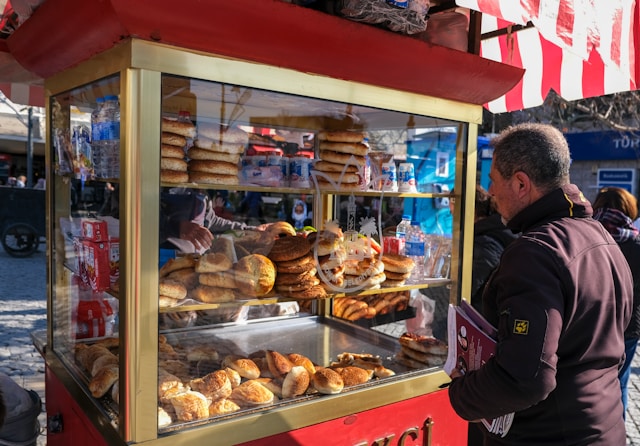
- Street food (simit, a döner wrap) costs pocket change — often under 100 ₺.
- A casual sit-down meal in a non-touristy neighborhood runs noticeably cheaper than a similar meal in Karaköy or Nişantaşı, where menus are priced for tourists and expats.
- Museum entry for foreigners is often pegged to the Euro even though you pay in Lira, so cultural sightseeing needs a slightly bigger line item than food does.
Bottom line: you can survive Istanbul cheaply, but the “wow” experiences — a proper Bosphorus dinner, a hammam, a private guide — cost real money, priced closer to European rates than Southeast Asian ones.
Turkish Currency Basics — Know the Lira Before You Land
What Is the Turkish Lira and How Does It Work?
The Lira (TRY, symbol ₺) is Turkey’s official currency, divided into 100 kuruş. Cards dominate spending citywide, but physical Lira is still essential for the Grand Bazaar, street vendors, and small neighborhood shops.
Understanding the Exchange Rate in 2026
As of early July 2026, one US dollar buys roughly 46–47 Turkish Lira, and the rate has been sliding gradually — the Lira lost about 17% of its value against the dollar over the previous 12 months. That number will be different by the time you read this; that’s simply the nature of the Lira right now. Check the mid-market rate (Google or XE) a day or two before you fly, so you have a real mental anchor for prices rather than working off outdated guidebook numbers.
The upshot for travelers holding USD, EUR, or GBP: your money generally goes further here than it did a year ago, because local prices adjust slower than the exchange rate moves.
Denominations, Coins & What to Expect at the Register
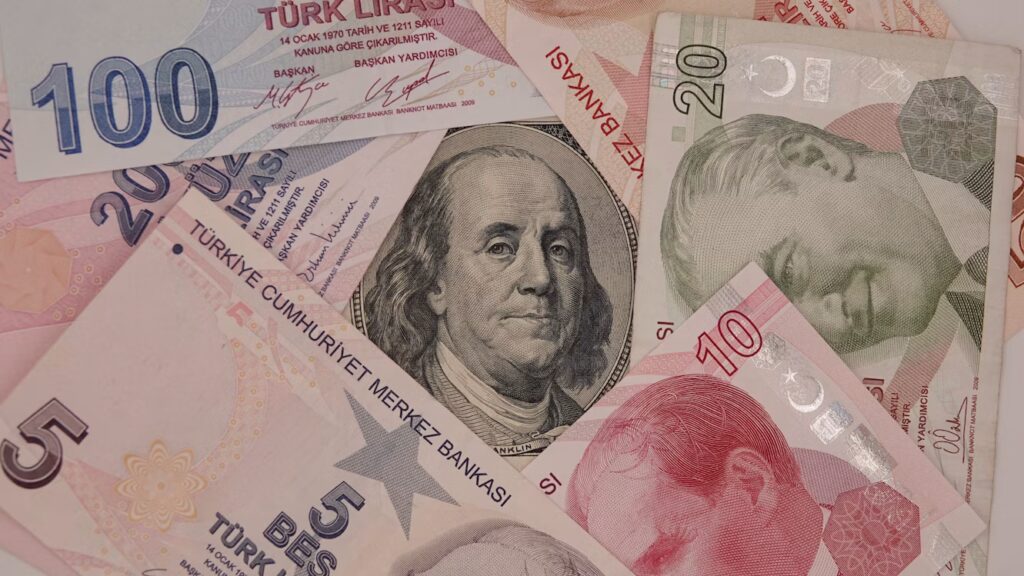
Banknotes come in 5, 10, 20, 50, 100, and 200 ₺. Coins exist in 1, 5, 10, 25, and 50 kuruş plus a ₺1 coin — but with 200 ₺ worth only around $4.27 today, kuruş coins have become almost worthless and you’ll rarely see them used in practice.
Real pro-tip: Break your 200 ₺ notes at supermarkets or chain stores, not small vendors. A street simit seller or taxi driver often genuinely can’t make change for a 200 ₺ note on a 10 ₺ purchase — it’s not an excuse, they just don’t carry that much small cash.
Getting Cash in Istanbul — ATMs, Banks & Exchange Offices
ATMs — The Safest Way to Get Lira
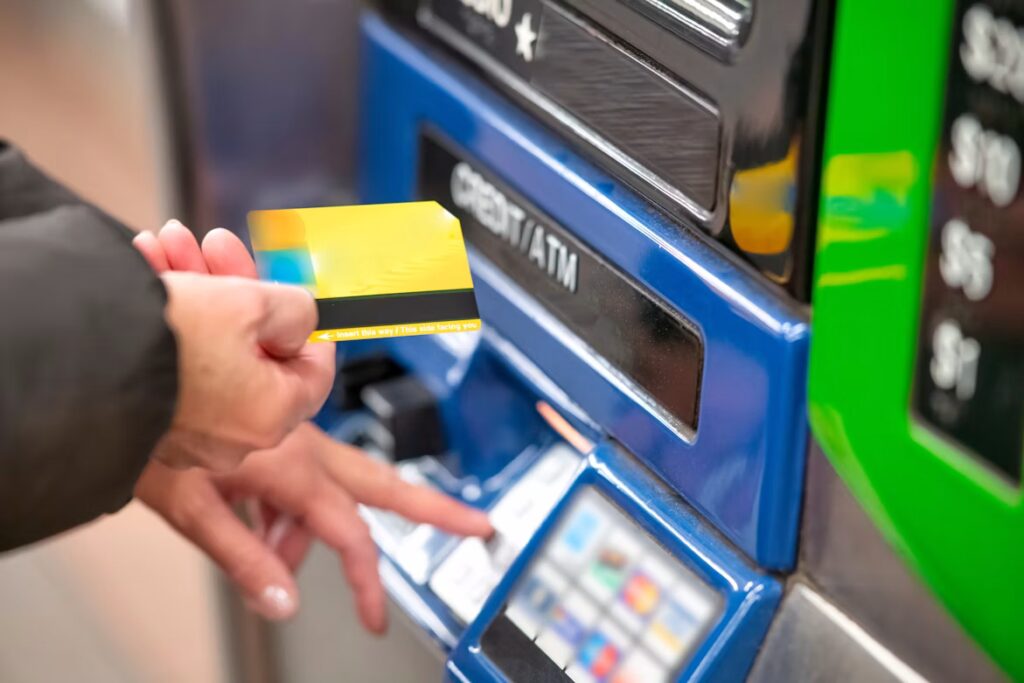
Withdrawing from an ATM (“Bankamatik” locally) is the most transparent way to get cash — you avoid carrying large amounts of foreign currency, and you can pull only what you need.
Which banks to use: This changes more often than most guides admit. As of mid-2026, Halkbank and PTT (Turkey’s post office, yellow signage) are the most consistently reported fee-free options for foreign cards. Ziraat Bank — long recommended as the “free” choice — recently started charging some foreign cards a withdrawal fee, so don’t assume it’s still free just because an older blog told you so. Private banks like Garanti BBVA, Akbank, and İş Bankası have excellent English-language interfaces but can charge noticeably higher fees to foreign cards.
The real rule: Read the fee disclosure screen every single time, on every machine, regardless of which bank’s logo is on it. If it quotes a fee that feels steep, cancel and walk to the next ATM — they’re rarely more than a block or two apart in central Istanbul.
The Two Fees You’re Actually Paying
- Your home bank’s fee — for using a foreign ATM at all. A no-foreign-fee travel card (Wise, Revolut, etc.) sidesteps this entirely.
- The local ATM’s surcharge — this is what you see on-screen before confirming. It varies by bank and by card network, and can run surprisingly high on private banks. Cancel and switch machines if it looks wrong.
How to Avoid the Dynamic Currency Conversion Trap
This is the single most important money rule in Istanbul. At the ATM or a card terminal, you’ll often be asked: charge in Lira, or in your home currency? Always choose Lira. Choosing your home currency hands the transaction to Dynamic Currency Conversion (DCC) — the local bank sets its own, worse exchange rate and pockets the difference. It looks like a convenience. It’s a markup.
Currency Exchange Offices (Döviz Büroları)
Exchange offices are everywhere and genuinely competitive with each other, which keeps margins tight if you know where to look.
Best areas:
- Grand Bazaar (Kapalıçarşı), specifically the gold dealers’ section near the Mahmutpaşa entrance — this is where jewelry merchants trade currency in volume, so the spreads here are some of the tightest in the city.
- Sirkeci / Eminönü, just outside the bazaar, is nearly as good.
- İstiklal Avenue in Taksim has plenty of reliable options too.
Avoid: the exchange booths clustered right at the Sultanahmet tram stop and directly outside Hagia Sophia — consistently reported as the worst rates in the historic peninsula.
Red Flags — Spotting a Bad Exchange Deal
Walk away from any booth with a big “NO COMMISSION!” sign but no visible rate board. Legitimate bureaus display a live digital board showing Alış (buy) and Satış (sell) rates, with a tight gap between the two. A wide gap is the commission — it’s just hidden in the spread instead of stated as a fee.
Exchanging Money at the Airport — Skip It
Don’t. Exchange booths in the arrivals halls at both IST and SAW post some of the worst rates you’ll find anywhere in the city — this holds true across virtually every traveler report I checked. If you need cash the moment you land, use a bank ATM in the terminal instead, withdraw a modest amount to get you to the city center, and do any larger exchange later at a proper Döviz office.
Bank Branches — Skip These Too
Unless you’re opening a local account, there’s no reason to queue inside a Turkish bank branch. ATMs and Döviz offices handle everything a traveler needs, faster and with less paperwork.
Cards & Contactless Payments in Istanbul
How Widely Accepted Are Cards, Really?
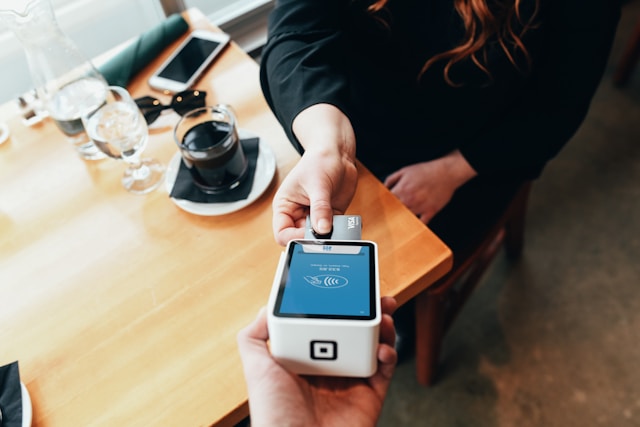
Card payments are the norm in Istanbul now, from neighborhood cafés to high-end retail. Even delivery riders for apps like Yemeksepeti carry wireless card machines. You’ll still want some cash on hand (more on that below), but you won’t struggle to pay by card almost anywhere central.
Visa vs Mastercard vs Amex
Visa and Mastercard work everywhere without question. American Express is the exception — it’s mainly accepted at international hotel chains (Marriott, Hilton, Hyatt, IHG) and a handful of businesses used to serving foreign travelers. Don’t count on Amex as your only card; bring a Visa or Mastercard as your primary.
Apple Pay, Google Pay & Contactless
Turkish banking rules mean local residents can’t link Turkish bank cards to Apple Pay or Google Pay — you won’t see Turks tapping their phones to pay the way you might in London or Seoul. But if your foreign card is already linked to Apple Pay or Google Pay at home, it usually works fine at Istanbul’s contactless terminals. “Usually” is the operative word — most large businesses handle it without issue, but occasionally a terminal will reject the mobile wallet even though the same physical card taps just fine. Keep the physical card in your pocket as backup, just in case.
The Best Travel Cards to Use in Istanbul
Wise
Wise lets you hold a Turkish Lira balance and spend it at the mid-market rate, with a small, transparent conversion fee (roughly 0.4–2%, not zero, despite what some guides claim). Here’s the nuance most articles miss: because the Lira depreciates so fast, loading up a big TRY balance weeks before your trip can actually cost you money — the rate today is often better than it was a month ago. Simpler approach: keep your balance in USD or EUR and let Wise auto-convert at the point of sale.
Revolut
Similar story — real-time, low-markup currency exchange up to your plan’s monthly limit, so tapping your card in Istanbul generally gets you close to the interbank rate.
Monzo, N26 & Other Fintech Cards
UK and EU digital banks like Monzo, Starling, and N26 are solid travel companions here too — no foreign transaction fees, and instant notifications so you can see exactly what you spent in your home currency the moment the charge clears.
When Cash Is Still King
Despite the card infrastructure, you’ll want Lira in hand for:
- Tipping (see below — this is the big one)
- Loading an Istanbulkart at smaller kiosks
- Street food carts (simit, roasted chestnuts, fresh mussels)
- Haggling in the Grand Bazaar — cash often gets you a better price than a card
- Small taxi fares
Tipping Culture — Why You Need Cash for This Specifically
Tipping (bahşiş) in Istanbul is customary but modest — around 10% at restaurants. Here’s the detail that trips people up: most Turkish card terminals have no line to add a tip, and you can’t write one onto a receipt after the card’s already been charged. If you want to tip your server, you need small Lira notes (50 ₺ or 100 ₺) on the table — the card terminal simply won’t let you do it digitally.
Mobile Connectivity in Istanbul — Your SIM Card Options
Do You Actually Need Data?
Yes, practically speaking. You’ll want it for Google Maps through the old city’s tangle of streets, translation apps at menus, hailing a BiTaksi or Uber, and checking ferry times. Relying only on café Wi-Fi means losing connectivity the second you step outside.
Turkey’s Three Networks, Briefly
- Turkcell — the largest network, fastest speeds, best coverage if you’re heading outside Istanbul too. Physical tourist packs tend to be the priciest of the three.
- Vodafone Turkey — strong urban coverage, a reliable middle ground.
- Türk Telekom — generally the cheapest physical option, and notably the network most eSIM providers (including Airalo) route through, so it’s also the backbone a lot of tourists are on without realizing it.
Physical SIM or eSIM?
Buying a physical SIM means an in-person shop visit and a passport photocopy (Turkish law requires SIM registration to an ID). It’s fine if you need a real Turkish phone number or have an older phone, but for most visitors, an eSIM is simpler, cheaper, and works before you’ve even left the airport.
eSIM in Istanbul — The Practical Choice for Most Travelers
An eSIM is a digital SIM profile you install directly onto a compatible phone (recent iPhones, Galaxy, Pixel models) — no plastic, no shop visit.
Airalo
Airalo’s Turkey eSIM (“Merhaba”) runs on Türk Telekom and is genuinely cheap: current pricing sits around $3.50 for 1GB (7 days) up to $18 for 10GB or $26 for 20GB (30 days). It’s data-only — no local calling — but WhatsApp and FaceTime work fine over data. Worth knowing: Airalo’s “unlimited” option isn’t truly unlimited — it’s capped at 3GB/day of full speed before throttling.
Holafly
Holafly markets unlimited data for Turkey too, and it’s a reasonable option if you want one flat price without watching a data counter. Just go in with realistic expectations: independent reviewers note Holafly, like its competitors, applies a daily fair-use cap (commonly 2–3GB) before slowing your speed — “unlimited” here means “won’t hard-stop you,” not “no ceiling at all.”
Maya, Nomad & Other Alternatives
Providers like Nomad and Maya Mobile are competitive too, often partnering with Turkcell or Vodafone directly. Prices shift often enough that it’s worth a quick app comparison before you commit rather than trusting a number printed months ago.
Setting It Up Before You Land
Download your chosen eSIM app at home, buy the Turkey plan over your home Wi-Fi, and install the profile — but leave it switched off until you land. The moment your plane touches down, flip it on in Settings and you’ll have data before you’re off the jet bridge.
The Real 120-Day Rule (Read This If You’re Staying a While)
If you’re a short-term tourist, ignore this — you’ll never come close to the limit. If you’re a digital nomad or long-stay visitor:
- Your foreign phone can connect to a Turkish SIM or eSIM for 120 days before the network can block it — and that clock runs per SIM slot, so a dual-SIM or eSIM+physical-SIM setup can stretch this somewhat.
- Eaten enough eSIM data — 91 accumulated days within a 120-day window — and Turkey’s rules require IMEI registration even without a physical Turkish SIM.
- Registration currently costs around 54,258 TL (~$1,260) — often more than the phone is worth, which is why most long-stayers just buy a cheap local Android device instead.
- Don’t plan around indefinitely swapping SIM slots to dodge this — regulators tightened enforcement against exactly that workaround in 2026.
Budgeting for Istanbul — A Practical Daily Breakdown
A quick honest note: daily-cost estimates for Istanbul vary a lot across sources — sometimes by 2–3x — because “budget” and “luxury” mean different things to different travelers, and prices swing hard by season. Treat these as reasonable planning ranges, not exact numbers.
Budget Traveler — Roughly $35–70/day
- Accommodation: hostel dorm or basic guesthouse ($15–35)
- Food: street food and local lokantası ($10–20)
- Transport: Istanbulkart across ferries, metro, trams ($3–6)
- Activities: walking tours, free mosques, parks ($0–10)
Mid-Range Traveler — Roughly $100–210/day
- Accommodation: 3–4 star hotel in Galata, Karaköy, or Kadıköy ($80–150)
- Food: café breakfasts, sit-down dinners with a glass of wine or rakı ($30–60)
- Transport: mix of Istanbulkart and occasional BiTaksi rides ($10–15)
- Activities: museum entries, a Bosphorus cruise, a hammam visit ($30–60)
Luxury Traveler — Roughly $250–700+/day
- Accommodation: 5-star Bosphorus hotel (Çırağan Palace, Four Seasons) ($400–1,000+)
- Food: fine dining (Mikla, Neolokal), upscale cocktails ($100–250)
- Transport: private airport transfer, Uber Black or similar ($40–100)
- Activities: private guides, boutique shopping, curated experiences ($100–350+)
Genuine ultra-luxury — private yacht charters, palace suites, round-the-clock private guides — can push well past $1,000/day, but that’s the exception, not the typical “luxury traveler” experience.
Hidden Costs Worth Knowing
- Museum audio guides often carry a separate fee or deposit.
- “Kuver” cover charges — some upscale restaurants add a 10% service or cover fee automatically. Check your bill.
- Airport taxi tolls — a taxi from IST will add the highway toll to your metered fare. This is standard and legal, not a scam.
Stretching Your Lira
Eat a few streets back from major landmarks — a kebab beside the Blue Mosque costs noticeably more than the same dish a ten-minute walk away in a residential pocket like Kumkapı. If you’re visiting more than three major paid sites, a Museum Pass Istanbul is usually worth it for both time saved and money saved on entry queues.
Financial Safety & Scam Awareness in Istanbul
The Fake Currency Exchange Trick
A street “exchanger” offers a slightly better rate than the boards, then uses sleight of hand while counting bills to shortchange you. Never exchange money with anyone on the street — only use a proper Döviz office with a visible rate board.
Taxi Meter Scams
Some drivers claim the meter (taksimetre) is broken, or simply don’t turn it on, then try to negotiate an inflated flat fee at the end. The rule: no meter, no ride. BiTaksi or Uber sidestep this entirely by locking in the route and price upfront.
Card Skimming
Stick to ATMs inside bank branches or well-lit shopping malls rather than standalone street machines, and cover the keypad with your hand when entering your PIN.
Keeping Cards and Cash Safe
Pickpocketing in crowded spots — the Grand Bazaar, the T1 tram — happens, as it does in any major tourist city. Leave your passport, spare cards, and bulk cash in the hotel safe; carry only your daily allowance and one card in a cross-body bag or front pocket.
If Your Card Is Lost or Stolen
Freeze it immediately through your banking app, then contact your bank to report it. Having your eSIM active from the moment you land means you’re never without a way to do this.
Emergency Cash — Western Union & MoneyGram
Both have locations throughout Istanbul if you lose access to all your cards — a friend or family member can wire cash for pickup with just your passport.
Money & Connectivity Tips by Traveler Type
Solo Travelers
Your phone is your lifeline — invest in a reliable eSIM so you’re never without maps or translation. Keep a small emergency cash stash somewhere separate from your daily bag, in case it goes missing.
Family Travel
Buying a separate eSIM for every device gets expensive fast. Put a high-data plan on one parent’s phone and use Personal Hotspot to share it with kids’ tablets when you’re settled at a café or in line somewhere.
Digital Nomads & Long-Stay Visitors
The Wise card is genuinely useful here for rent and groceries. And — as covered earlier — pay close attention to the 120-day foreign-device rule: it applies per SIM slot, covers eSIM data too (91 accumulated days within a 120-day window triggers registration), and currently costs around 54,258 TL (~$1,260) to register if you go past it. Most long-stayers find it cheaper to just buy a local Android phone.
Business Travelers
Revolut’s instant PDF receipt generation is handy for expense tracking. For connectivity reliability during calls, sticking with a Turkcell-backed eSIM (via Airalo or similar) tends to hold up best for video calls on the move.
The Istanbul Money & Connectivity Checklist
Before you leave home:
- Notify your bank you’re traveling to Turkey, so they don’t flag your card
- Install your Turkey eSIM profile (leave it switched off until landing)
- Download offline Google Maps for Istanbul
- Check the current mid-market TRY exchange rate
On arrival day:
- Switch on your eSIM the moment you land
- Skip the airport exchange booths
- Use an airport bank ATM for a small starter amount of Lira — read the fee screen carefully regardless of which bank’s logo is on it
- Always decline Dynamic Currency Conversion
Weekly habits:
- Check your data usage every couple of days
- Break large 200 ₺ notes at supermarkets or chain stores, not small vendors
- Keep roughly 300 ₺ in small bills on hand for tips, street food, and public restrooms
Conclusion — Stay Connected, Stay Smart, Enjoy Istanbul
Istanbul rewards the traveler who’s done their homework. A no-fee travel card, an eSIM installed before landing, and a habit of double-checking every ATM screen strip away almost all the logistical friction this city can throw at you. Get that sorted, and you’re free to actually be here — watching the ferries cross the Bosphorus, haggling in the Grand Bazaar, wandering Galata’s backstreets — instead of hunting for Wi-Fi.