Why Istanbul’s Rooftops Are in a League of Their Own
A City Built on Hills — Every Rooftop Tells a Different Story
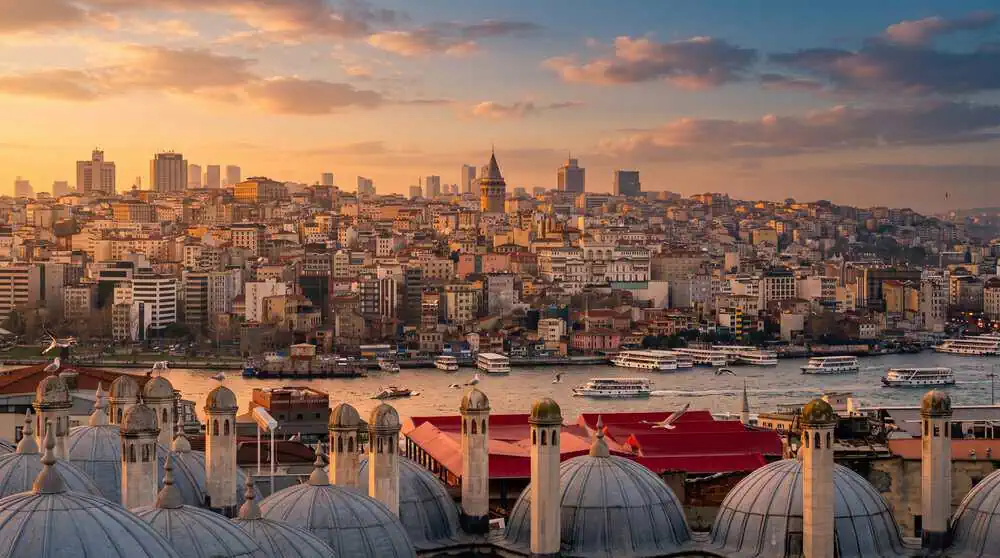
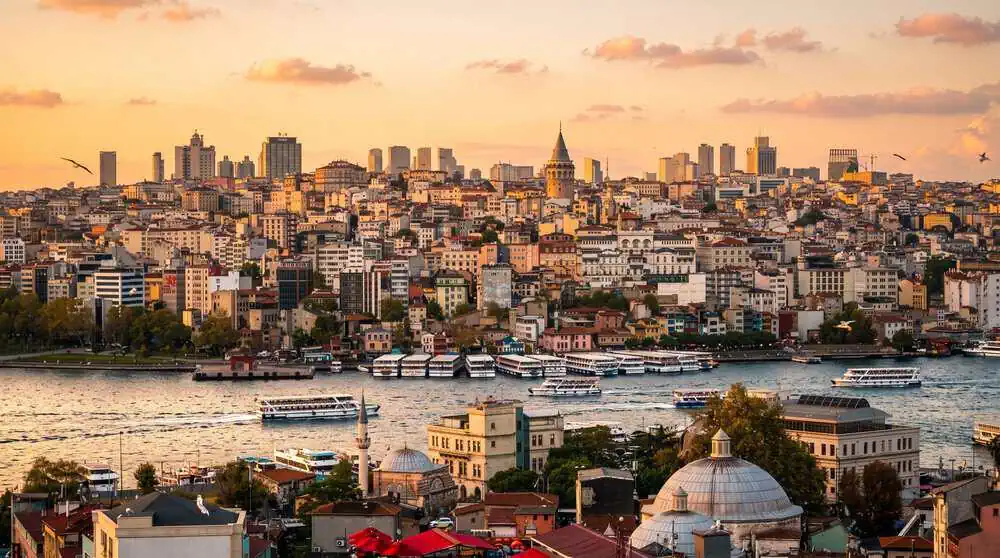
Istanbul was built across seven hills on the historic peninsula alone, and that’s before you count the ridges of Beyoğlu, Çamlıca, or the Bosphorus villages. The result: the city doesn’t have one skyline, it has dozens of them, stacked and overlapping. Climb up in Galata and you’re staring down into the Golden Horn. Climb up in Sultanahmet and you’re eye-level with a 1,500-year-old dome. Same city, completely different view — which is exactly why “best rooftop” in Istanbul depends entirely on which neighborhood you’re standing in.

The View That Stops You in Your Tracks — Bosphorus, Minarets & Two Continents
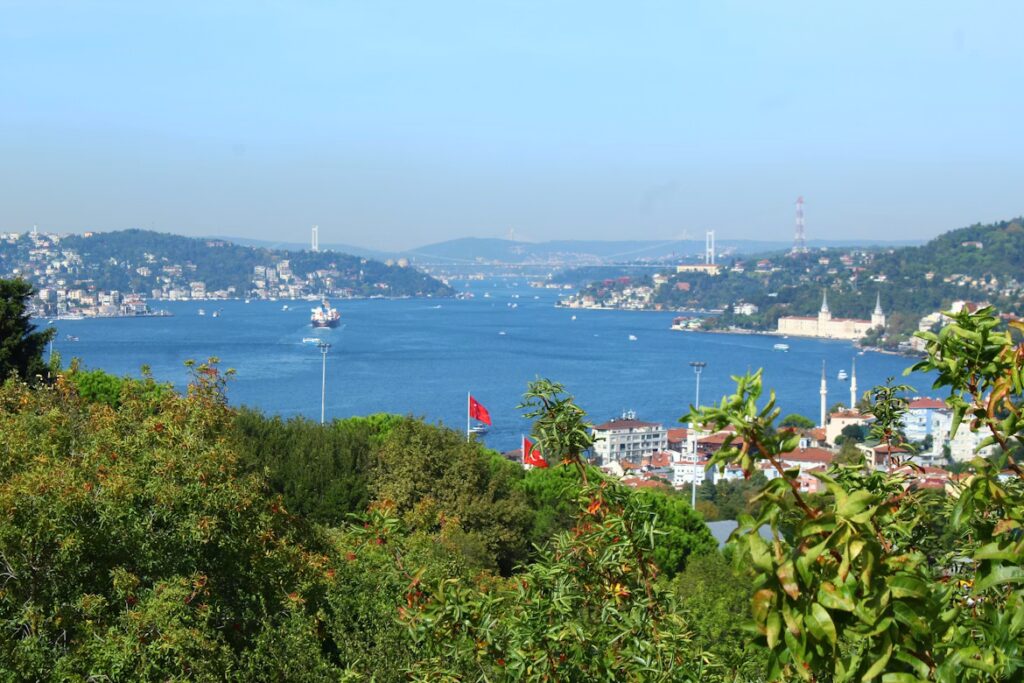
Here’s the thing that genuinely doesn’t exist anywhere else: you can be on one continent, drink in hand, watching the sun set over the other one. From the right rooftop, you get the Bosphorus traffic — container ships, ferries, the odd mega-yacht — the modern suspension bridges lit up at night, and minaret silhouettes cutting into the skyline behind it all. It sounds like a postcard cliché until you’re actually looking at it, and then it just… works.
Rooftop Culture in Istanbul — More Than Just a Pretty Backdrop
Rooftops aren’t a tourist invention bolted onto the city — they’re how Istanbul deals with itself. Summers here get hot and the streets get loud, so people go up. That covers everything from students playing backgammon at a plastic-chair tea garden to a table at a Michelin-recognized restaurant. The price tag changes; the impulse to get above the noise doesn’t.
How to Use This Guide — Categories, Neighborhoods & What to Expect
This guide is organized by neighborhood and by budget, because those are the two questions that actually matter: where do you want the view from, and what are you willing to spend to get it? You’ll find everything from a $2 tea with a Bosphorus view to a $150-a-head tasting menu above the Golden Horn. Each entry includes honest pricing, dress code expectations, and — where it matters — whether it’s worth fighting the crowds for.
Understanding Istanbul’s Rooftop Scene — A 2026 Overview
How the Istanbul Rooftop Scene Has Evolved
Ten years ago, an Istanbul rooftop meant plastic chairs, a view, and maybe a heat lamp if you were lucky. That’s changed fast. Rooftop venues across the city now come with full opening-hours listings, dress codes, and booking links as standard — the scene has professionalized into something closer to what you’d expect in London or New York, minus the London or New York prices (mostly).
Hotel Rooftops vs Standalone Rooftop Venues — Key Differences
Hotel rooftops — think The Marmara Pera, Soho House, the Ritz-Carlton — tend to mean better service, a stricter dress code, and a bill to match. Soho House Istanbul’s rooftop overlooks the Bosphorus and Golden Horn and comes with the polish you’d expect from a members’ club, though non-members can still get in for a meal.
Standalone venues in Beyoğlu, Karaköy, or Kadıköy are a different animal: louder, more local, less choreographed. You’re less likely to be handed a laminated wine list and more likely to end up talking to the table next to you.
Rooftop Bars vs Rooftop Restaurants vs Rooftop Cafés
- Bars: Cocktails, DJ sets, sunset crowds. Standing room is common; reservations matter more for a table than for entry.
- Restaurants: Sit-down dining, often requiring reservations days or weeks out, especially for terrace seating specifically (an indoor table is usually easier to get).
- Cafés: No alcohol, all tea and coffee, and by far the cheapest way to get a view — this is where you go if the $18 cocktail isn’t the point.
Seasonal Rooftop Culture — When Do They Open and Close?
Here’s the honest version: most rooftop bars in Istanbul still operate seasonally, roughly spring through autumn. What’s changed is that a growing number of the bigger hotel and fine-dining rooftops have added retractable glass enclosures and industrial heaters specifically so they don’t have to close for winter — Mikla, 360, and several Bosphorus-facing hotel terraces fall into that category. But don’t assume every rooftop on this list is open in January; plenty of the smaller, cheaper, more local spots still pack up around October and reopen in spring. If a specific date matters to your trip, it’s worth checking the venue directly rather than assuming.
The genuinely open-air, no-jacket-needed season is still June through September.
Dress Codes, Reservations & What to Know Before You Go
“Smart casual” is the baseline at most mid-to-high-end Beyoğlu and Bosphorus rooftops — no flip-flops, no gym wear. At the top end it tightens further: Mikla’s dress code is described as “smart and elegant”, and the restaurant explicitly bars sportswear and slippers.
On timing — Mikla recommends booking one to two weeks ahead for weekdays and two to three weeks ahead for weekend tables, which is a useful benchmark for the city’s other reservation-only fine-dining rooftops too. For sunset-specific tables in peak summer, push that earlier if you can.
Practical Rooftop Guide — Everything You Need to Know
How Much Do Istanbul Rooftop Bars & Restaurants Cost?
At today’s rate of roughly 47 TRY to the dollar, here’s how the budget tiers break down in practice:
Budget Rooftop Options — Under 200 TRY (~$4-5)
Traditional tea gardens, municipality-run Sosyal Tesisleri facilities, and basic hostel rooftops in Sultanahmet all fall in this range for a simple tea or coffee.
Mid-Range Rooftop Spending — What to Expect
A cocktail at a trendy Galata or Kadıköy rooftop runs roughly $12-18 (around 560-850 TRY) — broadly in line with Western European city prices.
High-End Rooftop Fine Dining — Worth the Investment?
Dinner at Mikla or Ulus 29 runs well over $100-150 per person (roughly 4,700-7,050 TRY). If world-class technique and an unbeatable view together are what you’re after, it earns the price tag — just don’t expect it to feel like a bargain by local standards.
Reservations — When You Absolutely Must Book Ahead
The general rule from earlier sections holds: for a prime sunset table at any of the “Iconic” venues, book at least a week out — though as covered specifically, Mikla wants 1-3 weeks and 360 is often fine with just a few days’ notice. When in doubt, book earlier rather than later.
Dress Codes Across Istanbul’s Rooftop Venues
Sultanahmet cafés
Casual — nothing off-limits beyond basic modesty near the mosques


Beyoğlu/Galata bars
Smart casual — no flip-flops or gym wear
Bosphorus/luxury hotels
Dress to impress — collared shirts, elegant dresses, sportswear turned away

Best Days of the Week for Rooftop Visits
Tuesday and Wednesday consistently offer the best balance of atmosphere and availability — you’ll skip the hour-long waits that build up by Friday and Saturday night.
Avoiding Tourist-Trap Rooftops — Red Flags to Watch For
Be wary of venues where street touts are actively trying to pull you in — that alone is a signal. A laminated menu with faded food photos on the street rarely improves once you’re upstairs, regardless of the view.
Accessibility — Which Rooftops Are Elevator-Accessible?
Major hotel rooftops and high-end venues (Mikla, 360) are fully elevator-accessible. Many historic boutique spots in Galata and Sultanahmet, by contrast, require several flights of narrow, steep stairs — worth checking ahead if that’s a concern.
The Ultimate Istanbul Rooftop Itinerary — A Three-Day View Chase
Day One — Old City Rooftops: Sunrise to Sunset in Sultanahmet
Morning: Sunrise Turkish breakfast (serpme kahvaltı) on a Sultanahmet hotel terrace, before the crowds arrive.
Afternoon: Ferry to Eyüp, then the cable car up to Pierre Loti for tea — go on a weekday if you can, since weekend queues get long.
Evening: Dinner at Seven Hills Restaurant, watching the Blue Mosque light up against the dusk sky.
Day Two — Beyoğlu & Galata: The Golden Horn Rooftop Loop
Afternoon: Coffee at a rooftop café near the Galata Tower.
Sunset: Cocktails at Mikla Bar, overlooking the historical peninsula.
Night: Dinner at 360 Istanbul, staying on as it shifts into its late-night club mode.
Day Three — Bosphorus & Asian Side: Two Continents From Above
Morning: Brunch on a Karaköy rooftop.
Afternoon: Ferry to Kadıköy; craft beers on a Moda terrace, looking back at the European skyline.
Evening: Dinner at an upscale Bosphorus rooftop in Ortaköy or Kuruçeşme, close enough to the bridge to feel like you’re sitting underneath it.
Conclusion — Istanbul’s Rooftops Are Where the City Reveals Its Soul
Walking Istanbul’s streets gives you the city’s chaotic, beautiful energy at ground level. Step onto a rooftop, and that same chaos resolves into something legible — hills, waterways, domes, and bridges arranging themselves into a single, coherent view. Whether you’re nursing a $2 glass of tea at a municipal tea garden or a $20 cocktail forty floors up, seeing Istanbul from above isn’t an optional add-on to a trip here. It’s close to the whole point.