Best Time to Visit Istanbul: Weather, Seasons & Packing Guide
Timing Your Istanbul Trip Changes Everything
Istanbul isn’t a city you just show up to whenever your schedule allows — it’s a city that rewards timing. Get it right, and you’re wandering tulip-filled parks with light glinting off the Bosphorus. Get it wrong, and you’re sweating through your shirt at Hagia Sophia, wedged between two tour groups, paying peak-season prices for the privilege.
The city genuinely transforms with the calendar — different light, different crowds, different smells drifting out of the market stalls. The good news: there’s no truly “bad” time to visit. There’s just a best time for you, and that depends on what you’re chasing.

A City That Transforms Completely With Each Season
Spring Istanbul smells like tulips and fresh bread from corner simit carts. Summer Istanbul buzzes with rooftop parties and ferry crowds. Autumn Istanbul glows amber and copper, with chestnut vendors appearing overnight on every corner. Winter Istanbul is quiet, moody, and genuinely atmospheric — especially when snow dusts the minarets.
Each version is real, and each is worth visiting. The question is which one matches your travel style, your budget, and what you want to feel when you land — whether that’s at Istanbul Airport (IST) on the European side, the city’s main international hub, or Sabiha Gökçen (SAW) on the Asian side, which tends to work better if you’re staying in Kadıköy or heading straight across the bridge.
The Four Very Different Istanbuls You Could Experience
Think of it this way: Istanbul in April is like a garden party — easy, colorful, energetic, effortlessly charming. Istanbul in July is that same gathering moved to a packed rooftop club — still incredible, but you’ll need more patience and a higher heat tolerance. Istanbul in October is a quiet dinner with an old friend. Istanbul in January is a solo walk through an empty museum where every painting is yours alone.
None of these is wrong. They’re just different trips.
What Kind of Traveler Are You — And When Should You Go?
A few honest questions to ask yourself:
- Do you melt in heat? Avoid July and August.
- Do you hate crowds more than cold? January is your answer.
- Obsessed with food culture and seasonal markets? October.
- Traveling with kids who need comfortable weather and open attractions? April or May.
- On a shoestring budget? January through February.
- Here for rooftop cocktails and Bosphorus sunsets? June or September.
This guide breaks it all down season by season, month by month — weather, crowds, prices, events, and exactly what to pack for each.
Istanbul’s Climate — Understanding the Big Picture
Where Istanbul Sits Geographically & Why It Matters
Istanbul straddles two continents, and that geographic oddity shapes everything about how it feels to be there. The city sits at roughly 41°N latitude — about the same as Madrid or New York. But don’t let the latitude fool you into expecting a single, predictable climate: Istanbul sits in a genuine transition zone, pulled between Mediterranean, oceanic, and continental influences depending on the season and which way the wind is blowing.
What that means practically: you get four real seasons here, not the mild, near-flat temperature curve you’d find in a classic Mediterranean city like Athens or Barcelona. Summers run hot and mostly dry, winters are cool and frequently rainy with occasional snow, and the shoulder seasons swing noticeably. One quirk worth knowing before you pack: in many years, March is colder than December — the season lags behind the calendar here, so “spring” on paper doesn’t always mean spring on the ground.

The Four Distinct Seasons of Istanbul
- Spring (March–May): Arrives slowly, building from chilly and wet in March to warm and glorious in May.
- Summer (June–August): Long, hot, and mostly dry — peak tourist season by a wide margin.
- Autumn (September–November): Arguably the city’s best-kept secret — warm in September, golden in October, quiet by November.
- Winter (December–February): Cold, frequently rainy, and genuinely underrated by most travelers.
The Bosphorus Effect
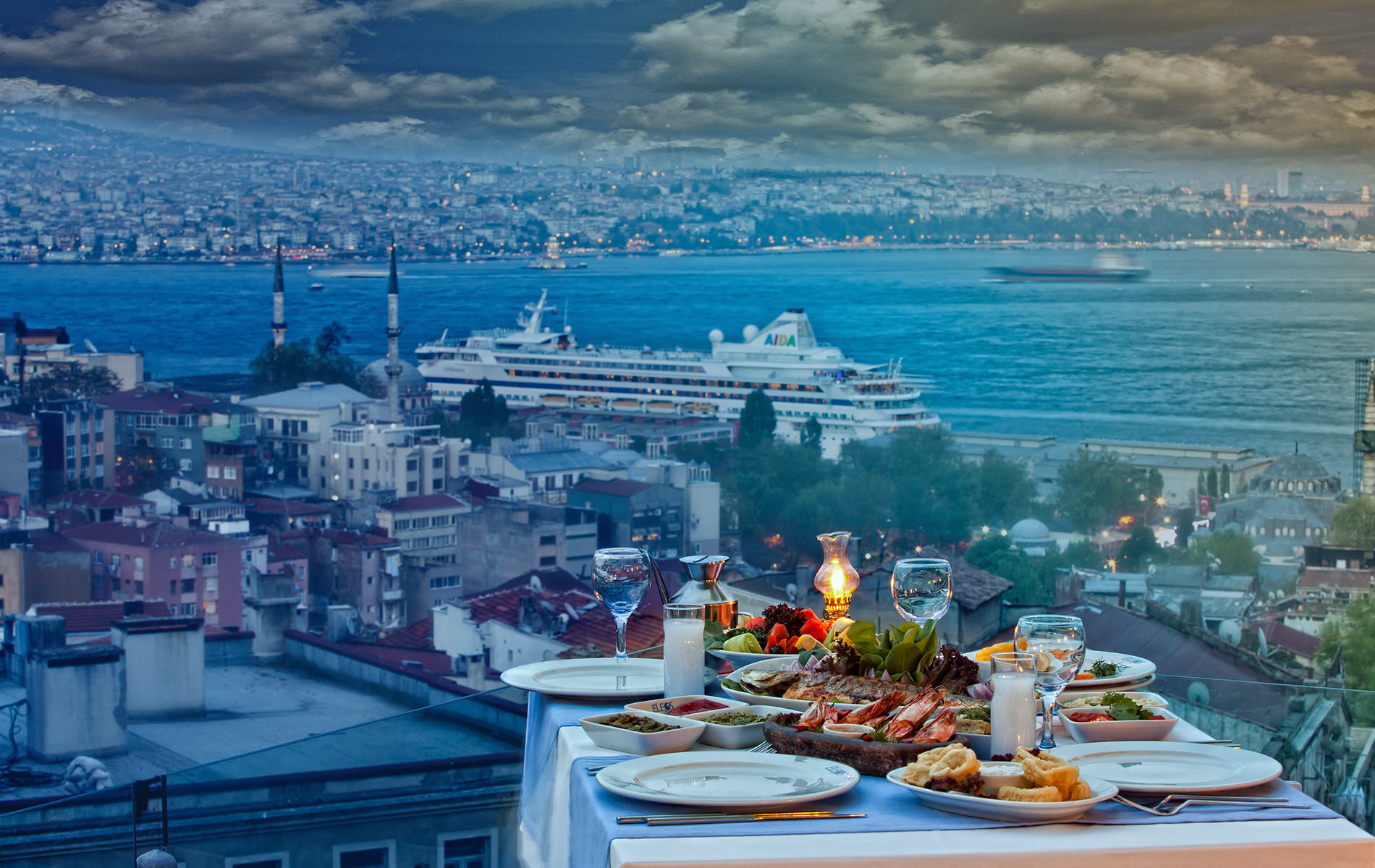
The Bosphorus Strait doesn’t just divide Europe from Asia — it creates a microclimate that shapes the whole city. The water moderates temperatures, keeping summers slightly cooler than inland Turkey and winters slightly milder than you’d expect at this latitude. It also drives sharp, sudden wind shifts, especially in autumn and winter. When the lodos (a southwest wind) blows in, it brings warm, damp air. When the poyraz (a northeast wind off the Black Sea) sweeps down, temperatures can drop within hours. If a day feels unexpectedly raw or unexpectedly mild, the wind direction is usually why.
The Two Sides of Istanbul
The European and Asian sides experience essentially the same weather — the differences are negligible, maybe a degree or two, with slight humidity variation depending on proximity to the water. Elevation matters more than which continent you’re on: neighborhoods on hills, like Beyoğlu and Fatih, tend to feel windier and slightly cooler than low-lying waterfront areas.
Sample Seasonal Itineraries for Istanbul
The Perfect Spring Week in Istanbul — April Itinerary
- Day 1: Arrive, settle into Beyoğlu, evening walk along İstiklal Avenue.
- Day 2: Sultanahmet in the morning — Hagia Sophia, Blue Mosque — before the crowds build.
- Day 3: Emirgan Park for the Tulip Festival at sunrise, then the Bosphorus shore.
- Day 4: Topkapı Palace and the Archaeological Museum.
- Day 5: Ferry to the Asian side — Kadıköy market and the Moda neighborhood.
- Day 6: Grand Bazaar and Spice Bazaar, evening dinner in Karaköy.
- Day 7: Bosphorus cruise, final evening rooftop drinks.

The Ideal Autumn Istanbul Trip — October Itinerary
- Day 1: Arrive, walk Galata and Beyoğlu at golden hour.
- Day 2: Sultanahmet with the October light for photography.
- Day 3: Drive north along the Bosphorus to Rumeli Fortress and the fishing villages.
- Day 4: Chora Church (Kariye) for its Byzantine mosaics, followed by the Archaeological Museum — check İKSV’s calendar in advance in case Biennial programming happens to coincide with your visit.
- Day 5: Asian side deep dive — Üsküdar, Bağlarbaşı, Moda.
- Day 6: Grand Bazaar, Kapalıçarşı, hamam afternoon.
- Day 7: Princes’ Islands ferry — one of the last full-schedule weekends of the season.
The Winter Istanbul Experience — January Itinerary
- Day 1: Arrive into the near-empty city. Check into a hotel at a fraction of summer price.
- Day 2: Hagia Sophia without the queue — spend two hours instead of twenty minutes.
- Day 3: Topkapı Palace in the cold and quiet.
- Day 4: Basilica Cistern, then warm up in a traditional hamam.
- Day 5: Grand Bazaar at a leisurely pace, sahlep from a street vendor.
- Day 6: Ferry along the Bosphorus watching the city in winter light.
- Day 7: Final meyhane dinner with rakı and hamsi — the quintessential Istanbul winter experience.
Conclusion
Istanbul is one of those rare cities that genuinely rewards you in every season — just differently depending on when you arrive. Spring brings tulips and perfect light. Summer brings energy and heat in equal measure. Autumn brings gold, quiet, and extraordinary food. Winter brings solitude, value, and the city at its most authentically itself.
Weighing comfortable temperatures, lower crowds, extraordinary light, and Istanbul’s best food season together, October stands out as the strongest single all-around recommendation for most travelers. April runs a close second, especially for first-time visitors who want the full visual impact of the city in bloom.
But the honest bottom line is this: any month in Istanbul beats most months almost anywhere else. Book the trip — the city will take care of the rest.