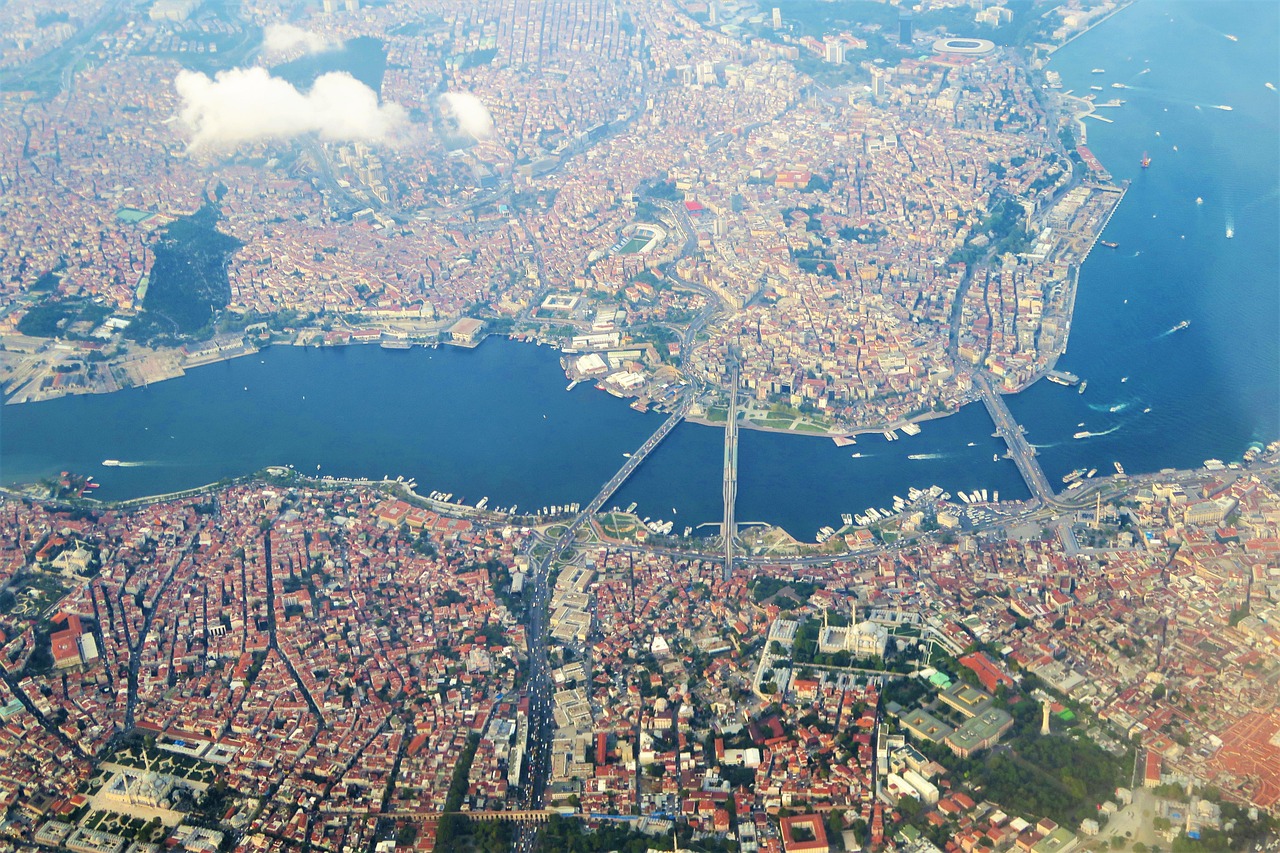
Navigating a megalopolis of 16 million people starts the second you step off the plane. As of 2026, Istanbul’s arrival infrastructure is faster and more connected than ever.
The biggest game-changers? The fully operational M11 and M4 metro lines now link both international airports directly to the city center, completely bypassing Istanbul’s notorious surface traffic.
Istanbul is the only city in the world straddling two continents — 97% of Turkey’s landmass is in Asia, but Istanbul’s historic core sits in Europe, separated from its Asian districts by the 31-km Bosphorus Strait. The city has been a continuously inhabited capital for over 1,600 years: as Constantinople under the Byzantine Empire (330–1453 CE), then as the seat of the Ottoman Empire until 1922. That layered history is visible and walkable — within a 2 km radius in Sultanahmet, you can stand inside a 6th-century cathedral-turned-mosque-turned-museum (Hagia Sophia), a 4th-century Roman hippodrome, and a 16th-century Ottoman market still operating as a commercial bazaar (the Grand Bazaar, with ~4,000 shops).
Whether you are heading to the historical core of Sultanahmet or the trendy cafes of Kadıköy, here is your strict, no-nonsense guide to clearing customs, securing your transit cards, and choosing the right transport to your hotel.
What Makes 2026 a Great Year to Visit Istanbul
Navigating a megalopolis of 16 million people starts the second you step off the plane. As of 2026, Istanbul’s arrival infrastructure is faster and more connected than ever. The biggest game-changers? The fully operational M11 and M4 metro lines now link both international airports directly to the city center, completely bypassing Istanbul’s notorious surface traffic.
Restoration work in Sultanahmet — including scaffolding removal from sections of the Topkapı Palace outer walls and the Blue Mosque’s interior — has progressed significantly, though always verify current site access before visiting, as Ottoman-era restorations run on unpredictable timelines.
Understanding Istanbul’s Two International Airports
Istanbul is served by two massive hubs situated on opposite sides of the Bosphorus. Booking the wrong one can easily add two hours and heavy taxi fares to your first day.
| Feature | Istanbul Airport (IST) | Sabiha Gökçen (SAW) |
| Location | European Side (near Black Sea) | Asian Side |
| Best For | Stays in Sultanahmet, Taksim, Galata | Stays in Kadıköy, Moda, Domestic transfers |
| Primary Airlines | Turkish Airlines, major international carriers | Pegasus Airlines, European budget carriers |
| Vibe & Scale | Massive, premium, requires heavy walking | Compact, high-turnover, highly efficient |
| Metro Link | M11 Line | M4 Line |
Istanbul Airport (IST) — The New Giant of Europe
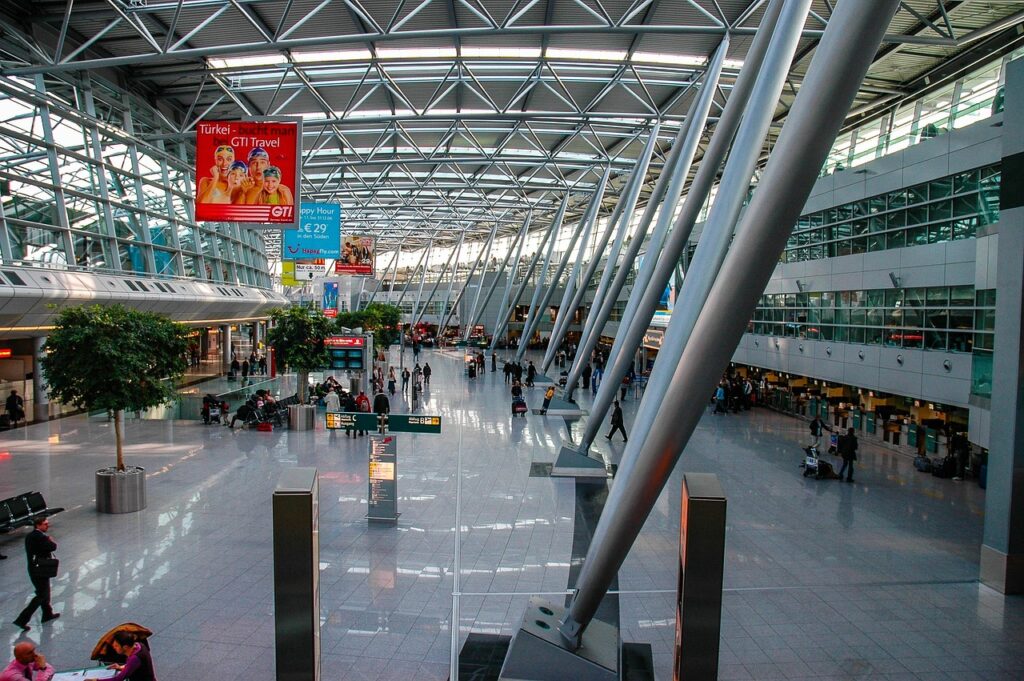
Istanbul Airport (IST, IATA: IST) opened in 2018 and is located 35 km northwest of the city centre on the European side, near Arnavutköy. It is the primary hub for Turkish Airlines and handles over 80 million passengers annually, making it consistently one of the five busiest airports in Europe. The terminal is a single structure spanning approximately 1.4 million m² — the world’s largest airport terminal under one roof. Practical consequence: the walk from a remote gate to passport control can exceed 1.5 km. If you have mobility issues or a tight connection, request a buggy transfer from your gate crew.
Sabiha Gökçen Airport (SAW) — The Asian Side Alternative
Sabiha Gökçen (SAW, IATA: SAW) sits 45 km southeast of central Istanbul on the Asian side, near Pendik. It handles around 35 million passengers per year. Primary carriers: Pegasus Airlines (Turkish LCC, hub here), SunExpress, Ryanair, easyJet, and Wizz Air. Note the distance: SAW is actually further from most European-side tourist districts than IST, despite being the “secondary” airport — factor this into your accommodation planning.
IST vs SAW: Which Airport Should You Fly Into?
Choosing between IST and SAW usually comes down to your airline and budget, but if you have the option, consider your accommodation location.
- Fly into IST if: You are staying on the European side (Sultanahmet, Taksim, Galata), flying a major international carrier, or want the most premium airport experience.
- Fly into SAW if: You are flying on a budget airline, staying on the Asian side (Kadıköy, Moda), or heading straight to other Turkish cities via domestic flights.
| IST | SAW | |
|---|---|---|
| Distance to Taksim | 35 km | 55 km |
| Metro to city centre | ~35 min to Gayrettepe | ~75 min (M4 + Marmaray) |
| Best for | European-side stays, premium carriers | Budget airlines, Asian-side stays |
| 24hr transport? | Metro: No. Bus: Yes | Metro: No. Bus: Yes |
Landing at Istanbul Airport (IST): Your Step-by-Step Arrival
Immigration and Passport Control at IST
After disembarking, follow “Pasaport Kontrolü” signs. Depending on your gate, the walk to passport control is 15–25 minutes on foot across IST’s vast single terminal — longer if you arrive at a remote pier. The hall operates multiple lane types:
- Turkish Citizens — far left banks
- e-Visa / Visa-Free (non-EU) — central lanes, staffed booths
- e-Gate lanes — available to holders of biometric passports from select countries (EU, UK, USA as of 2025; check current eligibility on arrival as this list expands)
- Diplomats / Crew — far right
Peak congestion windows: 05:00–09:00 (overnight long-haul banks) and 19:00–23:00 (evening European arrivals). During these windows, budget 40–60 minutes at immigration, not 20–40. Off-peak (10:00–15:00): typically 10–20 minutes.
Have ready: Passport + printed or screen-displayed e-Visa. Officers do ask you to display it — do not assume they pull it from a database.
Free Airport Wi-Fi: Before heading to baggage claim, find a blue Wi-Fi kiosk. Scan your passport on the machine to receive a printed slip with a unique PIN code. This grants you 1 hour of free internet access to notify your hotel or book a ride.
Baggage Claim and Customs Clearance
Check the overhead digital displays immediately after immigration — they list flight numbers against carousel numbers. IST has 30+ carousels across a large hall; finding the right one quickly saves time.
Luggage trolleys are available at no cost at IST — no deposit required (this changed with terminal upgrades; the deposit system described in older guides applied to the original terminal). If you cannot find a free trolley near your carousel, check the trolley bays 20–30 metres toward the exits.
Customs (Green vs Red Channel):
- Red Channel (Goods to Declare): Use this if carrying commercial quantities of goods, more than €430 worth of purchases (air travellers), or more than the tobacco/alcohol allowances (detailed in the Customs section below).
- Green Channel (Nothing to Declare): For travellers within duty-free limits. Random x-ray screening does occur — approximately 1 in 10 bags is pulled.
Airport Facilities, Lounges & First Hours in Terminal
Exiting customs, you enter IST’s arrivals hall (Level 1, “Geliş” floor). Key infrastructure, left to right as you exit:
ATMs:
Ziraat Bankası and Garanti BBVA machines are within 50m of the customs exit. Use these — avoid the currency exchange booths immediately adjacent, which charge 3–5% commission above interbank rates.
Left luggage (Emanet):
Available 24/7 near the arrivals hall exits, priced per bag per day. Useful if you have a long wait before hotel check-in.
SIM card kiosks:
Turkcell, Vodafone, and Türk Telekom counters are open 24/7, roughly 80m from customs exit toward the main hall.
Istanbulkart machines (Biletmatik):
Located near the escalators to the M11 metro level (Level B2). Buy and top up here before heading to transport.
Landing at Sabiha Gökçen (SAW): What to Expect
Arrivals Hall and Immigration Process at SAW
SAW operates from a single terminal with a compact footprint — gate to immigration is typically a 5–10 minute walk, a stark contrast to IST. However, compact space creates its own problem: the passport control hall has fewer booths than IST, and when three or four budget flights land simultaneously (common between 06:00–10:00 and 14:00–18:00, when Ryanair, easyJet, and Pegasus bank their arrivals), queues can back up significantly — 30–50 minutes is realistic during these windows.
There are no e-Gate lanes at SAW as of 2025/2026 — all foreign nationals queue for staffed booths regardless of passport type.
Baggage and customs at SAW: Carousels are immediately accessible after immigration — no long hall to cross. The customs exit leads directly into the arrivals forecourt, making SAW unusually efficient once you clear the immigration bottleneck.
Arrivals hall essentials at SAW:
- Taxi rank: immediately outside, metered, officially regulated — marked with orange signage
- ATMs: available immediately post-customs (Ziraat, QNB Finansbank)
- SIM kiosks: all three major carriers present, open during peak hours (verify 24/7 availability — SAW kiosks have inconsistent overnight staffing)
- Havabüs ticket counters: just outside the exit doors, accepts cash (TRY) and card
Getting from the Airport into Istanbul City Center
Istanbul Airport (IST) Transport Options
Metro Line M11 — Fast, Cheap & Reliable
The M11 metro line runs directly from IST’s basement (Level B2, follow “Metro” signs from the arrivals hall — allow 10 minutes to reach the platform from customs exit) to Gayrettepe on the M2 trunk line.
Key facts:
- Journey time IST → Gayrettepe: 35–38 minutes (6 stops, no changes)
- Operating hours: 06:00–00:00 daily. No overnight service — if you land between midnight and 06:00, you must take a bus or taxi.
- Frequency: Every 8–10 minutes peak, every 12–15 minutes off-peak
- Fare: Paid via Istanbulkart (contactless top-up card) or single-use token. Do not quote TRY figures — Istanbul transit fares are adjusted frequently due to inflation. Check current fares at iett.istanbul or on the Istanbulkart app before travel. As a reference frame: in mid-2025, a single metro journey cost approximately €0.30–0.40 at prevailing exchange rates — among the cheapest rapid transit fares in Europe.
- Onward connections from Gayrettepe:
- M2 north → Levent, Maslak (business district)
- M2 south → Şişli, Osmanbey, Taksim (3 stops, ~6 min)
- At Taksim: transfer to F1 funicular → Kabataş, then T1 tram → Sultanahmet (total IST → Sultanahmet: ~55–65 minutes, door to door)
For European-side destinations, the M11 is the default choice. Fast, air-conditioned, no traffic risk.
Havaş Airport Bus Routes
The official airport bus operator from IST is Havaist (not “Havaş” — that name belongs to the SAW operator, a separate company; confusing them leads to booking errors).
Key Havaist routes from IST (2025/2026):
| Route | Destination | Approx. Journey | Runs Overnight? |
|---|---|---|---|
| HAV-1 | Taksim | 60–90 min | Yes |
| HAV-4 | Sultanahmet | 75–100 min | Yes |
| HAV-7 | Beşiktaş | 60–80 min | Yes |
| HAV-11 | Kadıköy (Asian side) | 90–120 min | No |
Best use case: Overnight arrivals (metro not running), travellers with heavy luggage who want a direct drop at their neighbourhood, or those staying near Sultanahmet where the metro requires multiple transfers.
Tickets: Purchase at the Havaist counter in arrivals, via the Havaist app, or tap an Istanbulkart on boarding (where available)
Frequency: Every 30 minutes on major routes; reduced overnight
Traffic reality: Istanbul’s O-7 motorway connecting the airport to the city is heavily congested during 07:00–10:00 and 17:00–20:00. A journey quoted at 60 minutes can become 100+ minutes during these windows. If time matters, use the metro.
Taxi, Uber & Private Transfers from IST
Official taxis at IST are dispatched from a managed rank outside arrivals (exit doors 6–9 on the ground floor). Three tiers:
- Yellow (Sarı): Standard metered fare. IST to Taksim runs approximately 400–550 TRY in normal traffic (mid-2025 baseline; verify current meter rates on the Istanbul Taksi app or ask your hotel)
- Blue (Mavi/Comfort): Larger vehicles, slightly higher tariff
- Black (Siyah/Premium): Executive vehicles, fixed-rate negotiation or meter
Uber operates in Istanbul using the local licensed taxi fleet — not private drivers. The app provides price estimates and cashless payment, which is its main advantage over hailing a taxi directly. Surge pricing applies during peak hours.
BiTaksi (local equivalent of Uber, widely used by Istanbul residents): often has better availability than Uber during airport rush periods. Download before landing.
Private transfers: Pre-booked airport transfers via services like GetTransfer, Welcome Pickups, or your hotel’s own service eliminate meter anxiety entirely and are worth the 20–30% premium for first-time visitors or late-night arrivals. Confirm the driver has a name board at arrivals before approaching.
Never approach touts inside the terminal or in the arrivals hall offering rides. Use only the official outdoor taxi rank or a booked app.
Sabiha Gökçen (SAW) Transport Options
Havaş Buses from SAW to City Center
SAW has no direct metro station. The rail connection requires a free shuttle bus from the terminal to Sabiha Gökçen Metro Station, where the M4 line departs.
Full route SAW → European side by rail:
- Shuttle bus (SAW terminal → Sabiha Gökçen M4 station): 10–15 minutes, free, runs frequently
- M4 metro (Sabiha Gökçen → Kadıköy): ~30 minutes
- Marmaray commuter rail (Kadıköy → Sirkeci/Üsküdar): crosses under the Bosphorus in approximately 4 minutes; continues to Sirkeci (Old City/Sultanahmet area) or Yenikapı
- Total journey SAW → Sultanahmet area: 75–95 minutes under normal conditions
Important: The Marmaray runs from approximately 06:00–00:30, with reduced frequency late evening. Check the IETT journey planner for last departure times if you are arriving after 22:00.
If your destination is Kadıköy (Asian side): exit at Kadıköy from the M4 — total journey 45–55 minutes from terminal. SAW to Kadıköy is the single most efficient airport-to-district connection in Istanbul.
Havabüs (operated by Havaş, distinct from IST’s Havaist) runs coaches from SAW to two primary destinations:
| Route | Destination | Journey Time | Notes |
|---|---|---|---|
| SAW → Kadıköy | Kadıköy ferry terminal | 45–60 min | Best SAW bus option |
| SAW → Taksim | Taksim Square | 90–150 min | Traffic-dependent, can be very slow |
- Payment: Cash (TRY) or card at the driver/counter — confirm card acceptance before queuing, as this varies
- Frequency: Every 30–60 minutes depending on route and time of day
- Overnight: Limited service after midnight — check the Havabüs schedule at havas.net before relying on a late-night departure
Recommendation: For the European side from SAW, the M4 + Marmaray rail route is faster and more predictable than the Taksim bus in all but the lightest traffic conditions.
Taxi and Rideshare from SAW
Metered taxis from SAW are straightforward for Asian-side destinations. Key cost reality:
- SAW → Kadıköy: ~200–280 TRY (mid-2025), 30–45 minutes
- SAW → Taksim (European side): ~550–750 TRY, includes Bosphorus bridge toll (added to meter automatically) — confirm this before departure
- SAW → Sultanahmet: similar or higher than Taksim, depending on route
Uber and BiTaksi both operate at SAW.
How Long Does It Really Take to Reach the City?
| Route | Method | Off-Peak | Peak Traffic |
|---|---|---|---|
| IST → Taksim | M11 + M2 metro | 50–55 min | 50–55 min (unaffected) |
| IST → Taksim | Havaist bus | 65–80 min | 90–120 min |
| IST → Taksim | Taxi/Uber | 45–55 min | 75–110 min |
| IST → Sultanahmet | Metro + tram | 65–75 min | 65–75 min (unaffected) |
| SAW → Kadıköy | M4 metro | 45–55 min | 45–55 min (unaffected) |
| SAW → Kadıköy | Taxi | 30–45 min | 50–70 min |
| SAW → Taksim | M4 + Marmaray | 80–95 min | 80–95 min (unaffected) |
| SAW → Taksim | Havabüs | 90–120 min | 120–150 min |
| SAW → Sultanahmet | M4 + Marmaray | 85–100 min | 85–100 min |
Key insight missing from the original: Rail and metro are traffic-immune — their times are consistent at any hour. Buses and taxis are not. This single fact should drive most transport decisions.
Turkey Visa Guide for 2026 – Everything You Need to Know
Do You Need a Visa to Enter Turkey?
Turkey’s visa policy is subject to periodic revision based on bilateral agreements — always verify your specific nationality on the official portal (evisa.gov.tr) no more than 4–6 weeks before travel, as status can change between article publication and your departure date.
As of mid-2025, the general framework:
| Category | Examples | Entry terms |
|---|---|---|
| Visa-free | Germany, France, Netherlands, Spain, Japan, South Korea | 90 days within 180-day period, no prior action needed |
| e-Visa required | USA, UK, Australia, Canada, China, South Africa, India | Apply online before travel; see below |
| Sticker visa / embassy | Some African, Asian nationalities | Contact Turkish embassy in your country |
Note on USA and Canada: Both were placed on the e-Visa requirement list (not visa-free) following reciprocity adjustments in recent years. US and Canadian passport holders can obtain an e-Visa easily online, but they are not visa-free as of 2025. Confirm current status before booking.
The e-Visa System — How It Works in 2026
Step-by-Step: How to Apply for a Turkey e-Visa
How to apply — step by step:
- Go to evisa.gov.tr — the only official government portal. Dozens of third-party sites mimic this URL and charge service fees on top of the official cost; they are unnecessary.
- Select your nationality and passport type
- Enter travel dates (your intended entry date and intended exit date)
- Pay by credit or debit card — Visa, Mastercard, UnionPay accepted. Some cards are declined; have a backup ready.
- Your e-Visa is emailed as a PDF. Print a copy or save offline — do not rely on mobile data at the border.
e-Visa Fees, Processing Time & Validity
Fee: $50–$60 USD for most nationalities (USA, UK, Australia, Canada in this range); lower for some nationalities — the portal shows the exact figure for your passport Validity: 180 days from issue date, multiple entry Maximum stay per visit: 30 days (USA, Australia, most) or 90 days (varies by nationality — check your specific e-Visa document) Processing time: Typically under 24 hours, often minutes. However, apply at least 72 hours before departure — payment failures, name mismatches, and rare portal outages do occur, and airlines will deny boarding without a valid e-Visa if your nationality requires one.
Visa on Arrival — Is It Still Available?
Turkey has largely phased out the physical “Visa on Arrival” kiosks at airports to reduce queuing, shifting entirely to the e-Visa system. Do not rely on getting a visa once you land; you must secure your e-Visa before boarding your flight.
Visa-Free Countries for Turkey in 2026
As of 2026, passport holders from the USA, Canada, UK, Germany, France, Italy, and over 70 other nations can enter Turkey visa-free for tourism purposes, usually for up to 90 days within a 180-day period.
Common e-Visa mistakes
- Name entered differently from passport (middle names, hyphenated surnames) — must match exactly
- Travel dates entered incorrectly — the e-Visa must cover your actual entry date
- Paying on a third-party site — unnecessary fees, same result
Long-Stay Visas and Tourist Extension Options
If you need to stay beyond your tourist allowance (30 or 90 days depending on visa type):
“Visa run” reality: Exiting and re-entering Turkey on the same day to reset your tourist period is increasingly scrutinised at borders and is not a reliable long-term strategy. Border officers have discretion to deny re-entry if they judge you are using short trips to extend an effective residence.
Short-Term Residence Permit (Kısa Dönem İkamet İzni): Applied for online via the e-ikamet system (e-ikamet.goc.gov.tr). Apply before your current permitted stay expires — overstaying triggers fines and can affect future entry. Required documents typically include: passport, rental contract or hotel booking, biometric photos, and proof of sufficient funds. Processing takes 1–4 weeks; you receive a physical card by post.
Turkey Entry Requirements & Border Control in 2026
Passport Validity Rules You Must Know
Turkey’s official requirement is that your passport must be valid for the duration of your intended stay — there is no codified “60 days beyond visa expiry” rule in Turkish law itself. However, two separate requirements compound in practice:
1. Airline boarding rules: Most international carriers follow IATA’s Timatic database, which flags passports with less than 6 months validity from the date of travel as potentially problematic. Airlines can and do deny boarding based on this, regardless of what the destination country technically requires. This is the source of the “6 months” advice — it is an airline policy standard, not a Turkish legal requirement.
2. e-Visa issuance: The Turkish e-Visa system will reject your application if your passport expires before your intended exit date.
Practical rule: Ensure your passport is valid for at least 6 months from your date of entry. This covers both the airline and the e-Visa system with no edge cases. If your passport expires within 6 months, renew it before booking flights regardless of the technical minimum.
Additional check: Your passport must have at least one blank page for the entry stamp. Turkish border officers do stamp passports — this matters if you are a frequent traveller with a nearly full document.
Customs Regulations — What You Can and Cannot Bring
Turkey’s customs allowances for arriving international passengers (air travel):
Tobacco:
- 200 cigarettes or 100 cigarillos or 50 cigars or 250g pipe tobacco
- Note: The original article’s “600 cigarettes” figure is incorrect — that limit applied to a previous duty-free regime that was revised. The current limit is 200 cigarettes for standard import. An additional allowance can be purchased at Turkish duty-free shops on arrival, but this is a separate commercial transaction, not a personal import right.
Alcohol:
- 1 litre of spirits over 22% ABV or 2 litres under 22% ABV
- Additionally: up to 1 litre of spirits purchased at Turkish duty-free on arrival
Other goods:
- Personal goods and gifts up to €430 in value (air arrivals) without customs duty
- 600ml of perfume/cologne in opened bottles (personal use quantity)
- Personal electronics (laptop, camera, phone): no duty if clearly for personal use and not in commercial quantities — a single item of each type
- New goods in original packaging above the €430 threshold must be declared at the Red Channel — attempting to walk them through the Green Channel risks confiscation plus a fine
Prohibited and restricted items:
Archaeological artefacts: illegal to export from Turkey; buying “antiques” without a museum certificate is a serious criminal risk for the buyer
Narcotics: zero tolerance, severe criminal penalties
Weapons and ammunition: requires prior import permit from Turkish authorities
Fresh meat and dairy products from outside the EU: restricted
Counterfeit goods: confiscated and subject to fine
Drone regulations in Turkey are among the strictest in the region and apply to tourists without exception:
- Sub-500g drones (e.g. DJI Mini 3/4 series): Can be brought in and flown in designated open areas, but cannot be flown within 5 km of airports, over crowds, over government buildings, military installations, or in Istanbul’s historic peninsula (Sultanahmet) — which is effectively a no-fly zone for UAVs.
- 500g and above: Requires registration with the Directorate General of Civil Aviation (DGCA / SHGM) and an operator permit. The process is not tourist-friendly — it requires a Turkish tax number and local entity registration in most cases. Practically speaking: leave drones over 500g at home unless you have arranged permits in advance through a specialist aviation lawyer or tour operator.
- Flying over the Bosphorus bridges, Hagia Sophia, or Topkapı Palace: Prohibited regardless of drone weight. These are actively monitored. Confiscation and fines have been applied to tourists who ignored this.
- Carrying a drone through customs: Declare it. Attempting to bring in an unregistered 500g+ drone without declaration risks confiscation at the border.
Currency Declaration Rules at Turkish Customs
Bringing currency in: No legal limit on how much foreign currency or Turkish Lira you can import. No declaration required on entry unless you intend to export it above the threshold on exit.
Exporting currency on departure: You may take out a maximum of $5,000 USD equivalent in cash (any currency) without documentation. To export more than $5,000 USD equivalent, you must present a customs declaration certificate (Gümrük Beyannamesi) proving you declared the funds on arrival or obtained them through a traceable source (bank withdrawal receipts, exchange bureau receipts).
Practical implication: If you are carrying large amounts of cash — over $5,000 USD equivalent — for any reason, declare it at the Red Channel on arrival and obtain the stamped certificate. Without it, Turkish customs can confiscate the excess on your way out.
Turkish Lira export limit: A separate rule limits taking more than 5,000 TRY in physical banknotes out of Turkey — relevant if you have leftover lira at the end of your trip.
Health Requirements and Travel Insurance
Vaccinations: No vaccinations are legally required to enter Turkey for most nationalities. The WHO recommends standard travel vaccinations (Hepatitis A and B, typhoid) for travel to Turkey as general precaution — not entry requirements, but worth discussing with a travel health clinic 4–6 weeks before departure.
COVID-19: All pandemic-era entry restrictions have been lifted. No tests, certificates, or documentation required as of 2025.
Travel insurance: Not a legal entry requirement for standard tourist visas. However, consider two specific Turkey-relevant scenarios:
- Medical costs: Turkey has excellent private hospitals (particularly in Istanbul — American Hospital, Florence Nightingale, Medicana group), but costs for uninsured foreigners can be substantial. State hospitals are cheaper but language access is limited outside major cities.
- Earthquake risk: Turkey sits on active seismic fault lines — the 2023 Kahramanmaraş earthquakes (magnitude 7.8) were a reminder that this is a real consideration. Ensure your insurance covers natural disaster evacuation if you are travelling beyond Istanbul to southeastern or central regions.
Schengen-style insurance note: Turkey is not in the Schengen Area — standard Schengen travel insurance does not automatically cover Turkey. Check your policy explicitly lists Turkey as a covered territory.
Arrivals Admin — Istanbulkart, SIM Cards, Currency & Neighbourhoods
Getting Your Istanbulkart — The Must-Have Transit Card
The Istanbulkart is a contactless RFID smart card accepted on all Istanbul public transport: metro, tram, bus, ferry (İDO and Şehir Hatları), funicular, and nostalgic tram. It is significantly cheaper than single-use tokens on every journey.
Getting one at the airport:
- Available from Biletmatik machines (yellow or blue kiosks) at IST metro level (B2) and at the SAW metro shuttle stop
- Also available from vending windows in the arrivals hall at both airports
- Card cost: A one-time non-refundable card fee (around 100 TRY as of mid-2025 — check current price, as this is revised periodically) plus however much credit you load. Load at least 200–300 TRY for your first day if using metro, tram, and ferry.
- Card is reusable and rechargeable: Top up at any Biletmatik machine, IETT kiosks, or via the Istanbulkart app. Many convenience stores (especially near metro stations) also accept top-ups.
The Istanbulkart mobile app:
The app (available on iOS and Android, search “İstanbulkart”) allows you to register your physical card, check balance, top up via credit card, and in select stations pay via QR code. As of 2025, QR payment is available on an expanding but not universal set of metro gates and buses — carry the physical card as your primary method and use the app as a backup and balance tracker.
Transfer discount: One of the Istanbulkart’s most valuable features is its transfer discount system — making a connecting journey within 2 hours of your first tap costs significantly less than two separate fares. Plan transfers rather than separate trips to maximise this.
SIM Cards and Mobile Data at the Airport
Three carriers operate at both airports: Turkcell, Vodafone Turkey, and Türk Telekom. All have counters in arrivals halls, open 24/7 at IST (SAW overnight staffing varies).
Tourist SIM packages (approximate mid-2025 pricing):
| Carrier | Typical tourist package | Data | Validity | Approx. cost |
|---|---|---|---|---|
| Turkcell | Tourist SIM | 15–20 GB | 30 days | 350–500 TRY |
| Vodafone TR | Tourist SIM | 10–15 GB | 30 days | 300–450 TRY |
| Türk Telekom | Tourist SIM | 10 GB | 15 days | 250–350 TRY |
Prices at airport counters run 30–60% higher than identical packages sold in carrier stores in the city. If you can tolerate arriving without local data, buy your SIM from a Turkcell or Vodafone store in Taksim or Kadıköy the next morning.
Important registration requirement: Turkey requires all SIM cards to be registered to a passport. Airport staff do this on the spot — hand over your passport, they register it while you wait. Foreign phones used with a Turkish SIM for more than 120 days must be registered with the BTK (Information Technologies Authority) for a fee — not relevant for tourist visits but relevant for long stays.
eSIM option: If your phone supports eSIM (iPhone XS and later, most Android flagships from 2020 onwards), purchasing a Turkish eSIM from Airalo, Holafly, or Yesim before departure gives you data the moment you land with no airport counter queue. Typical cost: $8–15 USD for 5–10 GB valid 30 days — substantially cheaper than airport physical SIMs. Coverage uses local carrier networks (usually Turkcell or Vodafone) via roaming agreement. Voice calls are typically not included on eSIM tourist packages — use WhatsApp or similar.
Currency Exchange — Airport vs City
The Turkish Lira (TRY) is the only accepted currency for most local transactions, though some tourist-area businesses quote and accept EUR and USD — usually at poor rates for the customer.
ATMs at the airport (Bankamatik):
- Use ATMs belonging to major Turkish banks: Ziraat Bankası, Garanti BBVA, İş Bankası, Yapı Kredi. Avoid standalone “Euronet” or unbranded machines — these charge higher fees and typically offer worse conversion rates.
- When the ATM asks “Do you want to proceed with the guaranteed exchange rate?” (Dynamic Currency Conversion / DCC): always select “No” / “Decline conversion” / “Charge in TRY”. Accepting the ATM’s rate adds typically 3–8% above the interbank rate. Your home bank applies its own (usually better) rate when TRY is charged.
- ATM withdrawal fees: Most Turkish bank ATMs charge no fee to foreign cards for withdrawals, but your home bank may charge a foreign ATM fee (typically $2–5 per transaction). Withdraw enough to cover the first 24 hours in a single transaction to minimise this.
- How much to withdraw at the airport: Enough for transport (Istanbulkart top-up + possible taxi) and first-day incidentals — roughly 500–800 TRY is sufficient for most travellers. Do not withdraw large amounts at the airport.
Best rates in the city:
Istanbul’s licensed exchange bureaus (Döviz offices) offer rates close to interbank with minimal commission — consistently better than airport bureaus or hotel desks.
Best areas for competitive Döviz rates:
- Sirkeci (near the train station, Old City side)
- Kapalıçarşı / Grand Bazaar area (competitive, but tourist-facing — compare 2–3 booths)
- Kadıköy market area (Asian side, often the sharpest rates in the city)
- Karaköy (near Galata Bridge)
Never exchange at: Hotel front desks (worst rates in the city), airport exchange bureaus (second worst), or with street touts offering “special rates.”
First Night Neighborhoods: Where to Stay After Landing
This section deserves more substance — where you sleep your first night shapes your entire first impression of the city. A brief breakdown of the main options:
Sultanahmet (Old City / Fatih district)
- Walking distance to: Hagia Sophia, Blue Mosque, Topkapı Palace, Basilica Cistern, Grand Bazaar
- Character: Historic, tourist-dense, quieter at night than Beyoğlu
- Transport: T1 tram line runs through it; Marmaray stops at Sirkeci (5 min walk)
- Best for: First-timers who want maximum sightseeing efficiency
- Drawback: Restaurant quality is uneven in the immediate tourist core — eat 2–3 streets back from the main monuments
Beyoğlu — Taksim / Galata / Karaköy
- Walking distance to: İstiklal Avenue, Galata Tower, Karaköy waterfront, Pera neighbourhood
- Character: Istanbul’s cultural and nightlife spine — galleries, restaurants, rooftop bars, live music
- Transport: M2 metro to Taksim; F1 funicular to Kabataş; T1 tram accessible via funicular
- Best for: Travellers who want urban energy, a wide dining range, and a base for both European and Asian day trips
- Drawback: Taksim Square itself is heavily commercialised — stay 5–10 minutes’ walk south toward Galata or Cihangir for more authentic character
Kadıköy (Asian side)
- Walking distance to: Kadıköy market (moda pazarı), Moda coastline, Bağdat Avenue
- Character: Where Istanbul residents actually eat, drink, and shop — less tourist infrastructure but more authentic daily life
- Transport: Ferry to Eminönü/Karaköy (25 min, scenic, cheap); M4 metro
- Best for: Return visitors, those landing at SAW, slow travellers who want neighbourhood life over monument density
- Drawback: Longer transit to European-side major sights; fewer hotels at the budget end
Beşiktaş / Ortaköy
Best for: Visitors combining Istanbul with nearby day trips (Princes’ Islands ferry from nearby Kabataş)
Character: Upscale, Bosphorus-facing, younger professional crowd
Near: Dolmabahçe Palace, BJK stadium, Saturday market
Common Arrival Mistakes and How to Avoid Them
Booking the Wrong Airport
IST and SAW are 85 km apart by road — getting this wrong is not a minor inconvenience. A taxi between the two airports costs approximately 800–1,200 TRY (mid-2025) and takes 60–90 minutes in normal traffic, longer during peak hours. There is no direct public transport link between them.
Three specific scenarios where this mistake happens:
Return flight confusion: Some travellers stay near IST but booked their return on a budget carrier from SAW. Set a calendar reminder to verify departure airport 48 hours before your return flight.
Booking a connecting domestic flight: You land at IST on an international flight and your domestic connection to Cappadocia or Antalya departs from SAW. Turkish Airlines almost exclusively uses IST; Pegasus almost exclusively uses SAW. If you book one leg on each carrier, you have created a cross-city transfer — allow a minimum of 5–6 hours between flights, and treat it as two separate journeys with luggage reclaim and re-check in between. There is no inter-airport baggage transfer.
Split party arrivals: Group members arriving on different airlines at different airports is more common than it sounds when flights are booked separately. Confirm the airport code (IST or SAW) for every ticket individually.
Leaving Visa Applications Too Late
Two distinct errors to avoid:
Error A — Assuming visa-free status: Turkey’s bilateral agreements shift periodically. Nationalities that were visa-free two years ago may now require an e-Visa, and vice versa. Check evisa.gov.tr specifically — not travel blogs or forum posts, which may reflect outdated information.
Error B — Last-minute e-Visa application: Airlines check visa status during online check-in and at the boarding gate. If your e-Visa application hits a payment failure, a name mismatch, or a portal error at 05:30 when your flight boards at 06:15, you will be denied boarding. The e-Visa portal is a government system — it goes down for maintenance, payment gateways timeout, and PDFs occasionally fail to send. Apply at least 72 hours before departure. Print the PDF; do not rely on retrieving it from your email at the border.
Falling for Unofficial Taxi Scams
Istanbul taxi scams targeting airport arrivals are well-documented and take several specific forms — knowing them in advance removes the leverage:
The tout approach: Unlicensed drivers approach in the arrivals hall before you reach the exit. They will offer a “fixed price” that sounds reasonable but is typically 3–5x the metered rate. Rule: Never negotiate a ride inside the terminal. Walk to the official outdoor taxi rank.
The long route: A licensed metered taxi that takes a deliberately extended route, particularly at night when landmarks are unfamiliar. Counter: Before getting in, open Google Maps and tell the driver you are navigating. Most will immediately take the direct route. If a driver objects to you using navigation, exit the taxi.
The meter manipulation: Starting the meter on the night tariff (Tarife 2, 50% higher than day rate) during daytime hours. Counter: Day tariff (Tarife 1) applies 06:00–00:00; night tariff (Tarife 2) applies 00:00–06:00. Check which tariff number is displayed when the driver starts the meter. If Tarife 2 is running at 14:00, point it out immediately — most drivers will reset it.
The note switch: Handing back a smaller denomination bill claiming you gave them less. Counter: When paying, clearly state the denomination out loud — “Bu 500 lira” (“This is 500 lira”) — before handing it over.
Safest options: Use the BiTaksi or Uber apps (price estimated before you book, payment via card), or pre-book a private transfer. The slight premium is worth it for the first arrival in an unfamiliar city.
Underestimating Transfer Times
5–6 hours is the minimum under good conditions. Here is why, broken down:
| Step | Time required |
|---|---|
| Disembark + walk to baggage claim | 20–35 min |
| Immigration queue (off-peak) | 15–30 min |
| Baggage wait | 20–40 min |
| Exit terminal + reach taxi/bus | 10–15 min |
| Road transfer IST → SAW or SAW → IST | 60–90 min (normal traffic) |
| Check in at second airport + security | 45–60 min |
| Buffer for delays at any stage | 30–60 min |
| Total realistic minimum | 3.5–5 hours of actual movement |
Add the immigration queue during peak windows (40–60 minutes) and Istanbul traffic during morning or evening rush (transfer time becomes 90–120 minutes), and 5–6 hours becomes genuinely tight. If your itinerary forces an inter-airport connection, 8 hours is comfortable; 6 hours is the minimum. Anything under 6 hours is a gamble.
Also note: There is no airline responsibility for missed connections when the two flights are on separate bookings. The financial risk of a missed connection is entirely yours.
Assuming Card Payments Work Everywhere
Istanbul’s city centre is highly card-friendly. Step outside tourist infrastructure and the picture changes:
- Street food vendors, small bakeries (fırın), tea houses (çay bahçesi): Frequently cash only
- Minibuses (dolmuş): Cash only, exact change preferred
- Local ferries (some smaller routes): Istanbulkart or cash; contactless bank card not always accepted
- Markets and bazaars: Vendors accept card in the Grand Bazaar and Spice Market; smaller neighbourhood markets are cash-dominated
- Tipping: Almost always cash — tipping via card terminal is not standard practice in Turkey
Carry at minimum 200–300 TRY in small bills at all times. 200 TRY and 100 TRY notes are the most useful; 500 TRY notes can be difficult to break at small vendors.
Pro Traveler Tips for a Smooth Istanbul Arrival
Best Times to Land in Istanbul
Flight schedules rarely bend to optimal arrival windows, but if you have flexibility — particularly when choosing between morning and evening options on the same route — this is worth knowing:
Best arrival window: 09:00–14:00 local Istanbul time
- Immigration queues at both airports are at their lightest (overnight long-haul banks have cleared, evening European arrivals haven’t begun)
- M11 and M4 metros are running and between rush-hour peaks
- Hotels can often accommodate early check-in at this hour, or at minimum hold your luggage so you can head out immediately
- Daylight arrival means you can orient yourself by sight — Istanbul’s geography (Bosphorus, hills, Golden Horn) makes visual orientation genuinely useful
Worst arrival windows:
00:00–05:00: Metro not running. Taxi-only or pre-booked transfer. Budget for it.
05:00–08:00: Overnight banks of long-haul flights from North America, East Asia, and the Gulf all land in this window simultaneously. Immigration queues at IST peak here. You may also arrive before metro service begins (metro from IST starts 06:00).
18:00–22:00: Evening European short-haul arrivals peak. Road traffic from the airports is at its worst. Havaist and Havabüs journey times to the city can double.
What to Download Before You Land
Each app listed below solves a specific Istanbul problem — the reason matters as much as the recommendation:
Navigation:
- Google Maps — Download the Istanbul offline map before departure (Settings → Offline Maps → Select area). Istanbul’s mobile data can be patchy on the Asian-side ferry routes and in parts of the Grand Bazaar. The offline map works without data.
- Moovit — Better than Google Maps for real-time Istanbul public transit, including live bus tracking and ferry schedules. Google Maps Istanbul transit data has gaps.
Transport:
- Istanbulkart app — Balance checking and top-up via credit card. Reduces need to find a Biletmatik machine when your card runs low mid-journey.
- BiTaksi — Istanbul’s dominant taxi app, used by local residents. More drivers available than Uber during peak hours; essential for late-night rides. Register and add a payment method before landing — the SMS verification can be slow on a new SIM.
- Uber — Useful backup; price estimate before booking is its main advantage over street taxis.
Ferries:
- İDO app — Schedules and tickets for İDO (Istanbul Sea Bus) routes — the fast catamaran ferries crossing the Bosphorus and reaching the Princes’ Islands. Some routes sell out, especially weekend mornings. Book in advance via the app.
- Şehir Hatları app — Schedules for the classic city ferries (Eminönü–Kadıköy, Eminönü–Üsküdar, Karaköy–Kadıköy routes). These accept Istanbulkart; the app is primarily for schedules.
Language:
- Google Translate — Download the Turkish language pack for offline use. Enable the camera translation feature — useful for menus, street signs, and pharmacy labels. Turkish is phonetically consistent once you learn the alphabet (about 2 hours of study), which dramatically improves pronunciation even without fluency.
If purchasing an eSIM: Install and activate your eSIM app (Airalo, Holafly, or Yesim) and download the eSIM profile while still connected to Wi-Fi at your departure airport. Do not wait until you land to set it up — activation occasionally requires a data connection.
Your Istanbul Arrival Checklist
On the plane / before landing:
- Confirm your airport (IST or SAW) matches your booking
- e-Visa PDF accessible offline (downloaded to phone camera roll or printed)
- Google Maps Istanbul offline map downloaded
- BiTaksi account set up with payment method
- eSIM activated (if using one)
At immigration:
- Passport + e-Visa (if required) ready before reaching the booth
- Note which tariff is active when you eventually board a taxi (Tarife 1 daytime, Tarife 2 overnight)
After baggage claim:
- Use a major Turkish bank ATM (Ziraat, Garanti, İş Bankası) — decline Dynamic Currency Conversion
- Withdraw 500–800 TRY for first-day expenses
- Buy and load Istanbulkart at Biletmatik machine (near metro entrance at IST, near shuttle stop at SAW) — load minimum 200–300 TRY
- Purchase SIM if not using eSIM (or proceed to city and buy cheaper SIM tomorrow)
Reaching the city:
- Metro if 06:00–00:00 and carrying manageable luggage — fastest, traffic-immune
- Havaist/Havabüs if metro not running or luggage is heavy
- BiTaksi or pre-booked transfer if arriving 00:00–06:00 or with a large group
First evening:
- Locate nearest Biletmatik machine to hotel for future top-ups
- Find a Döviz exchange bureau for any larger TRY exchanges needed (not the hotel desk)
- Confirm outbound departure airport if different from arrival airport