
The Grand Bazaar
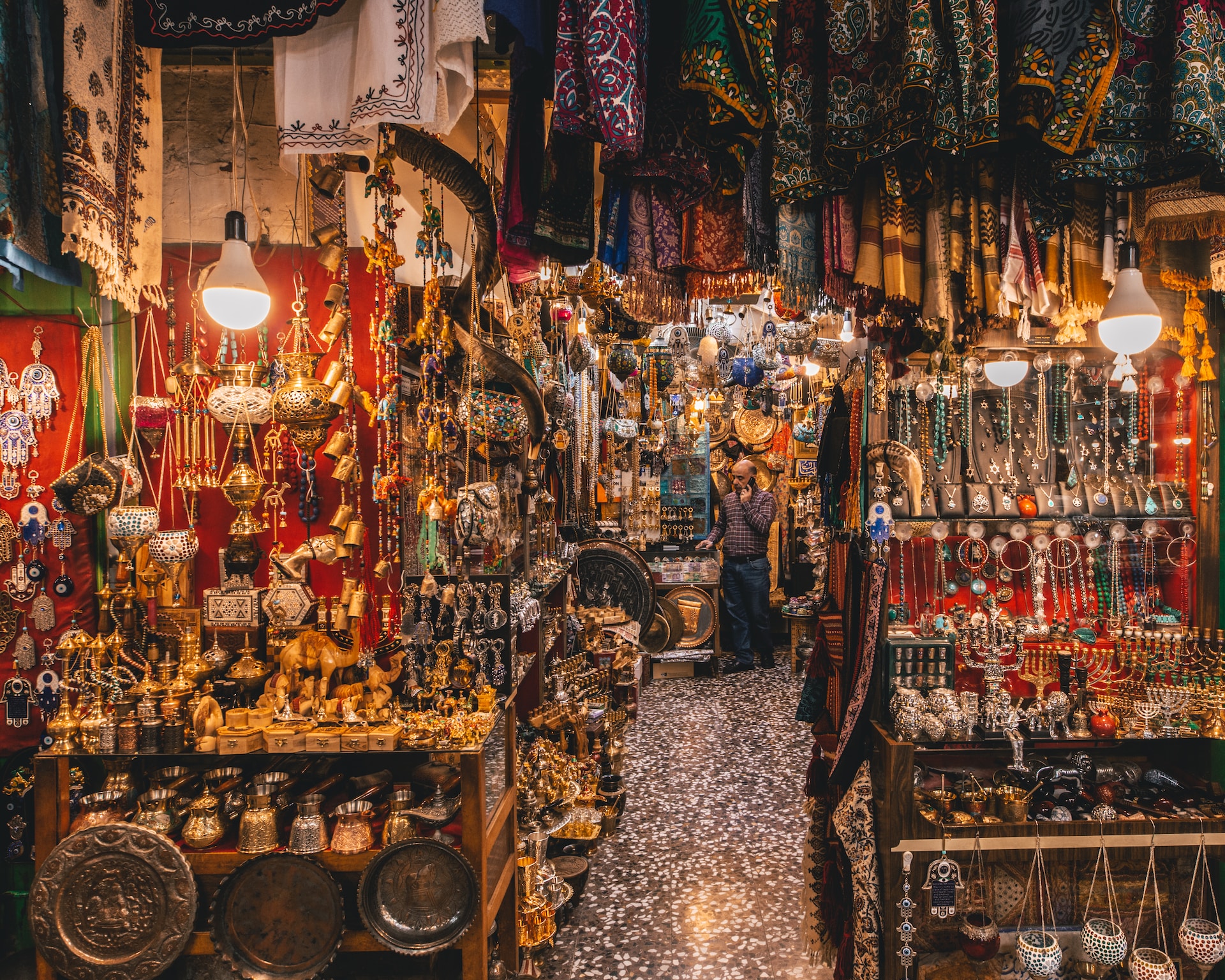

This isn’t a museum piece. Local jewelers still set the day’s gold price here every morning. Textile merchants still negotiate wholesale orders in the back alleys. This guide covers the Grand Bazaar’s layout, what’s actually worth buying at the Spice Bazaar, the courtyard hans most visitors miss, and the living craft traditions — Iznik ceramics, Ottoman calligraphy, Ebru marbling — that keep these markets running.

By the Numbers
570
30,700
4,000+
61
The History of Bazaar Culture in Istanbul

History of Bazaar Culture
| Period | What Happened |
|---|---|
| 1453 | Ottoman conquest of Constantinople |
| 1455–56 to 1461 | Grand Bazaar’s original Cevahir Bedesten built |
| 1894 | Major earthquake — one of several that reshaped the bazaar |
| 1923 | Republic founded; İstiklal Avenue begins drawing trade away |
| Late 20th c. | Mass tourism reorients main arteries toward visitors |
The Grand Bazaar — A Complete Deep Dive

The Grand Bazaar by the Numbers — Scale, Scope & Statistics
The Kapalıçarşı is one of the oldest and largest covered markets in the world: 30,700 square meters, 61 covered streets, more than 4,000 shops, and somewhere between 250,000 and 400,000 visitors on a typical day. Numbers like that are hard to picture until you’re standing inside them — it genuinely does feel less like a market and more like a self-contained neighborhood with a roof on it.
The Full History of Kapalıçarşı
Founded by Mehmed the Conqueror — The Original Structure
Construction began in the winter of 1455–56, not long after the Ottoman conquest of Constantinople, and wrapped up around 1461. Mehmed II ordered a central textile and jewelry hall — the Cevahir Bedesten — built specifically to generate revenue for the city’s ruined post-conquest economy, with rents earmarked to help fund Hagia Sophia’s upkeep as a mosque.
Fires, Earthquakes & Reconstructions — A Market That Refused to Die
Over five-plus centuries, the bazaar has burned down and been shaken apart more times than anyone bothers counting precisely — major fires and earthquakes recur throughout its history, including a particularly devastating 1894 earthquake. Each time, merchants and the state rebuilt it, gradually roofing over what had been open streets until it became the continuous, covered maze you walk through today.
The Grand Bazaar in the 19th & 20th Centuries
The 19th century brought European architectural flourishes and the large painted entrance gates still visible today. The 20th century added structural reinforcement and, gradually, a shift from primarily local supply hub to the global tourist landmark it’s known as now.
The Architecture of the Grand Bazaar
The Bedesten — The Fortified Core of the Bazaar
A bedesten is a lockable, vaulted stone hall — effectively a fortified strongroom that the rest of the bazaar grew up around. The Grand Bazaar has two of them, and they’re still the most atmospheric parts of the entire complex.
The İç Bedesten (Old Bedesten) — Antiques & Precious Goods
This is the original 15th-century core, supported by heavy stone pillars, and it feels different from the moment you step in — quieter, dimmer, more serious. It’s where the highest-value goods sit: antiques, rare coins, and old weaponry.
The Sandal Bedesten — Textiles & Auction History
The second core hall, historically used for trading sandal (a silk-and-cotton blend fabric) and once the site of the city’s biggest textile auctions.
The Street System — Named Streets & Their Specialties
Streets are named for the trades that originally worked them — Kuyumcular Caddesi (Jewelers’ Street), Halıcılar Caddesi (Carpet Sellers’ Street), Takkeciler Caddesi (Skullcap Makers’ Street) — and most of those names still roughly match what’s sold there today, which makes the street signs genuinely useful for navigation, not just historical trivia.
The Hans Within and Around the Grand Bazaar
The bazaar is flanked by hans — courtyard buildings like Zincirli Han and Cebeci Han — that offer a sudden, welcome breath of open air after the enclosed corridors, and are often where actual crafting still happens rather than just selling.

Navigating the Grand Bazaar — Gate by Gate
Nuruosmaniye Gate — The Most Famous Grand Entrance
The main eastern entrance, an 18th-century Ottoman Baroque gate topped with the Ottoman state crest, sitting right against Nuruosmaniye Mosque. It’s the most architecturally impressive of the bazaar’s gates and drops you almost immediately into the gold and jewelry district.
Beyazıt Gate — The Academic & Local Entrance
The western entrance, closest to the Beyazıt–Kapalıçarşı tram stop and Istanbul University. It’s the busiest, most heavily local of the main gates, opening directly onto Kalpakçılar Caddesi, the bazaar’s central artery.
Mahmutpaşa Gate — Connecting to the Wholesale District
This gate funnels you out of the covered bazaar and onto the steep, chaotic Mahmutpaşa slope — the start of Istanbul’s real budget-shopping district (more on that later in this guide).
How Many Gates Are There, Really?
Sources (and even locals) don’t fully agree — the bazaar has somewhere around 22 named gates in total, though only a handful are in regular daily use: Beyazıt, Nuruosmaniye, Çarşıkapı, Mahmutpaşa, and Örücüler cover the vast majority of foot traffic. Skip trying to memorize a gate number — the gates aren’t numbered in any way visitors will actually encounter. Instead, remember the name of the gate you entered through (it’s usually written above the arch), or better yet, snap a photo of it. That’s the only navigation trick that reliably works once you’re a few streets deep.
The Grand Bazaar by Section — What’s Where
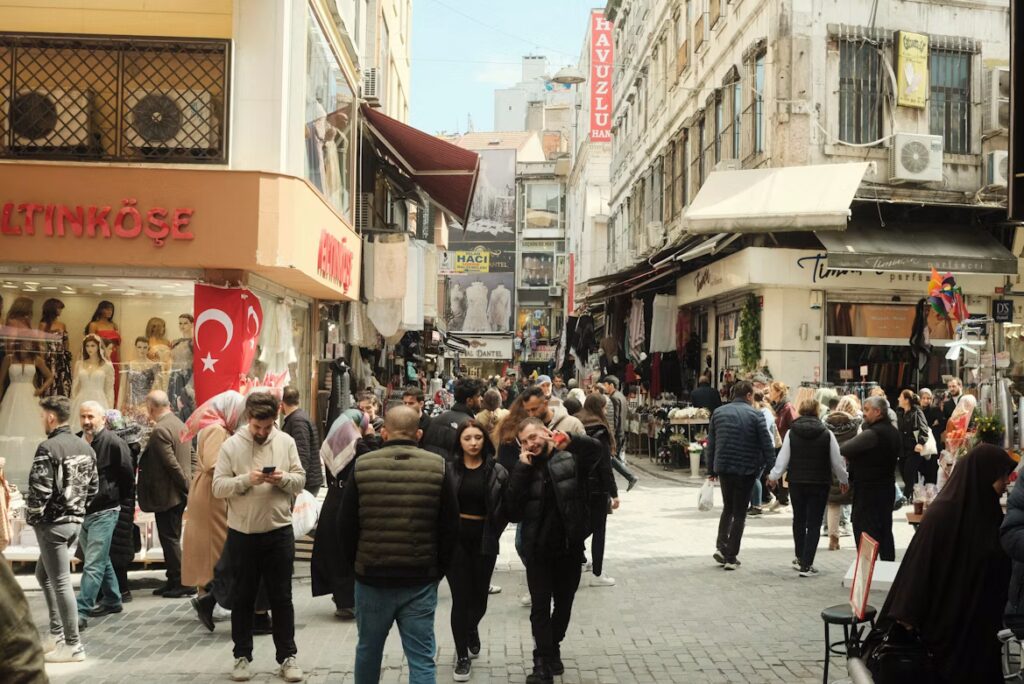
The Gold & Jewelry District — Kuyumcular Caddesi
The main artery connecting the Beyazıt and Nuruosmaniye gates. The window displays here are genuinely overwhelming — 22-carat gold bangles and elaborate diamond sets built for traditional Turkish weddings, shop after shop after shop.
The Carpet & Kilim Section — Finding Genuine Dealers
Skip the main streets for this one. The serious dealers operate out of the side alleys and internal hans (Zincirli Han is the classic example), in multi-story showrooms stacked with wool and silk pieces.
The Leather Goods Corridor — Bags, Belts & Wallets
Clustered near the northern exits: hundreds of shops selling Turkish leather jackets, bags, and some genuinely good bespoke tailoring services if you have a few days to spare.
The Ceramics & Tile Section — Spotting Quality Pieces
Scattered through the central streets. Look specifically for heavy, hand-painted Iznik-style reproductions rather than the light, glossy, mass-produced souvenir bowls — we’ll cover exactly how to tell them apart later in the crafts section.
The Textile & Fabric Streets — From Silk to Cotton
Mostly in the western half of the bazaar: quality peshtemals (hammam towels), Bursa silk scarves, and raw cotton fabric by the meter.
The Antique & Collectibles Corner
Concentrated almost entirely in the İç Bedesten — Ottoman-era compasses, pocket watches, silver mirrors, mother-of-pearl furniture.
The Spice & Herb Stalls Inside the Bazaar
The Spice Bazaar is the real destination for this (covered in detail in the next section), but the Grand Bazaar has its own scattering of spice and tea stalls too, mostly geared toward tourists after saffron and Turkish Delight.
Shopping in the Grand Bazaar — The Full Playbook
How to Enter the Bazaar Without Being Overwhelmed
Walk with purpose. Slow, wandering eye contact with every vendor is basically an invitation to be pitched continuously. Look ahead until something genuinely catches your interest, then stop.
Reading the Merchant — Body Language & First Contact
Merchants are often startlingly good at guessing where you’re from and will greet you in your own language. A smile and a polite “Merhaba” (Hello) is plenty — you don’t owe anyone a longer conversation unless you actually want to browse their goods.
The Art of Drinking Tea With a Shopkeeper
If you show real interest in a big-ticket item — a carpet, leather jacket, jewelry piece — you’ll likely be offered tea. Take it. It’s genuine hospitality, and it also naturally slows the whole interaction down to a more human pace.
Bargaining Tactics That Actually Work in 2026
Only negotiate if you’re actually prepared to buy — going through the motions for sport wastes everyone’s time and isn’t especially welcome. A reasonable starting point is offering somewhere around 40–50% of the asking price, though this varies a lot by category (see the pricing table below). Staying calm and mildly interested — rather than visibly excited — keeps you in a stronger position throughout.
Knowing When the Price Is Final — Reading the Room
If a vendor looks genuinely frustrated or simply stops countering your offers, you’ve likely hit the floor. A clearer signal: if they name a final number and extend a hand to shake on it, the negotiation is over.
Walking Away — The Most Powerful Negotiating Tool
A simple “Thank you, I’ll think about it” followed by actually walking out is the single most effective move in your toolkit. If they call you back with a better number, the negotiation continues. If they let you go, you’ve found the real floor.
Fair Price Reference Guide by Product Category
Gold is priced by the day’s market weight plus a small, fairly fixed labor fee — there’s very little room to negotiate here, and that’s normal, not a sign you’re being overcharged. Antiques, leather, and carpets carry much bigger margins and are where real negotiation happens.
What to Buy in the Grand Bazaar — Honest Recommendations

Gold Jewelry — The Grand Bazaar Advantage
Turkish gold is generally sold at high purity (often 22k) with comparatively low labor markup versus Western jewelers, which makes it a genuinely solid purchase if that’s what you’re after — though it’s worth having any serious piece checked or asking directly about purity stamps before you commit.
Authentic Carpets & Kilims — How to Find the Real Ones
Stick to established dealers who provide a certificate of authenticity. If someone offers you a “silk” carpet for $200, that’s not silk — it’s viscose (a cheaper synthetic fiber that mimics silk’s sheen). We’ll go deeper on authenticating carpets in the dedicated carpet-shopping section later in this guide.
Quality Leather Goods — What to Look For
Check the stitching closely and smell the leather — genuine Turkish leather smells earthy and natural, not chemical or plasticky.
Hand-Painted Ceramics — Genuine vs Tourist Grade
Run a finger over the painted design. Genuine hand-painted pieces have a slight raised texture where the paint sits. If it’s perfectly smooth and flat, it was machine-printed.
Antiques & Collectibles — Categories Worth Exploring
Ottoman-era calligraphy sets, vintage brass coffee grinders, and historic Karagöz shadow puppets are all worth a look if that’s your interest.
What NOT to Buy in the Grand Bazaar
Skip obvious counterfeit luxury goods (fake Gucci, fake anything with a logo), cheap plastic Evil Eye trinkets, and boxed mass-produced Turkish Delight that’s been sitting in a sunny shop window for who knows how long.
Practical Bazaar Guide — Everything You Need Before You Go
{Image: comfortable walking shoes and a tote bag, flat lay, bazaar in soft background}
What to Wear to the Grand Bazaar & Spice Bazaar
Dress modestly out of respect for the surrounding mosques and local norms, and wear genuinely supportive, closed-toe walking shoes — you’ll cover miles of uneven stone flooring without fully realizing it.
What to Bring — Cash, Bags & Practical Essentials
A sturdy tote bag, a bottle of water, and a reasonable amount of Turkish Lira in cash. Cards are widely accepted, but cash still gives you real leverage in any negotiation.
Language Tips — Key Turkish Phrases for Bazaar Shopping
- Merhaba (Hello)
- Ne kadar? (How much?)
- Çok pahalı (Very expensive)
- Teşekkür ederim (Thank you)
Safety in the Bazaar — Pickpockets, Pressure & Staying Alert
Violent crime is virtually nonexistent in the bazaar district, but pickpocketing does happen in the densest crowds. Keep your wallet in a front pocket and your bag zipped, same as you would in any packed tourist environment worldwide.
Accessibility — Navigating the Bazaars With Mobility Considerations
The Grand Bazaar’s interior is relatively flat, if extremely crowded. The Spice Bazaar is easily navigable. The steep, cobbled Mahmutpaşa slope connecting the two, however, is genuinely difficult for wheelchairs or limited mobility — worth planning an alternate route or transport if that’s a concern.
Getting to the Grand Bazaar & Spice Bazaar — All Transport Options
- Grand Bazaar: T1 Tram to Beyazıt-Kapalıçarşı, arriving right at the Beyazıt Gate.
- Spice Bazaar: T1 Tram to Eminönü, or take a ferry directly to the Eminönü docks.
Guided Bazaar Tours — Worth It or Better Alone?
If you want the architecture, hidden hans, and deeper history explained, a knowledgeable guide adds real value. If you’re mainly there to shop at your own pace, you’ll likely do just as well exploring independently, especially armed with the details in this guide.
Sample Bazaar Itineraries for Different Traveler Types
{Image: split-frame style shot suggesting multiple bazaar scenes — gold street, spice cones, tea house}
The First-Timer’s Grand Bazaar Half-Day Plan
Enter through the Nuruosmaniye Gate. Walk the gold street (Kuyumcular Caddesi). Detour into the İç Bedesten to browse the antiques. Stop for tea at Şark Kahvesi, then exit via the Beyazıt Gate.
The Serious Shopper’s Full-Day Bazaar Circuit
Start at 9:00 AM in the Grand Bazaar for leather and carpets. Have lunch at Havuzlu (confirm prices before ordering). Walk down Mahmutpaşa toward the Spice Bazaar. End the day picking up vacuum-sealed lokum and fresh-roasted coffee from Tahmis Street.
The Culture Seeker’s Bazaar & Craft Workshop Day
Spend the morning taking a ceramic painting or Ebru workshop in Sultanahmet — Caferağa Medresesi is a solid, verified starting point. In the afternoon, walk through the Grand Bazaar specifically hunting for authentic, handmade craft pieces rather than souvenirs.
The Food Lover’s Spice Bazaar & Eminönü Morning
Skip the Grand Bazaar entirely. Spend three unhurried hours in the Spice Bazaar and its surrounding backstreets — tasting cheeses, buying real saffron, and finishing with a fish sandwich by the ferry docks.
The Photographer’s Golden Hour Bazaar Visit
Arrive at the Grand Bazaar around 9:00 AM for the clearest morning light through the domed windows and the thinnest crowds. Move to the Spice Bazaar’s exterior courtyard toward dusk to capture the chaotic, colorful evening rush instead.