
Istanbul’s covered bazaars get all the postcard attention, but they’re only half the story. Walk into Zorlu Center or Istinye Park and you’re in a different city entirely — one with marble floors, Bosphorus views from the food court, and flagship stores that wouldn’t look out of place on the Champs-Élysées. Over the last three decades, Istanbul has quietly built one of the most serious retail scenes in the region, and most visitors never see it because they’re busy haggling in the Grand Bazaar.
That’s a mistake, and not just for the shopping. Modern Istanbul malls tell you something about how the city actually lives now — where the money goes, what people wear to work, how families spend a Sunday. If you want to understand contemporary Istanbul rather than just its history, the malls and the fashion streets around them are as useful as any museum.
This guide covers the whole modern retail landscape: the ultra-luxury centers clustered in Levent and Beşiktaş, the mega-malls of Şişli and beyond, the Asian side’s quieter (and less touristy) mall scene, and — the part most guides skip — the actual Turkish brands worth your money. We’ll also get into tax-free shopping, phone-buying rules, and the practical stuff nobody tells you until you’re standing at a register confused.
How Istanbul Built a Modern Shopping Scene
From Bazaar to Boulevard
Istanbul’s retail story splits cleanly into two eras. For centuries, shopping meant the covered bazaars — the Grand Bazaar, the Spice Bazaar, the tangle of artisan streets around them. Then, in 1988, everything changed: Galleria Ataköy opened as Turkey’s first modern shopping mall, built at the recommendation of then-Prime Minister Turgut Özal after he visited the Houston Galleria in Texas. It was a genuine novelty at the time — climate control, an ice rink, imported goods under one roof — and it drew families from across the city as a weekend destination through the 1990s.
Expertise note: Galleria itself is a cautionary tale worth knowing before you go looking for it. The mall that pioneered Turkish mall culture has since faded — many of its original 140-plus stores have closed, and it’s now a shadow of what it was. It’s an interesting historical stop if you’re curious, but don’t plan a shopping trip around it; go to Zorlu, Istinye Park, or Cevahir for that.
What followed Galleria was a genuine boom. Istanbul now has over a hundred shopping malls, and — unlike in a lot of Western cities — the mall didn’t kill the high street or the bazaar. They just split the job. You go to the Grand Bazaar for carpets, gold, and theater. You go to a modern AVM (alışveriş merkezi, “shopping center” — the term you’ll see on every map and sign) for reliable pricing, air conditioning, and a Zara that actually has your size.
Why Istanbul Punches Above Its Weight on Shopping
A few things stack together to make Istanbul a genuine shopping destination rather than just a city that happens to have malls:
- Manufacturing on its doorstep. Turkey is one of the world’s largest textile and denim producers, and a lot of that manufacturing happens within a few hours of Istanbul. That proximity shows up as quality-to-price ratio in Turkish clothing brands that’s hard to match in Western Europe.
- A genuinely competitive luxury sector. Malls like Zorlu Center and Istinye Park were built to rival Paris, London, and Dubai, and the flagship stores inside them are treated as serious business, not tourist-trap satellites.
- Favorable exchange-rate economics. The lira’s depreciation over recent years has been rough for Turkish households, but it’s made Istanbul unusually cheap for anyone spending dollars, euros, or pounds — on both Turkish brands and, often, on international ones manufactured locally.
That combination is why you’ll see so many shoppers from the Gulf, the Balkans, and Central Asia treating Istanbul as a weekend shopping city, flying in specifically to shop rather than sightsee.
What Istanbulites Actually Buy
Local shopping habits are worth understanding because they explain why certain brands dominate mall floor space. Istanbul is a genuinely fashion-conscious city — sharp tailoring matters, quality leather matters, and modest fashion (long-line coats, high-necked tops, tailored hijab-friendly pieces) sits comfortably alongside European streetwear rather than in a separate category. This is a big part of why brands like Twist, İpekyol, and Mavi have loyal followings that outlast whatever’s trending on Zara’s shelves that season — they’re designed for how people here actually dress, not adapted from a Milan or London collection.
E-commerce is huge here too — platforms like Trendyol and Hepsiburada dominate everyday purchases the same way Amazon does elsewhere — but physical retail hasn’t shrunk the way it has in some Western markets. Istanbul malls survive by leaning into what a screen can’t offer: dining, entertainment, personal shopping, and the simple fact that trying on a leather jacket beats guessing your size online.

Luxury Shopping Destinations in Istanbul
{Image: Open-air luxury boutique street at Istinye Park or Nişantaşı, Bentley or Rolls-Royce parked outside}
If you’re shopping seriously — flagship boutiques, personal shopping suites, valet parking — this is where you go. Istanbul’s luxury retail isn’t a token effort to look international; it’s built to compete directly with Paris, London, and Dubai, and in terms of sheer square footage and architectural ambition, it often wins.
Zorlu Center — The Crown Jewel
Zorlu Center, in the Zincirlikuyu area straddling Beşiktaş and Şişli, is a semi-open-air complex built around a landscaped central square — sleek, glass-heavy, and unapologetically upscale.
- What’s inside: the region’s largest Apple Store, flagship boutiques for Bvlgari, Dior, Louis Vuitton, and Prada, and a sprawling Beymen department store.
- Beyond retail: Turkey’s only Eataly, a cluster of high-end restaurants, and Zorlu PSM — a genuine performing arts center that hosts touring Broadway productions, international jazz acts, and large-scale music events. This is one of the few malls anywhere that functions as an actual cultural venue, not just a mall with a stage bolted on.
- Getting there: this is where the update matters — Gayrettepe station now serves both the M2 city line and the M11 airport line, so if you’re arriving from Istanbul Airport, you can ride the metro directly into Zorlu without touching Levent’s surface traffic at all. That’s a genuinely new convenience worth planning around.
Istinye Park — Indoor Glamour, Outdoor Village
Istinye Park splits into two personalities: a glass-domed indoor mall for high-street and mid-luxury brands, and an open-air “Brands Village” styled like a European town square, where Chanel, Hermès, Dior, Louis Vuitton, Cartier, and Jimmy Choo each get their own standalone building.
- The vibe: this is Istanbul’s best “see and be seen” spot — expect valet-parked sports cars and a crowd that dressed for the occasion.
- Café culture: Masa, in the central courtyard, is the go-to spot to sit down between purchases.
- The mistake to avoid: don’t assume this is a metro-accessible mall the way Zorlu or Kanyon are. There’s no direct subway line — take the M2 to İTÜ-Ayazağa and budget a 15–20 minute walk, or just grab a short taxi from there. Plenty of visitors show up expecting a metro exit right at the door and end up walking much further than planned.

Nişantaşı — Istanbul’s Open-Air Luxury District
Nişantaşı is the closest Istanbul gets to a European fashion capital’s feel — art nouveau buildings, wide sidewalks, and a slower, more deliberate kind of shopping than a mall offers.
- Abdi İpekçi Street is the headline act: this is consistently cited as Turkey’s most expensive retail street, lined with Chanel, Gucci, Prada, Louis Vuitton, and Cartier, with valet-parked luxury cars along the curb.
- Teşvikiye and Valikonağı, the intersecting avenues, offer a slightly softer entry point — contemporary Turkish designers alongside international names.
- Go off the main drag into side streets like Atiye Sokak, where multi-brand concept stores mix fashion with small galleries and coffee bars. This is where Nişantaşı stops feeling like a shopping street and starts feeling like a neighborhood.
Kanyon — Architecture as the Draw
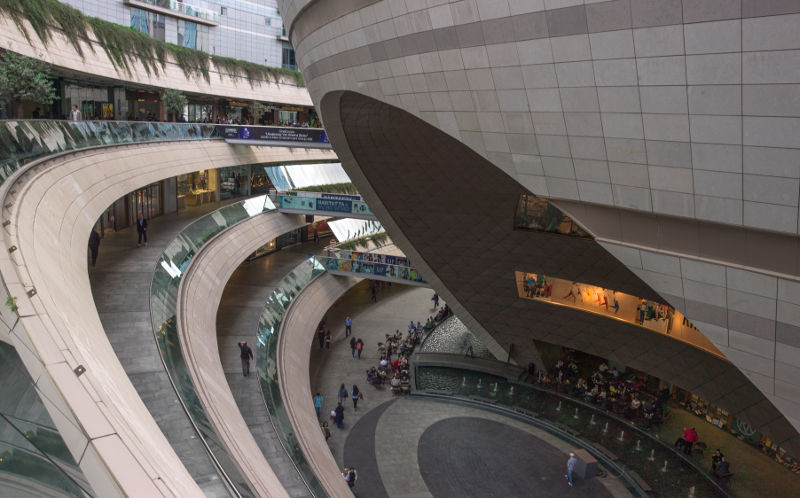
Kanyon, in Levent, is built to resemble a natural canyon — curved, open-to-the-sky walkways carved through the structure. It’s less about maximum brand density and more about the experience of walking through it. Inside you’ll find Harvey Nichols as the anchor, alongside Calvin Klein, Max Mara, and a strong mix of premium lifestyle and tech retail aimed at the office workers from the surrounding business towers. It connects directly to Levent metro station, making it one of the easiest luxury malls in the city to reach without a car.

Akmerkez — The Original, Still Standing
Opened in December 1993 in the affluent Etiler neighborhood, Akmerkez wasn’t Istanbul’s first mall — Galleria and Capitol beat it — but it set the template for luxury retail here. It was named Best Shopping Center in Europe by the International Council of Shopping Centers in 1995, then Best Shopping Center in the World the following year — a rare double that no other mall in the world has matched. It’s smaller than Zorlu or Istinye Park today, but that’s arguably its appeal: a quieter, more curated shopping experience without the crowds, still favored by old-money Istanbul families. It’s a short walk from Nispetiye metro station on the M6 line.
{Image: Nişantaşı street scene, Abdi İpekçi Street storefronts}
Tax-Free Shopping in Istanbul — The Complete Guide

This is one of the most misunderstood parts of shopping in Turkey, so let’s get the numbers right.
How VAT Refunds Actually Work
Turkey’s standard VAT rate is 20%, with a reduced 10% rate applying to certain categories like textiles and leather goods. As a non-resident visitor, you’re entitled to claim this back on qualifying purchases — but there are real rules that trip people up:
- Minimum spend: You need to spend at least 1,000 Turkish Lira at a single retailer on a single receipt. It doesn’t accumulate across different stores or across separate visits to the same store — one qualifying receipt, one refund claim.
- Look for the “Tax Free” sign. Not every shop participates; ask before you buy if it’s not clearly posted.
- Keep everything unused and sealed. Customs can (and sometimes does) ask to see the item, so don’t wear that leather jacket out of the store.
The Refund Process, Step by Step
- At the point of sale, ask for a tax-free form (most retailers use Global Blue or a similar operator) and have your passport ready — they’ll need it to issue the form.
- Before you check in for your flight home, find the customs desk at the airport (not the regular check-in counter) and get your form stamped. This step is non-negotiable — no stamp, no refund.
- After security, look for the Global Blue or Planet refund counter to collect your money, either in cash or credited back to your card.
The Honest Reality Check
Here’s the part most guides skip: after processing fees, your effective net refund tends to land well below the full 20% or 10% VAT rate — often closer to 6% in practice. That’s still real money on a big purchase, but don’t go into a big luxury buy assuming you’ll get the full VAT rate back. Budget the refund as a bonus, not the reason you’re buying.
Common mistake to avoid: leaving the stamping step until the last minute. Customs queues at Istanbul Airport can be genuinely long during peak travel times, and if you’re rushing to a gate, this is the step that gets skipped — and once you’ve passed through security without the stamp, the refund is gone for good. Build in extra time.
Practical Mall & Shopping Guide for Istanbul
Hours, Days & Logistics
Istanbul malls keep consistent, generous hours — generally 10am to 10pm, seven days a week, with no weekly closure day. The only exceptions are the first day of religious holidays (Eid al-Fitr and Eid al-Adha) and New Year’s Day, when most stay closed until 1pm. Unlike İstiklal or Bağdat Avenue’s independent shops — some of which close Sundays — malls are reliably open whenever you need them, which makes them a good fallback plan on a day when other things are shut.
Payment & Money
Credit and debit cards are accepted everywhere in malls, including contactless. That said, carry some cash for smaller independent shops on fashion streets and definitely for the bazaars, where not every stall has a card machine. If you’re paying by card, always ask for the receipt in Turkish Lira, not a foreign currency conversion — accepting “dynamic currency conversion” at the terminal almost always costs you a worse exchange rate than letting your own bank handle it.
Malls vs. Bazaars — When to Use Which
This is the single most useful mental model for shopping in Istanbul:
- Go to a mall or brand store when: you want fixed, transparent pricing, need a specific size or a return policy, or are buying anything electronic, branded, or high-value where authenticity matters.
- Go to a bazaar when: you’re after souvenirs, carpets, spices, gold, or one-of-a-kind craft items, and you’re willing to negotiate. Bargaining is genuinely expected there — start around half the quoted price — but it’s simply not part of mall culture. Trying to haggle at a Zara register will just confuse the cashier.
Common Mistakes First-Time Shoppers Make
- Assuming every mall is metro-accessible (Istinye Park and Emaar Square both require a taxi or a longer walk than expected).
- Budgeting for electronics purchases in Istanbul — buy your phone and laptop before you fly in.
- Leaving the tax-free customs stamp until the last minute before a flight.
- Expecting genuine outlet-level discounts at Venezia Mega Outlet — treat it as a scenic stop, not a bargain hunt.
- Forgetting cash for the bazaars, where card machines aren’t universal.

Sample Shopping Itineraries for Istanbul
The Half-Day Luxury Circuit (Levent/Beşiktaş)
Start at Kanyon (direct from Levent metro) for architecture and a coffee, then take a short taxi or the M2 to Zorlu Center for the flagship boutiques and an Eataly lunch. If you have energy left, Istinye Park is a taxi away for the outdoor Brands Village — just budget the extra transit time.
The Full-Day Family Day Out (Bayrampaşa)
Forum Istanbul is built for exactly this: morning at Turkuazoo’s aquarium, lunch at one of the mall’s many family-friendly restaurants, afternoon at Jurassic Land, and a browse through IKEA or Decathlon before you leave.
The Local’s Afternoon (Nişantaşı → İstiklal)
Walk Abdi İpekçi Street for the window-shopping, cut through the side streets around Atiye Sokak for concept stores and coffee, then head down toward Taksim and spend the evening on İstiklal Avenue, ducking into Atlas Pasajı or Avrupa Pasajı for something you won’t find in a mall.
The Asian Side Day (Kadıköy → Bağdat Avenue)
Start in Kadıköy for its independent boutiques and café culture, then head to the Bostancı–Kızıltoprak stretch of Bağdat Avenue for the main shopping run — the useful 6 km, not the full 14. Emaar Square or Palladium make a good final stop if you want a mall finish, both a manageable taxi ride away.
