Getting Around a City of 15 Million (Without Losing Your Mind)
Istanbul shouldn’t work. It’s split down the middle by a strait, built across seven hills, home to more than 15 million people, and its street grid was never really “planned” so much as it grew organically over 2,000 years. On paper, that’s a recipe for gridlock.
And yet — in the same hour, you can ride a modern underground metro, hop a 19th-century funicular that predates the London Underground by a few decades, and finish on a ferry crossing from Europe to Asia with a glass of tea in hand. That’s not marketing copy. That’s a Tuesday commute for half the city.
Why You Should Skip the Taxi
Taxis feel like the obvious choice when you land, tired, with luggage. Resist it. Istanbul’s traffic isn’t “bad” in the way most cities are bad — around the Bosphorus bridges and the historic peninsula, a 15-minute drive can genuinely stretch to 90 minutes, especially between 5:00 and 7:30 PM. Add meter disputes, detours, and the language gap, and a taxi stops being the “convenient” option fast.
Public transit sidesteps almost all of that. It’s dramatically cheaper, largely immune to surface traffic (the metro, Marmaray, and Metrobüs all run in their own dedicated space), and it puts you shoulder-to-shoulder with actual Istanbulites doing their actual commute — which, if you’re chasing that “live like a local” feeling, is worth more than any taxi ride ever will be.
The Istanbul Transit Network, Mode by Mode
Before you touch an Istanbulkart, it helps to know what you’re actually choosing between. Here’s the lineup.
Metro — The Backbone
Istanbul’s metro now runs 11 lines and roughly 265 km of track, making it the 4th-longest metro network in Europe — and it’s still growing, with more lines under construction. Trains are modern, air-conditioned, and run every 4-8 minutes at peak times. This is your fastest option for covering real distance, especially the newer lines pushing out toward the airports and the northern business districts.
Trams — Slow, Scenic, and Genuinely Useful
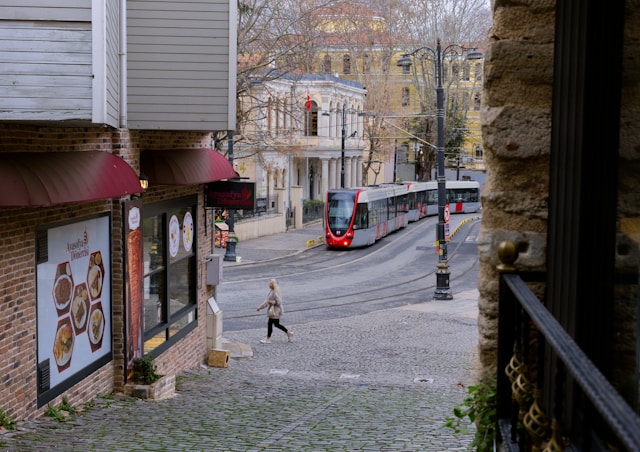
The surface tram lines (especially T1) aren’t fast, but they hit almost every major sight in the historic peninsula directly — somewhere the metro doesn’t reach at all. In pedestrianized, traffic-choked Sultanahmet, “slow” is relative: a tram will often beat a car by a wide margin.
Metrobüs — The Bus That Outruns Traffic
The Metrobüs is a dedicated bus lane running down the middle of Istanbul’s main highways for roughly 50 km, completely separated from car traffic. It runs 24/7 and moves an enormous number of commuters daily — but it’s also famous for being packed shoulder-to-shoulder at rush hour. Think of it less as a “bus” and more as a surface-level subway that happens to have wheels.
City Buses (İETT) — Filling in the Gaps
The yellow İETT buses cover neighborhoods the rail network simply doesn’t reach — hillside districts, coastal suburbs, anywhere the metro and tram haven’t gotten to yet. The route network is large enough that first-timers usually lean on Google Maps or Moovit rather than trying to memorize it, and that’s fine — that’s what those apps are for.
Ferries & Sea Buses — Commuting With a View
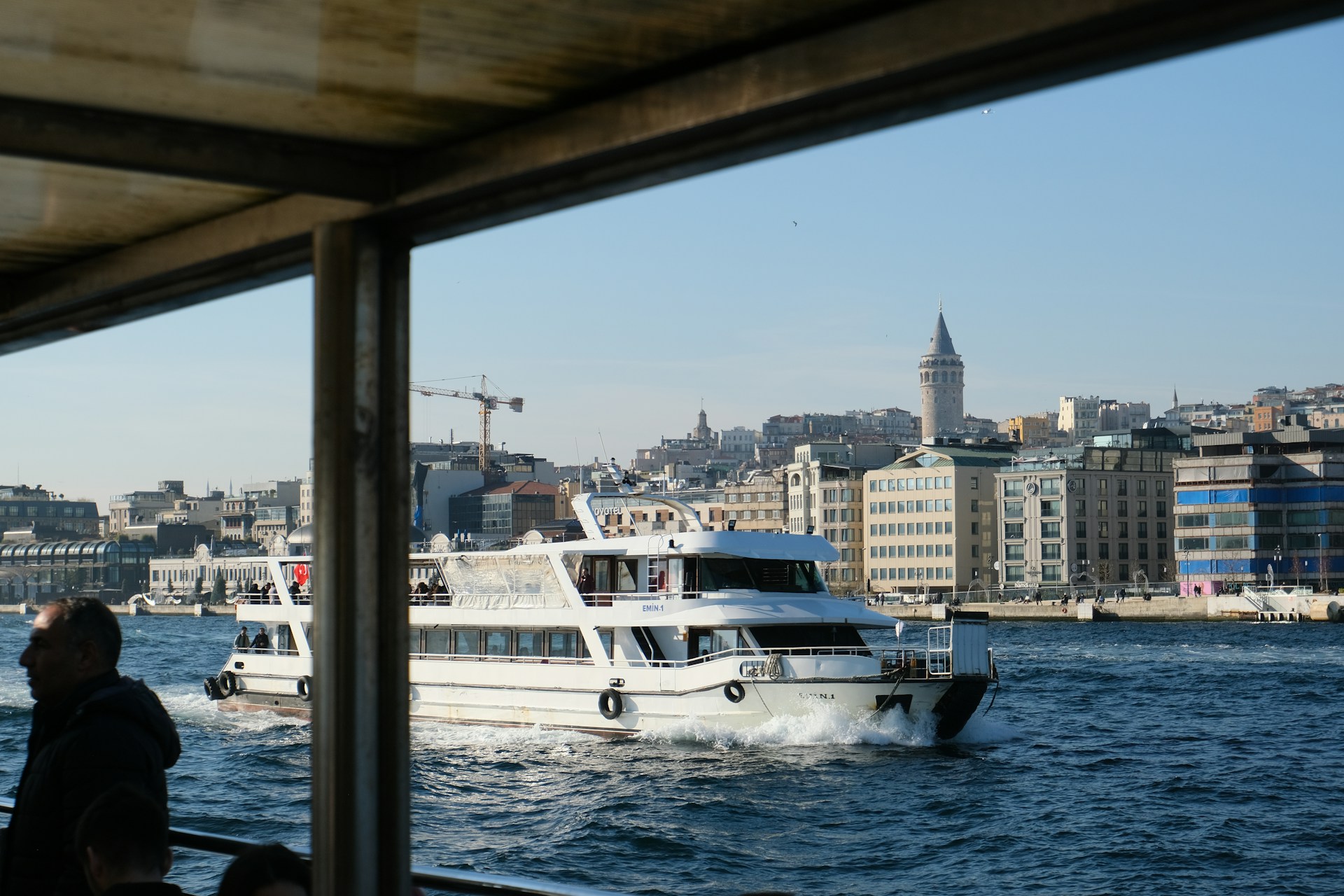
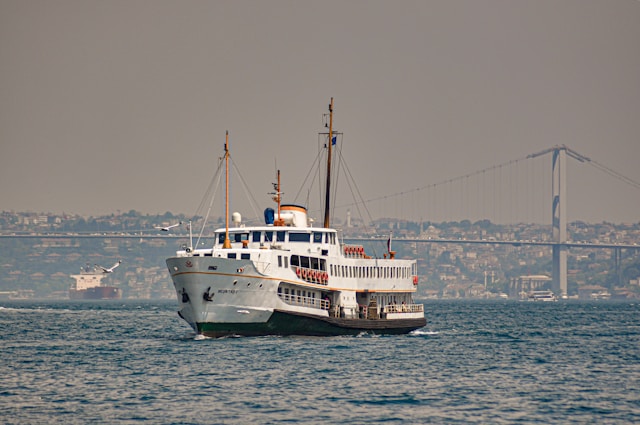
This is the one genuinely unique item on the list: a normal commute that doubles as a Bosphorus cruise. The city-run Şehir Hatları ferries connect Europe and Asia across the Bosphorus, the Golden Horn, and the Sea of Marmara, and they’re fully integrated into the Istanbulkart system — meaning you can tap on for a few Lira and get the same view that private “Bosphorus tour” operators charge tourists a premium for.
Funiculars & Cable Cars — Beating the Hills
Istanbul is built on seven hills, and after a full day of walking, that matters. The city runs a handful of short funiculars and cable cars purpose-built to save your legs — including one, the Tünel, that’s been doing this since 1875 (more on that below).
Marmaray — Crossing Continents Underground
The Marmaray is a 76.6 km commuter rail line that tunnels beneath the Bosphorus seabed. The headline number: Sirkeci to Üsküdar — Europe to Asia — takes about 4 minutes. It’s the fastest way to cross the strait by a wide margin, and it runs on the same distance-based fare logic as the Metrobüs (tap in, tap out at a refund machine).
Istanbulkart: Your Ultimate Istanbul Transit Pass
What Exactly Is the Istanbulkart?
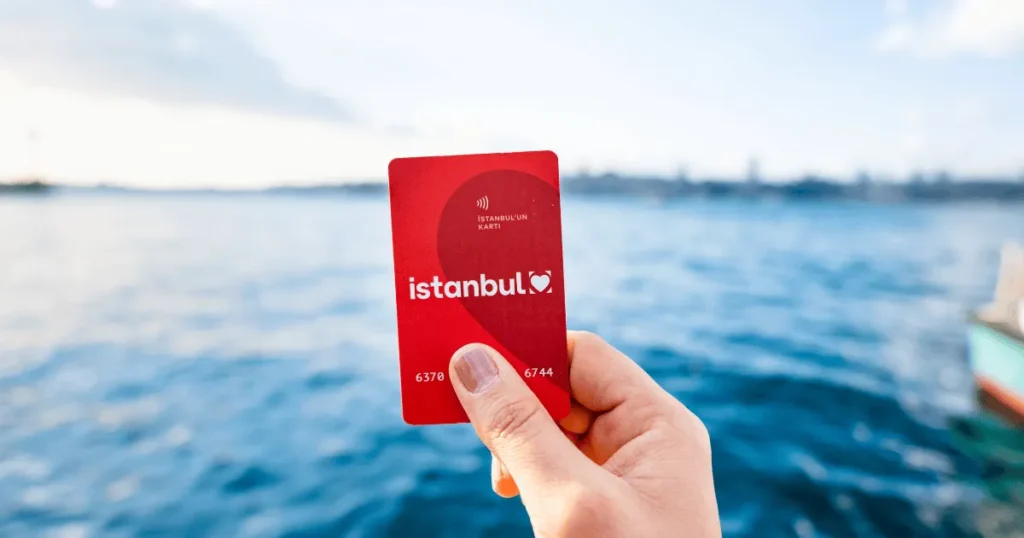
The Istanbulkart is a contactless RFID smart card — about the size of a credit card — that works as the universal ticket for nearly every form of public transport in Istanbul. It runs on a pay-as-you-go model: you load money onto it once, then tap it at the turnstile every time you ride. No queuing for a fresh ticket at every single station.
Why Every Visitor Needs One
You can technically get by on single-use paper tickets or tokens (called Jetonmatik tokens or Birgeç/İkigeç passes depending on the machine), but they cost noticeably more per ride, and — this is the part that actually matters — they don’t unlock transfer discounts. Every single-use ticket is charged at full price, every time. The Istanbulkart is the only way to access Istanbul’s transfer-discount system, which is where the real savings live.
Istanbulkart vs. Paying Cash — The Real Cost Difference
Here’s the honest math, as of mid-2026:
- Single-use token/paper ticket: roughly 50-60 TL per ride, no transfer discount, ever.
- Istanbulkart standard tap: roughly 35-42 TL per ride (fares rose partway through 2026, so expect this number to keep drifting upward — always sanity-check it against a Biletmatik screen when you land).
- Istanbulkart transfer within a 2-hour window: your second, third, and fourth taps get progressively discounted — not just a token nod, a real cut to the fare.
Run the math on a single day of sightseeing — say, four rides mixing metro, tram, and ferry — and the gap between “tapping a card” and “buying tickets one at a time” adds up fast, especially multiplied across a group.
How to Get Your Istanbulkart in 2026
Where to Buy It on Arrival
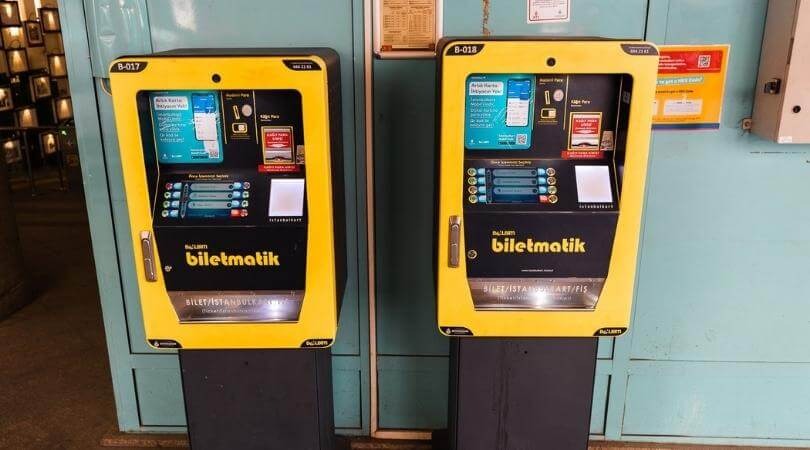
Your first stop should be a Biletmatik vending machine — the yellow (cash) or blue (card-accepting) machines on the transit level of both Istanbul Airport (IST) and Sabiha Gökçen (SAW). You’ll also find them at nearly every metro, tram, and Marmaray station entrance, plus major ferry docks.
If you can’t find one, look for small kiosks and convenience stores with a blue-and-yellow “Istanbulkart” sticker in the window — they sell the card at the official rate and can top it up for you by hand, which is genuinely useful if the machine screen’s countdown timer is stressing you out (it moves faster than you’d like).
How Much Does It Cost?
As of 2026, the physical card costs a non-refundable 165 TL. That’s the fee for the plastic itself — it comes with zero balance, so you need to load credit immediately after buying it. Heads up: this number moves. Some machines and sources in 2026 have shown figures anywhere from roughly 130 to 175 TL depending on when you’re reading this, so treat 165 TL as your working estimate, not gospel — the machine screen has the real number.
How to Load Credit
At a Biletmatik machine:
- Place the card flat on the illuminated reader panel.
- The screen shows your current balance.
- Feed in flat, unwrinkled Turkish Lira notes (50, 100, or 200 TL bills work best).
- Wait for the green checkmark confirming your new balance.
Important: these machines don’t give change. Insert a 200 TL note and all 200 TL becomes travel credit — no coins back. Also worth knowing: anonymous tourist cards have a monthly top-up cap of 2,750 TL. You’re extremely unlikely to hit that on a normal trip, but if you’re planning a long stay or topping up for a group, it’s good to know the ceiling exists.
Via the mobile app: The official Istanbulkart app lets you top up digitally if your phone supports NFC — though it’s worth setting expectations here. It’s genuinely hit-or-miss for foreign travelers: it’s built primarily for Turkish ID/phone numbers, and plenty of visitors report it simply not recognizing foreign accounts or cards. If you’re tech-comfortable and want to try it, go for it, but don’t count on it as your only option — have a backup plan (cash + a Biletmatik machine) in case it doesn’t cooperate.
At a kiosk: Hand your card and cash to the attendant, tell them the amount, and they’ll process it through their point-of-sale system. This is the path of least resistance if you don’t want to fight with a machine.
The Digital Istanbulkart — Skip It or Use It?
Yes, the app can generate a QR-code-based digital card you scan at the turnstile. In practice, I’d treat this as a backup, not a primary plan: it needs a live data connection, works one person per device (no sharing it across your group like you can with a physical card), and — per the app’s own user reviews — has a rockier track record with international users than the physical card does. For a short trip, the plastic card is still the safer bet.
Teleferik Lines for Scenic Views
Beyond Eyüpsultan, the TF1 Maçka-Taşkışla cable car swings over a green valley in the city center, connecting two affluent neighborhoods. It’s less a commuting necessity and more a relaxing scenic shortcut — worth it if you’re already in the area, not worth a special trip.
Crossing Between Europe and Asia — Your Options
Marmaray: the fastest option, hands down. Sirkeci to Üsküdar takes roughly 4 minutes through the seabed tunnel. It runs on Istanbulkart, but it’s distance-based fare logic — same rule as Metrobüs: tap the refund machine on exit or you’ll pay for the full line.
Ferry: slower, but this is the crossing worth doing at least once just for the experience — tea in hand, gulls trailing the boat, the skyline sliding by.
Bridge buses: various city buses cross the Bosphorus bridges, giving you genuinely striking aerial views of the strait — but you’re fully at the mercy of bridge traffic, which can turn a quick crossing into a long one during daylight hours.
Quick decision guide:
- Crossing at rush hour → Marmaray.
- Want the view and have time to spare → Ferry.
- Traveling after midnight → Metrobüs or a taxi (ferries and Marmaray both stop overnight).
Navigation Apps & Digital Tools
Google Maps
Reliable for walking directions and general transit routing in Istanbul, with generally solid schedule data for the metro, Marmaray, and trams. It’s shakier on real-time bus positions and the logic of the city’s biggest transfer hubs.
The Official Transit App — Now “Otobüsüm Nerede”
If you’ve read older guides recommending “Mobiett,” that app has been phased out — İETT’s current official app is Otobüsüm Nerede (“Where Is My Bus?”), which pulls directly from the city’s own tracking systems for bus arrival times and route info.
Moovit and Other Third-Party Apps
Moovit handles multi-modal routing well — stitching together a bus, a ferry, and a funicular into one sensible route — and often suggests more locally-sensible paths than Google Maps does.
Download Offline Maps
Cell signal drops out in the deeper Marmaray and metro tunnels. Download an offline map before you’re underground so you don’t lose your bearings mid-tunnel.
Neighborhood-by-Neighborhood Transport Guide
Sultanahmet & the Old City: cars are essentially useless here. Walk, and use the T1 tram for anything farther. The Marmaray station at Sirkeci is your fastest way out to the rest of the city.
Beyoğlu, Taksim & Galata: the M2 metro connects Taksim, Şişhane (Galata), and Haliç. To drop down toward the water, take the F2 Tünel or F1 funicular instead of walking the steep cobblestones.
Beşiktaş & Ortaköy: relies heavily on buses and ferries. To reach Taksim or the Old City, bus to Kabataş and transfer to the F1 or T1. Ferries from the Beşiktaş pier are your best route across to Asia.
Kadıköy & the Asian Side: highly walkable on its own. For longer trips, the M4 heads to the airport and deeper suburbs, while the nostalgic Moda tram loops the coastal neighborhood.
Üsküdar, Fatih & Beyond: Üsküdar is well served by the Marmaray and ferries. For the older Fatih neighborhoods like Balat and Fener, the T5 tram along the Golden Horn is your most scenic option.
Common Public Transport Mistakes Tourists Make
Not buying an Istanbulkart on day one. Every hour without one is an hour spent queuing for pricier single-use tickets.
Confusing the two continents’ bus terminals. Mixing up Harem (Asian side) with Esenler Otogar (European side) can cost you a couple of hours correcting course — check which side of the Bosphorus you actually need before you book that intercity bus.
Boarding the wrong direction. Always check the line’s terminus, not the compass direction. Heading to Taksim from the Old City on the M2 means boarding toward “Hacıosman” — not “Yenikapı.”
Missing the last ferry. Most passenger ferries stop running around 10:30-11:00 PM. Miss the last one and you’re looking at the Marmaray, a night bus, or a pricier taxi across the bridge.
Trusting Google Maps blindly. It might say your bus is 2 minutes out — traffic can turn that into 20. If a bus route looks convoluted, a slightly longer metro route is almost always the more reliable bet.
Pro Traveler Hacks
The Airport Coach Trick
If you’ve landed with a mountain of luggage and want to skip the taxi line, take the Havaist (IST) or Havabüs (SAW) coaches. They’re essentially private buses — proper luggage space, notably cheaper than a taxi, and far more comfortable than wrestling suitcases through metro turnstiles.
Beating Rush Hour
If you have to move between 5:30 and 7:00 PM, lean on the ferries or the Marmaray. The Bosphorus doesn’t get traffic jams, and Marmaray’s trains are large enough to absorb rush-hour crowds far better than the surface trams or Metrobüs can.
Realistic Budget for a Week of Transit
Here’s the honest 2026 math: with standard fares around 35-42 TL and transfer discounts softening the blow on connecting rides, a full week of enthusiastic sightseeing — multiple rides a day mixing metro, tram, and ferry — realistically runs somewhere around 600-900 TL (roughly $13-19 at current exchange rates). Load 400 TL onto your card on day one to get moving, then top up again once you see your own pace; it’s a 30-second stop at any Biletmatik machine.
Accessibility
The newer lines — M11, M2, and the Marmaray — are genuinely well-equipped: working elevators, tactile paving, level boarding. Older tram lines and the steep, uneven streets around some stations are a different story and can be a real challenge for wheelchair users. If accessibility is a hard requirement for your trip, it’s worth route-planning around the newer lines specifically rather than assuming the whole network is equally equipped.
Own the City Like a Local
Mastering Istanbul’s public transport is genuinely the difference between spending your trip stuck in traffic and spending it actually experiencing the city. Get your Istanbulkart on day one, don’t be afraid of the ferries, and once you understand the logic of the metro map, the rest falls into place fast.