
Why Turkish Food Is One of the World’s Great Cuisines
Ask food people to name the world’s great cuisines, and three names come up again and again: French, Chinese, and Turkish. It’s one of those claims that gets repeated so often it sounds official — food writers cite it, NPR has done a segment on it — but there’s no single academic source behind it, and even Turkish food historians admit it’s more culinary folklore than settled fact. That said, the folklore earns its keep. Turkish cuisine really did emerge from something unusual: six centuries of an empire that stretched from the Balkans to North Africa to the Caucasus, with an imperial kitchen in Istanbul that had the resources and the mandate to absorb, refine, and standardize the best cooking from every corner of that territory.

What actually sets it apart from its neighbors. Compare it to Greek food, which shares plenty of ingredients, or the heavier spice-blend cooking of the Levant, and the difference is restraint. A good Turkish cook doesn’t bury a piece of lamb or an eggplant under sauce — the point is to get out of the ingredient’s way. Grilling technique, good olive oil, and a handful of herbs do the work that a heavy sauce would do elsewhere.
The pantry that makes it taste like itself. A few ingredients show up constantly enough that learning to recognize them will change how you read a menu:
- Nar ekşisi (pomegranate molasses) — tart, dark, used in salads and marinades
- Pul biber — Urfa (dark, smoky, mild) and Aleppo/Antep (brighter, more heat) pepper flakes
- Salça — tomato and red pepper pastes that form the base of most stews
- Aegean olive oil, used generously rather than sparingly
- An enormous range of regional cheeses and yogurts, most of which never make it onto an export label
Why Istanbul specifically. Istanbul isn’t just one regional cuisine — it’s where all of them collided. Twentieth-century migration brought Adana’s kebab masters, Black Sea bakers, and Aegean olive oil producers into one city, and none of them fully assimilated into a single “Istanbul style.” That’s the useful part for you: you can eat genuinely regional Turkish food — Kurdish, Black Sea, Aegean, Southeastern — without leaving the city.
How to Use This Guide
This is a practical roadmap, not a listicle. It covers what to eat, where locals actually go, how to order without embarrassing yourself, and what things cost in 2026 — whether you’re grabbing a $1 simit from a street cart or booking a tasting menu at a Michelin-starred table reinventing Anatolian classics. Use it neighborhood by neighborhood, or meal by meal — however you’re planning your trip.

Understanding Turkish Food Culture From the Inside
Food as Hospitality
In Turkey, feeding someone isn’t small talk — it’s close to an obligation. Get invited into a Turkish home, or even just linger a few minutes too long in a small shop, and you’ll likely be offered tea or food before you’ve said much of anything. Turning it down outright can land as mildly rude. Accepting doesn’t commit you to anything except a few minutes of conversation — but it’s usually where a real connection with a local starts. If you genuinely can’t eat or drink something, a polite “eksik olmayın, ama olmaz” (roughly, “thank you, but I can’t”) lands much better than a flat no.

The Rhythm of the Day — When Locals Actually Eat
Meal times in Istanbul don’t map neatly onto a Western schedule, and knowing the rhythm will save you from showing up to an empty restaurant or a kitchen that’s already closed.
Breakfast (Kahvaltı) isn’t a quick plate — it’s a spread. Cheeses, olives, eggs, jams, and bread arrive together and the meal is built for lingering, especially on weekends when it can stretch past two hours.
Lunch (Öğle Yemeği) is the opposite: fast and functional. Most working Istanbulites eat at a lokanta — a cafeteria-style spot serving slow-cooked stews (sulu yemek) over rice — and they’re in and out in twenty minutes.
Dinner (Akşam Yemeği) starts late by most visitors’ standards, rarely before 8:00 PM, and it’s the social anchor of the day: mezes, grilled fish or meat, and a couple of hours of unhurried conversation.
Late night is its own category. Istanbul’s kitchens don’t fully close, and eating tripe soup (işkembe) or a steamed “wet burger” (ıslak hamburger) at 3:00 AM after a night out is such a common ritual it’s basically a civic institution.
The Role of Bread
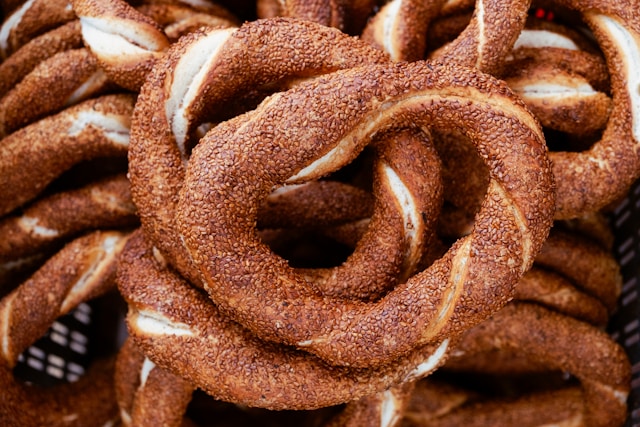
Bread (ekmek) shows up at nearly every table, usually a basket of fresh white loaf (francala), and it’s treated with a level of respect that surprises a lot of visitors — you’ll rarely see a Turk throw bread in the trash; stale pieces often get left out for someone else to collect rather than binned. Two bread forms — simit (the sesame-crusted ring sold from carts everywhere) and the Ramadan-only Ramazan Pidesi — are cultural enough that they get their own full breakdown later in this guide.
Seasonal Eating & Ramadan in Istanbul
Eating With the Seasons
Turkish cooking is genuinely seasonal, not just marketed that way. Summer means Aegean vegetables and cold zeytinyağlı dishes; winter shifts toward hearty stews, kalkan (turbot), and hot soups. If you’re eating well in July, you’re eating vegetables; if you’re eating well in January, you’re eating something slow-cooked.
If Your Trip Overlaps With Ramadan
Ramadan is a lunar month, so its dates shift roughly 10–11 days earlier each year — check the specific dates for your travel year rather than assuming. A few things genuinely change during it:
The pre-dawn drummers (davulcu). Around 3:00–3:30 AM, drummers still walk through older neighborhoods like Ayvansaray, beating a large double-headed drum to wake residents for sahur, the pre-dawn meal before the day’s fast begins. It’s a real, still-living Ottoman-era tradition — over 3,000 drummers take part across the city each year — and if you hear rhythmic drumming outside your window at 3:00 AM during Ramadan, this is why, not a protest or a parade. Locals traditionally tip the drummer for their own street at the end of the month if they choose to.

Iftar, the fast-breaking meal. At sunset, the fast breaks with dates and water first, followed by soup, then the full meal. Restaurants get genuinely packed right at sunset — if you want to eat at a popular spot during Ramadan, plan around that window specifically.
Ramazan Pidesi. A round, soft, slightly sweet bread baked only during this month — bakery lines can stretch around the block in the hour before sunset, and it’s worth joining one.
Güllaç, a light, rosewater-scented milk pudding layered with starch wafers, appears almost exclusively during Ramadan and is considered the season’s signature dessert — you genuinely won’t find it much the rest of the year.
Is everything closed during the day? No — Istanbul is a large, secular city, and most restaurants stay open through the day for non-fasting locals and visitors. You just won’t see the ambient street eating and drinking that’s normal the rest of the year, and it’s polite to be a bit more discreet about eating in public in more traditional neighborhoods.
Sample One-Day Itineraries for Eating Your Way Through Istanbul
Day 1: The Classic First-Timer Route (Historic Peninsula)
- Morning — Breakfast at Kahvaltıcılar Sokağı in Beşiktaş, or a simpler simit-and-tea start near your hotel
- Midday — Walk to Eminönü for balık ekmek by the Galata Bridge, then browse the Spice Bazaar for lokum and dried fruit
- Afternoon — Turkish coffee break in Sultanahmet, near Tarihi Sultanahmet Köftecisi if you want an early dinner detour
- Evening — Dinner at Matbah for Ottoman palace cuisine, or a more casual meyhane in nearby Kumkapı
Day 2: Local Life on the Asian Side
- Morning — Ferry to Kadıköy, breakfast at a neighborhood spot in Moda
- Midday — Walk the Kadıköy market streets — cheese samples, pastırma, a stop at Şükela
- Afternoon — Lunch at an esnaf lokantası, then çiğ köfte and Borsam Taşfırın lahmacun as an afternoon snack
- Evening — Dinner in Kadıköy’s bar-and-meze district, or head back across for a Bosphorus fish dinner in Arnavutköy
Day 3: Deep Dive for Serious Food Travelers
- Morning — Book a tour with Istanbul On Food or a private guide through Culinary Backstreets for a neighborhood you wouldn’t otherwise find
- Midday — A cooking class built around a market shopping trip
- Evening — Splurge night: Mikla, Neolokal, or TURK Fatih Tutak if you’re booking weeks ahead
Budget Street Food Day (Under $25/person)
Simit and tea for breakfast → lahmacun rolled with lemon and parsley for lunch → midye dolma and kumpir as afternoon grazing → döner or a wet burger for dinner. You’ll genuinely eat as well as anyone spending five times as much — the ceiling on Istanbul street food quality is unusually high.
Istanbul Food Icons: Breakfast Culture, Street Food & Sweets
You can read a city’s history in its buildings, but you taste its soul in its street food. Istanbul’s culinary icons aren’t just something to eat — they’re edible archives. They carry the legacy of nomadic Turkic cooking, the excess of the Ottoman palace kitchens, and the daily rhythm of a city of nearly 16 million people who are constantly crossing between two continents just to get to work.
Eating your way through Istanbul is almost chronological. The city wakes up to the smell of toasted sesame from simit carts, moves into the smoky charcoal of midday street stalls, and winds down with the sticky, pistachio-studded crunch of late-night sweets. None of this is a “food scene” in the curated, Instagram sense. It’s infrastructure — the way people here actually eat, every day.
What makes something an “icon” in Istanbul isn’t popularity alone. It’s how deeply a dish is wired into daily life: the running argument over whether menemen needs onions, the ritual of drinking tea on a ferry, the unspoken rule that a proper breakfast can’t be rushed. An iconic dish here comes with its own time, place, and method of eating — get any of those wrong and a local will tell you.
This guide is built around three pillars: the sacred ritual of Turkish breakfast, the fast-moving world of street food, and the old, highly technical tradition of Turkish sweets. Each section covers the history, the honest pros and cons, real 2026 pricing, and the mistakes that mark someone as a first-timer.
The Turkish Breakfast — Istanbul’s Most Sacred Meal
{Image: overhead shot of a full serpme kahvaltı spread with tulip tea glasses}
Why Breakfast Is a Ceremony, Not a Meal
In Turkey, kahvaltı isn’t something you grab on the way out the door. It’s a sprawling, multi-plate social event, and rushing it is close to missing the point entirely. It’s the bridge between waking up and your first proper glass of Turkish coffee, and it’s built for lingering — with friends, family, or a newspaper.
The Full Spread — What’s Actually on the Table
A classic serpme kahvaltı (spread breakfast) covers the whole table in small plates:
- Beyaz peynir — a salty, briny sheep’s milk cheese, similar to feta but creamier, and the anchor of the spread.
- Kaşar peyniri — a mild, semi-hard yellow cheese, usually sliced, that softens the sharper white cheese.
- Regional cheeses — look for tulum (crumbly goat cheese aged in a casing) and Ezine (a prized, full-fat white cheese from the Aegean).
- Olives — wrinkled, oil-cured black olives alongside cracked green ones marinated in lemon and thyme.
- Tomatoes and cucumbers — simply chopped, drizzled with good olive oil, and non-negotiable as a palate cleanser between the richer plates.
- Honey and kaymak — the table’s real star: thick water-buffalo clotted cream swimming in local pine or wildflower honey.
- Bread and jam — fresh, crusty white bread meant for tearing and dipping into sour cherry or apricot jam.
- Çay — endless tulip-shaped glasses of strong black tea to wash it all down.
The Egg Dishes You’ll Actually Order
- Menemen — eggs scrambled with tomatoes, green peppers, and olive oil, usually in a bubbling copper pan.
- Sahanda yumurta — eggs fried in butter, often topped with spicy sucuk (garlic beef sausage).
- Çılbır — poached eggs over garlicky yogurt, drenched in butter infused with Aleppo pepper.
- Haşlanmış yumurta — a soft-boiled egg, usually dusted heavily with pul biber (red pepper flakes).
Bread and Pastry at the Table
- Simit — the chewy, sesame-crusted ring that defines an Istanbul morning (full breakdown below).
- Açma — softer and richer than simit, closer to a savory brioche.
- Poğaça — flaky, palm-sized pastry pockets filled with olives, cheese, or minced meat.
- Pide ekmeği — soft, dimpled flatbread that shows up at nearly every weekend spread.
- Börek — layered phyllo baked with cheese or spinach, added for weight and crunch.
Regional Breakfasts That Conquered the City
Istanbul’s breakfast scene has absorbed regional traditions from across the country, and you’ll now find them as their own category on menus:
- Van kahvaltısı — from the eastern city of Van, built around otlu peynir (herb cheese) and a wide range of local honeys.
- Hatay breakfast — spicy red pepper pastes, za’atar, and rich olive salads from the south, near the Syrian border.
- Black Sea breakfast — known for kuymak (a bubbling cheese-and-cornmeal fondue) and dense cornbread.
- Aegean breakfast — lighter and herb-forward, built around wild greens, citrus-marinated olives, and milder cheeses.
Where to Eat It — A Neighborhood Guide
- Beyoğlu and Cihangir — long, photogenic breakfast spreads, popular with a bohemian, café-culture crowd.
- Kadıköy and Moda — the Asian side’s version: unpretentious, authentic, and favored by locals and students over tourists.
- Balat — tiny, beautifully curated cafés in the shadow of 19th-century Greek mansions — arguably the most photogenic breakfast setting in the city.
- Beşiktaş — home to Kahvaltıcılar Sokağı (“Breakfast Street”), a strip of more than 30 breakfast halls serving large, affordable spreads to a mostly local, student-heavy crowd.
The Brunch Crossover
International brunch culture has started merging with traditional kahvaltı. High-end cafés in Nişantaşı and Karaköy now put avocado toast and eggs benedict on the same menu as menemen — a newer, more cosmopolitan take on the weekend ritual.
What It Actually Costs in 2026
A standard spread in Beşiktaş or Kadıköy runs roughly 350–600 TRY ($7–13 USD) per person. Premium or Bosphorus-view breakfasts in Bebek or Ortaköy regularly run 600–1,250 TRY ($13–27 USD) per person, and can go higher. Prices shift with the lira, so treat these as a ballpark rather than a fixed number.
Making the Most of It
Clear your schedule. Don’t book a museum for 10 AM if you’re sitting down for breakfast at 9. A proper Turkish breakfast takes at least two hours to do justice to, and most dedicated kahvaltı houses stop serving by early afternoon and don’t reopen for dinner — so plan around that window, not around it.
Pastane Culture — Istanbul’s Beloved Pastry Shops
What a Pastane Is
A pastane leans Western — baked goods and desserts with roots in French and Central European pastry traditions, heavily localized over the past century into something distinctly Istanbul.
Pastries That Became Local Icons
Profiterol — cream puffs swimming in dark chocolate sauce — is most associated with İnci Pastanesi, which has been making them since 1944. Worth knowing before you go: İnci isn’t at its original İstiklal Caddesi address anymore. It was evicted from the historic Cercle d’Orient building in 2012 and now operates from Mis Sokak, a short walk away — so don’t be thrown off if the famous old storefront isn’t where you expect it.
Kup Griye — a layered ice cream sundae with caramel, toasted almonds, and whipped cream — was invented in 1954 by Harry Lenas at Baylan, whose Kadıköy branch (opened 1961) is still the place most people mean when they talk about it.
Sweet Street Foods — The Mobile Dessert Culture
Ortaköy’s Waffle Culture
After a kumpir in Ortaköy, the dessert is right across the street. An Istanbul waffle is soft, folded in half like a taco, and loaded — often aggressively so — with Nutella, banana, strawberries, and crushed nuts.
Lokma — Fried Dough, Charity, and Celebration
Crispy, deep-fried dough balls soaked in cold syrup. You’ll sometimes see a truck distributing them for free on the street — this is a genuine charitable tradition, most commonly tied to honoring someone who has died (often on the 7th or 40th day after a death), but it’s also used to mark births, business openings, or simply to give thanks. If you’re offered a free one, it’s polite to accept and say a quiet word of thanks rather than question it.
Iconic Drinks That Accompany Istanbul’s Food Icons
- Çay (tea) — served in small tulip-shaped glasses. Don’t be surprised if you end up drinking far more of it in a day than you expected; refills are constant and expected.
- Turkish coffee — unfiltered and thick, served with a glass of water to cleanse the palate beforehand. It’s drunk after a meal, not during — ordering it alongside your main course will mark you as a first-timer.
- Ayran — a frothy, salty yogurt drink that pairs well with spicy kebabs and lahmacun, cutting through the richness.
- Sahlep — a hot, milky winter drink dusted with cinnamon, traditionally thickened with orchid-root flour (the same ingredient behind dondurma’s stretch — see above for why genuine sahlep has become harder to find and more expensive).
Practical Sweet and Street Food Guide
Food Hygiene and Safety
Istanbul’s street food is largely safe, with high turnover and generally fresh ingredients. The “line of locals” rule is a reasonable general guide, but it’s not universal — mussels specifically deserve extra caution regardless of the line, for the reasons covered in the midye dolma section above. For nearly everything else on this list, busy, well-established vendors are a genuinely reliable signal.
Dietary Considerations
Almost all meat in Istanbul is halal. Vegetarians have solid options — simit, çiğ köfte, roasted corn, kumpir without meat toppings. One real warning worth taking seriously: nut allergies are difficult to manage around sweet shops, since pistachios and walnuts show up across shared equipment and surfaces even in dishes that don’t obviously contain them. If you have a serious nut allergy, ask directly before ordering rather than assuming a dish is safe based on the menu description.
Photography Etiquette
Vendors — especially dondurma sellers and simitçis — are used to cameras and generally welcoming of them. A polite nod, or asking “Fotoğraf çekebilir miyim?” (“May I take a photo?”), is a small courtesy that’s always appreciated before you get close with a lens.