Most first-time visitors plan their whole trip around Sultanahmet’s domes and Beyoğlu’s neon-lit alleys. Fair enough — that’s the Istanbul everyone’s seen in photos. But head north along the European shore of the Bosphorus and the city shifts register entirely.
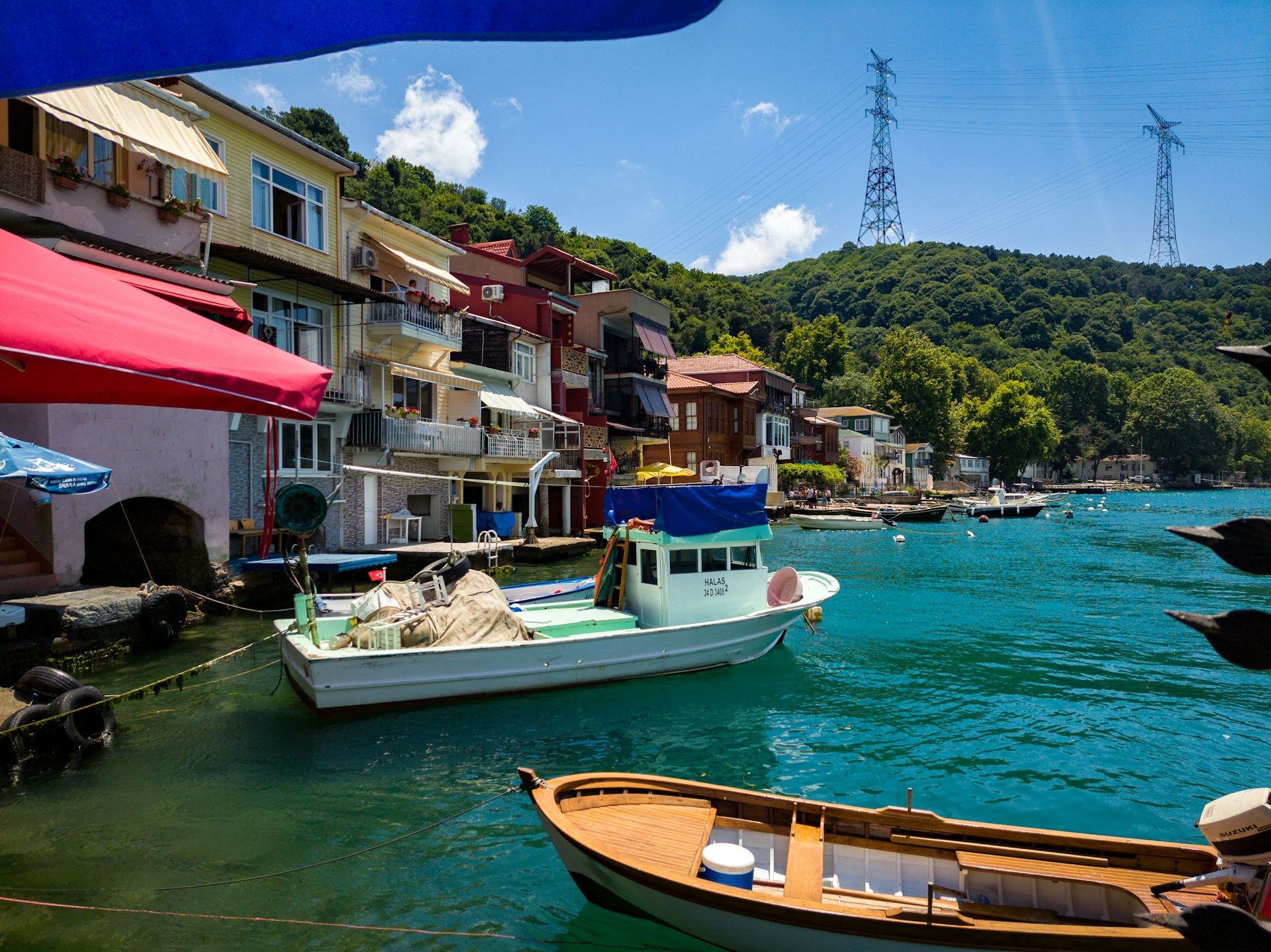
Arnavutköy, Kuruçeşme, and Bebek are old maritime villages that got absorbed into the city without losing their shape. Wooden Ottoman mansions — yalılar — still line the water. Fishing boats share the marina with yachts that cost more than most apartments. The pace is slower, the money is louder, and the whole stretch still runs on a rhythm set by the strait itself.
European Side vs. Asian Side Villages
The European-side villages — Arnavutköy, Kuruçeşme, Bebek — are where Istanbul’s wealthier crowd goes to be seen. Boutiques, sleek cafés, valet parking outside seafood restaurants. Cross to the Asian side and villages like Çengelköy or Kuzguncuk feel like a different decade: quieter, more residential, fewer people performing their outfit for the street.
Neither side is “better” — they’re different experiences. If you want polish and energy, stay European. If you want to sit under a plane tree with a tea and watch fishermen mend nets, go Asian side. This guide covers the European stretch in depth.
Who This Route Is For
This walk rewards a specific kind of traveler:
- Slow travelers and photographers who don’t mind spending three hours to cover 3.5 kilometers because they keep stopping
- Food-focused visitors who plan trips around where they’ll eat
- Couples looking for a romantic, non-touristy backdrop
- Anyone who’s already done the “big sights” checklist and wants to see how residents actually spend a Sunday
If you’re on a 48-hour layover trying to hit Hagia Sophia, the Grand Bazaar, and a Bosphorus cruise all in one day, this walk is the first thing to cut. It needs unhurried time to make sense.
Why It’s Genuinely One of Istanbul’s Most Scenic Walks
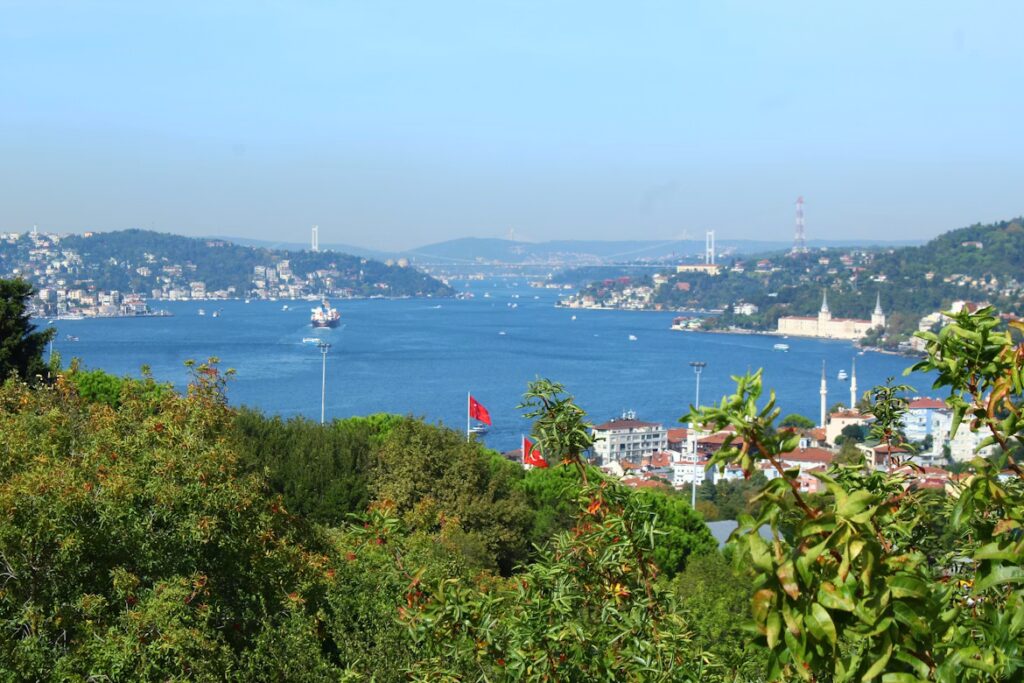
The road and pedestrian path hug the water almost the entire way — you’re rarely more than a few meters from the Bosphorus. What makes it visually interesting isn’t just the water itself; it’s the contrast. Nineteenth-century wooden mansions sit a few hundred meters from ultra-modern suspension bridges. Container ships the length of city blocks slide past small wooden fishing boats. That juxtaposition — old and new, grand and modest, sharing the same narrow strip of water — is what makes the walk feel different from anywhere else in the city.
Map & Route Overview
Full Route from Arnavutköy to Bebek
Heading north from the city center (Beşiktaş/Ortaköy), the villages line up in this order: Kuruçeşme, then Arnavutköy, then Bebek, then Rumeli Hisarı. This guide focuses on the Arnavutköy–Bebek stretch — the most rewarding part — but covers Kuruçeşme too, since it’s the natural starting point.
Suggested Walking Direction
Walk south to north: start in Kuruçeşme or Arnavutköy in the late morning and finish in Bebek. Two practical reasons for this direction, not just aesthetics:
- The sun sits at your back or side for most of the walk, which matters if you’re photographing the yalıs
- Bebek has the strongest concentration of parks and lunch spots, so you end the walk somewhere worth lingering rather than somewhere you’re just passing through
Key Stops Along the Way
- Kuruçeşme Marina — starting point, packed with yachts and high-end clubs
- Akıntıburnu (“The Current Point”) — the bend in Arnavutköy where the Bosphorus current is visibly strong; also the best photo spot on the route
- Bebek Park — shaded, lively green space, good for resting
- Rumeli Hisarı — the fortress marking the narrowest point of the strait
Distance & Time Breakdown
The walk from Kuruçeşme through Arnavutköy to central Bebek is about 3.5 km (2.2 miles). Walked without stopping, that’s roughly 45 minutes. Realistically, with photo stops, a coffee break, and some window shopping, budget 2 to 3 hours.
Alternative Routes & Extensions
- Extend south: start further down in Ortaköy and walk north — adds roughly another 30–40 minutes of walking
- Extend north: from Bebek, continue about 20 minutes further to reach Rumeli Hisarı and the leafy district of Emirgan
How to Get There & Around
Getting to Arnavutköy (Starting Point)
The coastline itself has no metro station sitting directly on the water, so getting here always involves a short surface or connecting leg. From Beyoğlu or Sultanahmet, take the T1 tram to its final stop at Kabataş, then continue by bus or ferry. From Beşiktaş, you head north along the coast the same way.
A shortcut most guides miss: since a 2022 funicular extension, you can also take the M6 metro from Levent to Boğaziçi Üniversitesi/Hisarüstü, then transfer to the F4 funicular for a 3-minute descent to Aşiyan, right next to Rumeli Hisarı and about a 15–20 minute walk (or short bus hop) from Bebek. If you’re already near Levent or want to start the walk from the northern end and work south, this avoids surface traffic entirely — something the bus and taxi options below can’t promise.
Do not forget to see Istanbul’s Most Photogenic Route Through Colorful Ottoman Mansions in Arnavutköy.
Public Transport Options
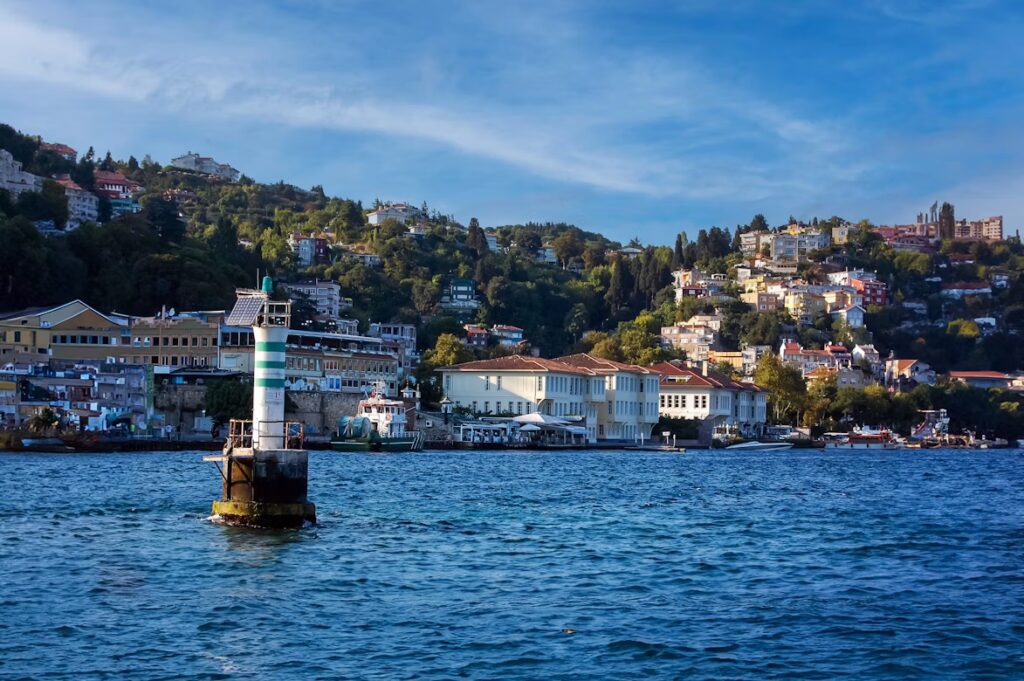
The public ferry (Şehir Hatları) is arguably the most scenic way to arrive. Check the “Boğaz Hattı” (Bosphorus Line) schedule — ferries hop between Beşiktaş, Ortaköy, Arnavutköy, and Bebek, though not on a frequent enough schedule to rely on for quick hops between neighborhoods.
Bus Routes Explained
Buses 22, 22RE, and 25E all run this coastal corridor from Kabataş/Beşiktaş north through Kuruçeşme, Arnavutköy, and Bebek, continuing toward Rumeli Hisarı and beyond. Tap your Istanbulkart and watch the onboard screen or a transit app for your stop — “Arnavutköy” and “Kuruçeşme Üstü” are the names to watch for.
Taxi & Ride App Tips
Warning: Cevdet Paşa Caddesi, the coastal road, is notorious for brutal traffic — especially sunny weekends and evening rush hour. An Uber or BiTaksi can genuinely end up slower than walking the same stretch. If you need a taxi, take it early morning, or use it only to get to your starting point, not to move between villages.
Walking vs. Transport Between Stops
Once you’re dropped in Kuruçeşme or Arnavutköy, commit to walking. The distance between these villages is short, flat, and the pedestrian promenade is genuinely the best part of the experience — don’t waste it sitting in a bus.
Arnavutköy — Ottoman Houses & Seafood Culture
What Makes Arnavutköy Special
Arnavutköy means “Albanian Village” — most accounts trace the name to Albanians resettled here by Sultan Mehmed II in the 15th century, though the exact story varies depending on the source. What’s not in dispute is that this is the most photogenic of the Bosphorus villages, and the one that’s held onto its neighborhood feel the hardest against the pressure of high-end development. Under its Byzantine name, Mega Revma (“Great Current”), it was already known for the exact current you’ll see churning past Akıntıburnu today — some things here haven’t changed in over a thousand years.
Historic Waterfront Houses
The centerpiece is the unbroken row of yalıs — ornate wooden mansions built directly on the water by Ottoman-era elites in the 19th century. Their pastel façades (pink, seafoam green, cream), carved balconies, and overhanging bay windows are as close as Istanbul gets to a living architecture museum. Many of these homes were built by wealthy Greek and Armenian families — worth knowing, since it explains the multicultural detail you’ll find a block inland.
Best Streets to Wander
The coastal road is the postcard shot, but the real texture is one block back. Francalacı Caddesi and the steep alleys climbing the hill behind it are lined with restored Greek and Armenian houses, small art galleries, and bougainvillea spilling over garden walls. This is also where you’ll find the neighborhood’s less-touristy cafés and pizza spots tucked into converted houses.
A detail most guides skip: Arnavutköy was once genuinely agricultural. Roughly 40 hectares of pink “Ottoman strawberry” fields covered the hillside a few decades ago, supplying much of the city. The fields are gone, but the strawberry still shows up on local dessert menus as a nod to that history.
Seafood Restaurants Scene
Arnavutköy’s coastal road is lined shoulder-to-shoulder with upscale balıkçı (fish restaurants), most displaying the day’s catch on ice out front.
- Arnavutköy Balıkçısı — one of the most consistently recommended spots by locals, not just tourists
- Sur Balık — housed in a restored wooden mansion with terrace seating over the water; reviews are strong on ambiance and freshness, but a few flag pushy upselling on drinks and extras, so confirm prices as items are ordered
- If you want lower-key alternatives with a strong local following, Adem Baba and Hayri Balık are worth asking about — smaller, less scenographic, often cheaper
Reality check on reservations: for weekend dinners, especially a water-view table, walk-ins are close to impossible at the well-known spots. Call ahead or book online at least a day out.
Photography Spots
The signature shot is at Akıntıburnu. Stand on the promenade facing south and you’ll frame the curving row of yalıs with the open Bosphorus and the Asian shore behind them. Early morning light comes from the Asian side, hitting the wooden façades on the European shore almost head-on — that’s the best light of the day, not sunset.
Things to Do in Arnavutköy
Waterfront Walk
The promenade itself, from Kuruçeşme into Arnavutköy, is the main event — not a warm-up for something else. It’s wide, breezy, and unobstructed the whole way.
Dining Experiences
Book ahead at Arnavutköy Balıkçısı or Sur Balık for a traditional Turkish seafood dinner — expect a long, multi-course meal built around meze and raki if that’s the local custom you’re after.
Café Stops
Duck one street back from the water for third-wave coffee roasters — this stretch has several, and they change often enough that it’s worth asking a local barista for the current favorite rather than chasing a name that might have moved.
Hidden Corners
Walk up to the Taksiarhis Greek Orthodox Church. The current building dates to 1896–1899, rebuilt after an 1894 earthquake destroyed the earlier structure — it still serves one of the larger remaining Greek Orthodox congregations in the city, a quiet trace of the neighborhood’s multicultural past.
Kuruçeşme — Quiet Waterfront Escape (By Day), Nightlife Epicenter (By Night)
Overview of the Area
South of Arnavutköy, Kuruçeşme has narrower sidewalks and less pedestrian charm on paper, but it makes up for that with green space and a completely different energy after dark. Think of it as the hinge between Ortaköy’s bustle and Arnavutköy’s residential calm.
Marina & Coastal Walk
The small marina here is genuinely glamorous — some of the most expensive yachts docked anywhere in Istanbul sit here. The adjacent Kuruçeşme Cemil Topuzlu Park is a quiet green strip worth a slow lap.
Local Vibe & Atmosphere
By day: sleepy, residential, a few people walking dogs. By night: this stretch turns into one of the city’s premier nightlife zones, with waterfront superclubs running until sunrise.
Things to Do in Kuruçeşme
Scenic Walks
Walk the coastal park and grab roasted chestnuts (kestane) or corn on the cob from a street vendor — a genuinely local snacking habit, not a tourist add-on.
Cafés & Chill Spots
Look for a waterside café for brunch with a quieter, more romantic setting than Bebek’s busier spots — this stretch has a few, and they tend to have shorter waits than their Bebek equivalents.
Night Venues
If you want Istanbul’s premium club scene, this is the place:
- Sortie — multiple restaurants, three bars, open 6 PM–4 AM, right on the water
- Oligark — large, modern, doubles as a restaurant by day and club by night; reviews are strongly positive on atmosphere but consistently note it’s expensive — expect table/bottle service pricing rather than a casual cover charge
Both require reservations for a table with a view on weekends, and dress codes are enforced.
Bebek — Trendy, Green & Upscale
What Makes Bebek Popular
If Arnavutköy is historic and lived-in, Bebek is polished. It translates to “Baby” in Turkish — nobody agrees on exactly why, though most theories trace it to the Ottoman period. What matters more: this is where Istanbul’s wealthier residents, expats, and fashion crowd actually spend their weekends. It reads more like a European Riviera town than a typical Istanbul neighborhood — designer boutiques, sports cars parked along the coastal road, and a café culture that takes itself seriously.
Bebek Park & Waterfront
The neighborhood’s heart is Bebek Parkı, officially Türkan Sabancı Bebek Parkı. The land has been public green space since 1908, though what you’re walking through today is a 2008 renovation funded by the Sabancı Foundation — before that, it was the private garden of an 18th-century royal pavilion. On weekends, expect it packed with people walking well-groomed dogs, reading on the grass, and drinking takeaway coffee from the surrounding cafés.
Luxury & Lifestyle Scene
The streets climbing the hill above Bebek hold some of the priciest real estate in Turkey. The coastal road doubles as an informal showroom for luxury cars, and the boutiques selling fine jewelry and designer fashion aren’t performing wealth — they’re serving the people who actually live here.
Café Culture & Brunch Spots
Bebek’s café scene is genuinely influential — several trends that later spread across Istanbul’s brunch culture started here. Sunday mornings mean real competition for a sea-view table, so plan around that rather than against it.
Things to Do in Bebek
Walking & Jogging Routes
The wide promenade running from Bebek Park north toward Rumeli Hisarı is one of the city’s most popular outdoor workout routes — join the locals for a morning jog if you’re up early enough to beat the crowds.
Breakfast & Coffee Spots
- Mangerie — a long-running Bebek institution on an upper floor with Bosphorus views; strong on atmosphere and Turkish breakfast trays, though reviews note service can be inconsistent on busy weekends. Expect mains in the 1,100–1,550 TL range as of recent menus — confirm current pricing before you go, since this changes often.
- For a quicker, less scene-driven coffee, look for one of the independent specialty roasters tucked into the side streets — they turn over occasionally, so ask locally for the current favorite rather than chasing a specific name.
Boutique Shopping
Wander down Küçük Bebek Caddesi (Little Bebek Street) for independent Turkish designers, homewares, and perfume boutiques.
Sunset & Evening Spots
Lucca has been a fixture of Bebek’s social scene since 2004 — part restaurant, part late-night bar, genuinely popular for “see and be seen” people-watching. Worth knowing before you go: several recent reviews describe an inconsistent and sometimes frustrating door policy, particularly for walk-ins without reservations. Book ahead and dress the part rather than showing up casual and hoping for the best.
For a quieter, historic alternative: Baylan, founded in 1923 (Bebek branch since 2010), is Istanbul’s most famous patisserie and the place to try kup griye — a caramel-and-ice-cream dessert that’s genuinely worth the trip. It also has a rooftop and full restaurant menu if you want a lighter, less club-like evening than Lucca.
For fine dining with water views after dark, Chilai is a solid, currently-operating option with a frequently updated menu.
Optional Extension: Rumeli Hisarı & Beyond

Why Continue Past Bebek
If you’ve got another 20 minutes in your legs, the shoreline gets more dramatic as the strait narrows toward one of Istanbul’s most significant monuments.
Fortress Views & History
Rumeli Hisarı was commissioned by Sultan Mehmed II, with construction beginning on April 15, 1452, in preparation for the siege of Constantinople. Its original name, Boğazkesen (“strait-cutter” or “throat-cutter”), tells you exactly what it was built to do: it functioned as a military-financial control point to manage ships passing the Bosphorus, working in tandem with Anadolu Hisarı on the Asian shore to cut off any naval relief reaching Byzantine Constantinople. Mehmed mobilized thousands of laborers, and the fortress was completed in roughly four months — a genuinely fast build for a structure this size. It’s been a museum since 1960, though renovations and reopening schedules shift, so check current opening hours and admission before you go rather than relying on a fixed number here.
A route tip most guides don’t mention: since a 2022 funicular extension (the F4 line), you can reach this area directly from the M6 metro via a 3-minute ride down from Boğaziçi Üniversitesi/Hisarüstü station — useful if you want to see the fortress first and walk south into Bebek, rather than only approaching from the coastal road.
Additional Villages Worth Exploring
Just past the fortress lies Emirgan, home to Emirgan Park — the center of Istanbul’s annual Tulip Festival each April — and the Sakıp Sabancı Museum, which houses a significant art and calligraphy collection.
Best Cafés & Restaurants Along the Route
{Image placeholder: flat lay or table shot of Turkish meze and grilled fish}
Seafood by the Bosphorus
- Arnavutköy Balıkçısı — consistently recommended by locals, not just guidebooks
- Bebek Balıkçısı — a long-running institution with a large waterfront terrace and a wide meze selection
- Sur Balık (Arnavutköy) — housed in a restored wooden mansion; strong on ambiance, but confirm your bill as courses arrive, since a few reviewers report upselling
Best Breakfast Spots
- Mangerie (Bebek) — known for its Turkish breakfast trays and Bosphorus-view terrace; expect a wait on weekends
- A waterside café in Kuruçeşme — a quieter, more romantic breakfast setting than Bebek’s busier spots, with shorter waits
Coffee & Dessert Places
- Baylan (Bebek) — the city’s most historic patisserie (founded 1923; Bebek branch since 2010). Order the kup griye — a caramel, ice cream, and toffee dessert that’s genuinely the signature item, not a marketing line
- Cup of Joy (Bebek) — tiny, hidden inside the Yasemin Pasajı shopping arcade off the main waterfront street; some of the most serious specialty coffee in the city, but small enough that you may queue
- Petra Roasting Co. (Bebek) — on Küçük Bebek Caddesi, with a garden seating area; excellent coffee by most accounts, though pricing runs high even by Bebek standards — a single specialty drink can run several hundred lira
Romantic Dining Options
- Chilai (Bebek) — modern menu, strong wine list, tables close to the water
- Sur Balık (Arnavutköy) — intimate, historic-mansion setting; book ahead for a weekend table
Budget-Friendly Eats
The Bosphorus villages are expensive by Istanbul standards, but you don’t have to spend like a local billionaire to enjoy them. A waffle from one of the stalls in Bebek, or a simit and cheese eaten on a bench in Bebek Park, gets you the same view as the rooftop tables — for a fraction of the price. Street vendors selling roasted chestnuts and corn in Kuruçeşme’s coastal park are another genuinely local, low-cost option.
Best Time to Visit the Bosphorus Villages
{Image placeholder: golden-hour light on the Bosphorus waterfront promenade}
Morning vs. Sunset Experience
- Morning (9:00–11:00 AM): Best for walking and photography. The light is clean, the water is calm, and you’re ahead of the afternoon traffic that clogs Cevdet Paşa Caddesi.
- Sunset (5:00–7:00 PM): Best for atmosphere. The light turns warm, cafés fill up, and the transition into the evening scene begins — especially in Kuruçeşme.
Seasonal Differences
Spring (May) and autumn (September) offer the most comfortable walking conditions. In July and August, the waterfront breeze is a genuine relief from the heat further inland in the Old City. Winter walks can turn bracingly cold — the wind off the strait has real bite, so bring more layers than you think you’ll need.
Weekday vs. Weekend Atmosphere
For an unhurried walk, go Tuesday or Wednesday. On weekends, the whole route fills up — expect 30–45 minute waits at popular cafés and a genuinely crowded pedestrian path.
Photography & Instagram Spots
{Image placeholder: telephoto shot compressing the row of Arnavutköy yalıs against the water}
Colorful Houses in Arnavutköy
The signature shot is the curving line of yalıs from the promenade near Akıntıburnu. A slightly longer lens compresses the background and makes the row of houses feel even more continuous against the water.
Waterfront Views in Bebek
The small marina in Bebek, with wooden boats framing the Fatih Sultan Mehmet Bridge in the distance, is one of the more elegant, classically “Istanbul” compositions on this route.
Hidden Scenic Angles
The steep hill behind Bebek (Bebek Yokuşu) gives you an elevated view down through the trees toward the bay — a genuinely different angle from anything at water level.
Best Time for Photos
Early morning wins here specifically because the sun rises over the Asian side, casting soft, front-facing light directly onto the wooden mansions on the European shore — the same light that makes the yalıs’ pastel colors read most vividly in photos.
Sample Walking Itineraries
2–3 Hour Quick Walk
- Take a taxi or bus to Arnavutköy
- Photograph the yalıs and walk the promenade
- Continue into Bebek, stop for coffee
- Sit in Bebek Park for half an hour before heading back
Half-Day Slow Travel Route
- Start with a late breakfast at a waterside café in Kuruçeşme
- Walk the coast into Arnavutköy, exploring the backstreets and the Taksiarhis Church
- Continue to Bebek for boutique shopping
- Finish with a late seafood lunch at Bebek Balıkçısı
Food-Focused Route
- Start in Bebek with pastries at Baylan
- Walk south to Arnavutköy to build an appetite
- Have a multi-course meze-and-fish lunch at Arnavutköy Balıkçısı
- Continue to Kuruçeşme to walk it off, grabbing roasted chestnuts along the way
Romantic Walk Itinerary
- Arrive in Arnavutköy about an hour before sunset
- Walk the coast as the lights on the Bosphorus Bridge come on
- Have dinner at Chilai or Lucca in Bebek — book ahead for either
- Take a late taxi back along the illuminated waterfront
Practical Tips for Visiting
{Image placeholder: pedestrians walking the flat waterfront promenade between Arnavutköy and Bebek}
What to Wear & Comfort Tips
This is an upscale area, but you’re still walking for miles on pavement. Wear comfortable shoes you don’t mind being seen in — flip-flops or brand-new shoes will both let you down here. The breeze off the Bosphorus is deceptive: bring a light jacket or scarf even in summer, especially if you’re staying until sunset.
Safety & Crowds
These neighborhoods are affluent, well-lit, and heavily trafficked by both residents and visitors, which in practice makes them comfortable to walk at most hours. The main hazard isn’t safety — it’s crowd density on weekends. Stay on the pedestrian path and watch for cyclists and joggers sharing the same narrow strip.
Budget Expectations
Adjust your budget upward before you arrive. A coffee or cocktail in Bebek routinely costs more than the same order in Kadıköy or Fatih — reviewers of even casual cafés here report prices that surprise first-time visitors, so treat listed menu prices as a starting point, not a ceiling, and confirm costs on anything unusual before you order it (extras, add-ons, and “recommended” sides are where bills tend to climb).
Accessibility Notes
The waterfront promenade from Kuruçeşme to Bebek is flat, paved, and works well for wheelchairs and strollers. The side streets climbing away from the water — including the more atmospheric backstreets in Arnavutköy — are steep and largely inaccessible. If mobility is a concern, plan to stay on the coastal path and treat the hillside detours as optional rather than essential.
Common Mistakes to Avoid
Starting Too Late in the Day
Starting this walk at 2:00 PM on a Saturday means fighting both traffic to get there and a full house at every café once you arrive. Start by 10:00 AM if you can.
Skipping the Smaller Stops
Taking a taxi straight to Bebek and staying there misses the point of this route. The value is in the transition — watching the architecture, pace, and crowd shift gradually from Kuruçeşme through Arnavutköy into Bebek. Do the walk, not just the destination.
Not Reserving Restaurants
For a well-known seafood restaurant in Arnavutköy or weekend brunch in Bebek, walk-ins for a sea-view table are close to impossible. Call ahead or book online — a day’s notice is usually enough, but for peak Sunday brunch slots, more lead time helps.
Underestimating the Walk
3.5 kilometers doesn’t sound like much on paper, but doing it in full sun with photo stops and crowd navigation adds up. Pace yourself, and carry water — shade is inconsistent along the coastal road.
Bosphorus Villages vs. Other Istanbul Experiences
Compared to Sultanahmet
Sultanahmet is essentially an open-air museum of empires — impressive, but built almost entirely around tourism. The Bosphorus villages are a working neighborhood where wealthy residents genuinely spend their weekends. If you’ve spent a day or two absorbing historical sites, this route functions as a deliberate change of pace rather than more of the same.
Compared to Kadıköy & Moda
Kadıköy and Moda, on the Asian side, are bohemian, younger, and noticeably more affordable. Arnavutköy and Bebek are polished and expensive by comparison. If Moda is a worn-in denim jacket, Bebek is a tailored linen suit — both are authentically Istanbul, just from opposite ends of the city’s personality.
When to Prioritize This Route
Put the Bosphorus villages on your second or third day, after you’ve covered the major mosques and the Grand Bazaar. It works best as a deliberate slowdown — sea air, less structured sightseeing, and a look at how the city’s waterfront lifestyle actually functions day to day.