Part of our Istanbul’s Asian Side: Exploring Kadıköy, Moda & Üsküdar pillar guide.

You know that feeling when a city suddenly turns the volume down? One second you’re elbowing through the fish sellers and simit carts of Kadıköy’s produce market, the next you duck down a narrow side street and the noise just… drops. That’s Tellalzade Street for you.
If you’ve read our guide to Kadıköy, Moda, and Üsküdar, you already know the Asian side rewards people who wander off the main drag. Tellalzade Sokak (also called Antikacılar Sokağı, or “Antique Dealers’ Street”) is the single best example of that rule. It’s a short, unassuming lane packed with over fifty antique shops, and it happens to be one of the last places in Istanbul where you can still dig through crates of vinyl and stacks of vintage brass lamps in the same afternoon.
This guide isn’t a five-minute “top 10 things to do” list. It’s the practical, no-nonsense breakdown: exactly where the street is, what’s actually for sale, which mistakes waste your time and money, and whether it’s even worth your afternoon. Let’s get into it.
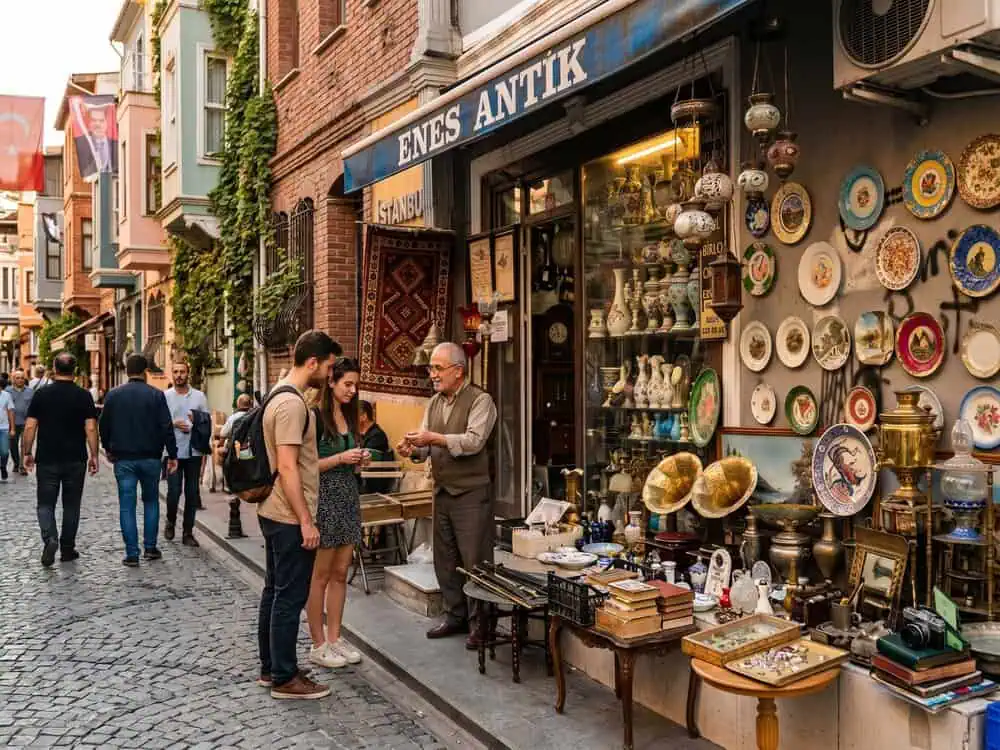
Where Exactly Is Tellalzade Street?
Tellalzade Sokak sits in the Caferağa neighborhood of Kadıköy, tucked between the district’s two most famous landmarks: the Kadıköy Fish Market (Kadıköy Balık Pazarı) at one end and the shop- and café-lined Bahariye Caddesi at the other. It’s also a short walk from Kadife Sokak, Kadıköy’s bar-and-bookshop street, so if antiquing leaves you thirsty, help is close by.
Choose best excursion in Istanbul
Here’s a fun bit of trivia that most tourist blogs skip: the street’s official name has nothing to do with antiques. “Tellal” comes from Ottoman Turkish for “town crier” or “auctioneer,” and “zade” means “son of.” So Tellalzade roughly translates to “son of the town crier” — almost certainly named after a family who once lived there, long before it became an antique row. Locals rarely use the formal name anyway; ask anyone in Kadıköy for “Antika Sokak” and they’ll point you the right way faster than any map app will.
Why this matters for you: because the street’s registered name and its “known-by” name are different, GPS apps and even some taxi drivers can get confused. Save yourself the back-and-forth and navigate to “Antikacılar Sokağı, Kadıköy” or search for a specific shop name once you’re close.
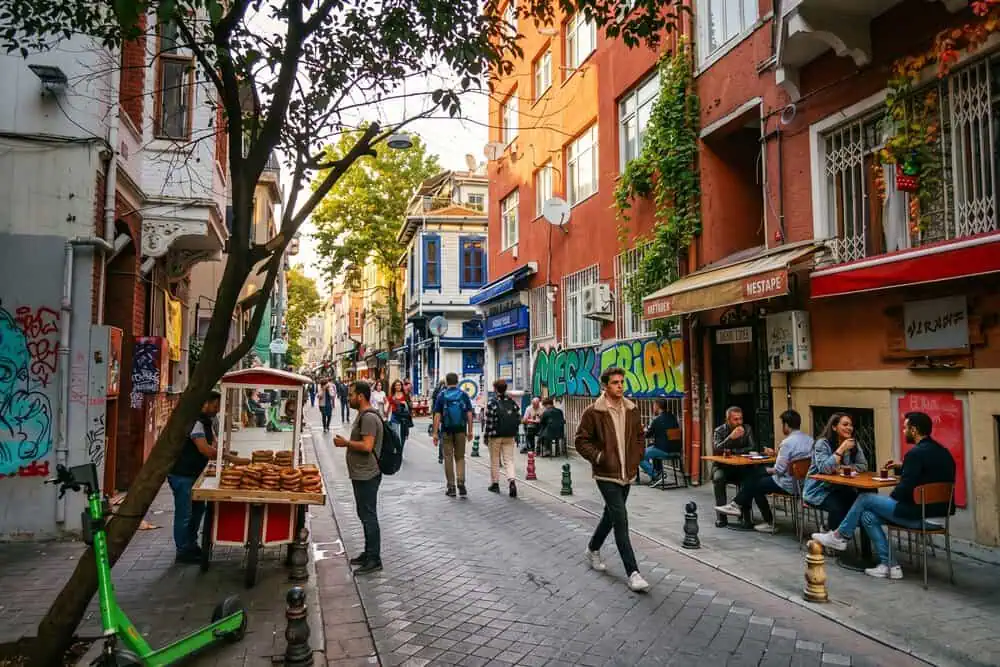
A Bit of History: How a Residential Street Became an Antique Row
Kadıköy itself has always been one of Istanbul’s older, more settled residential districts on the Asian shore, and Tellalzade Sokak sits inside the Caferağa neighborhood, which is dotted with apartment blocks dating back to the mid-20th century alongside older, more traditional konak-style houses. That mix of old and older is part of why the street ended up as an antique hub in the first place: as long-time residents moved out, downsized, or passed their belongings on, a natural supply of furniture, lighting, and household objects needed somewhere to go. Small dealers moved in to buy, sell, and trade that inventory, and over time the street built a reputation strong enough that most Kadıköy locals simply call it “Antika Sokak” instead of using its formal name.
That local, resident-driven origin story is worth keeping in mind as you browse, because it explains why the stock here feels different from a big curated bazaar. You’re not looking at a warehouse of imported “antique-style” goods; you’re looking at what used to sit in someone’s actual living room, kitchen, or study a few decades ago. It also explains why inventory turns over unpredictably — a shop’s shelves reflect whatever estate, house clearance, or trade came through recently, not a restocked catalog.
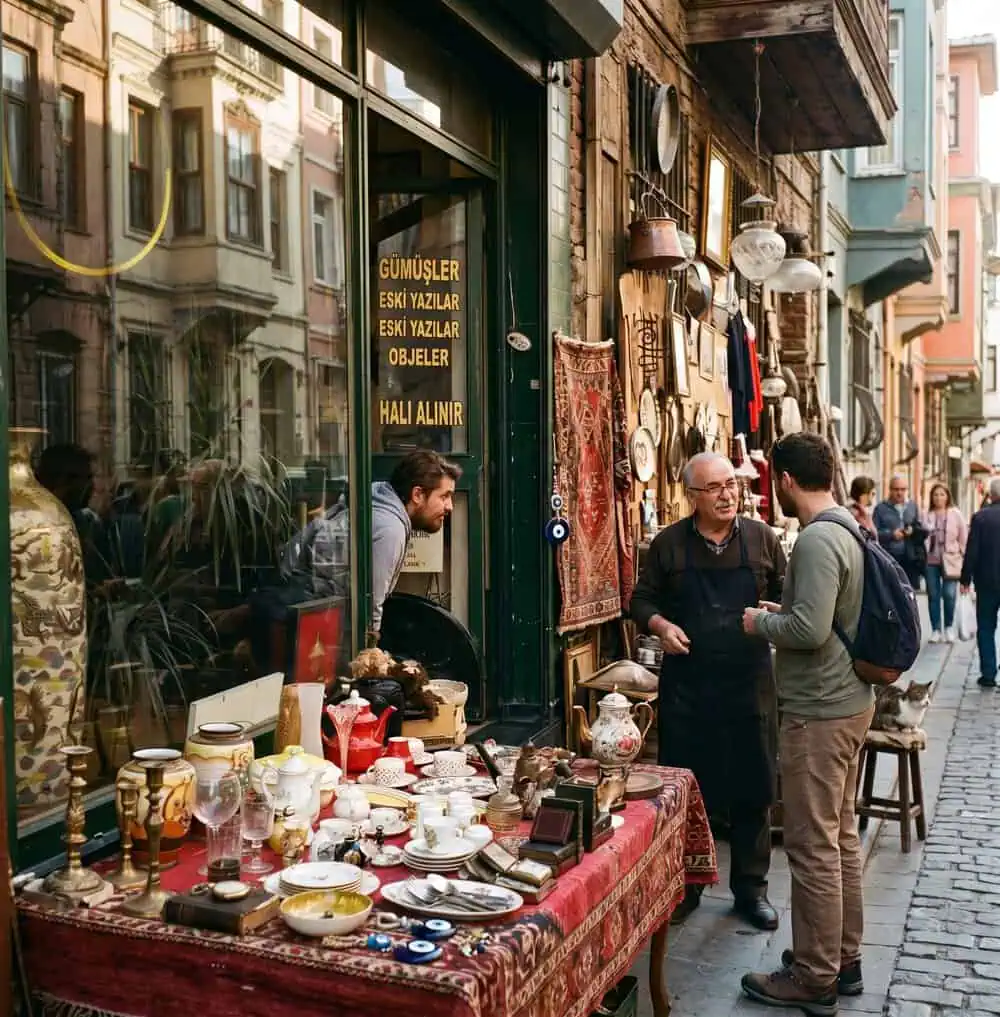
How to Get There
By ferry (the way we’d recommend)
Take a ferry to the Kadıköy pier from Eminönü, Karaköy, or Beşiktaş. It’s a scenic ride, and honestly cheaper and more pleasant than fighting cross-Bosphorus traffic. From the pier, it’s about a 10–12 minute walk inland toward the fish market
By metro
The M4 line has a Kadıköy stop, from which it’s a similar short walk
On foot from the fish market
This is the natural approach. Walk into the produce/fish market area and look for a quieter side street branching off — that’s your entry point into Tellalzade
Once you’re near the fish market, don’t overthink it. Part of the fun is simply noticing where the crowd noise fades and letting that guide you in.
What You’ll Actually Find on the Street
This is where most articles get vague and start throwing around words like “treasures” and “hidden gems” without telling you anything useful. Let’s be specific.
Stay connected during your trip
The Vinyl and Old Audio Gear
Tellalzade isn’t a dedicated record shop street the way Akmar Pasajı (also in Kadıköy, a short walk away) is — but it’s home to a handful of stores that mix vinyl in with their general antique stock. Expect to see:
- Crates of Turkish arabesque, pop, and classical records from the 60s–80s
- The occasional European or American pressing that clearly traveled a long way to end up in a Kadıköy shop window
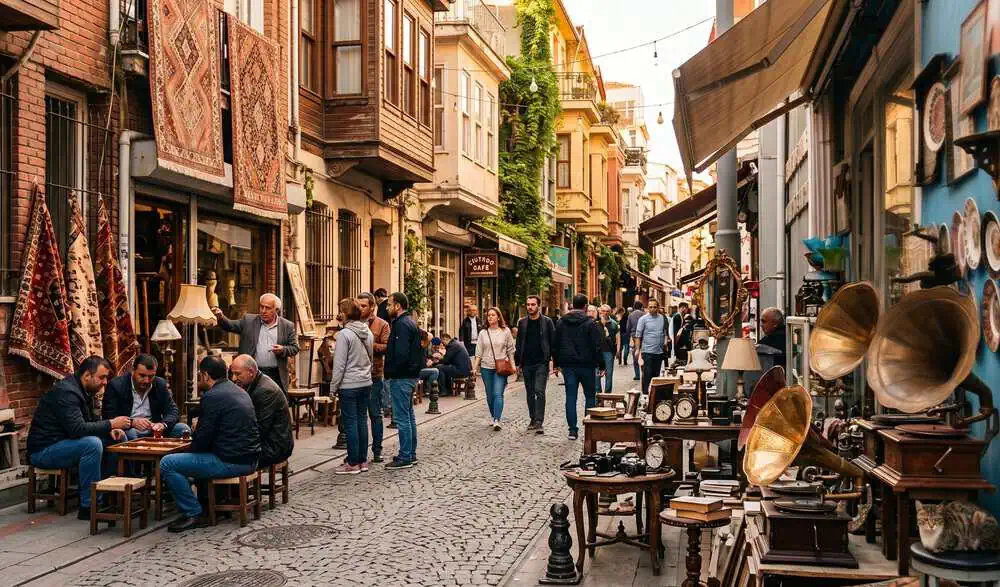
- Old turntables, gramophones, and tube radios, some functional and some purely decorative
- Vintage cassette players and reel-to-reel decks for the truly nostalgic
Expertise tip: if vinyl is your main mission, treat Tellalzade as a warm-up and Akmar Pasajı as the main event. The two are close enough to combine into one afternoon, and shop owners on Tellalzade will often point you toward Akmar’s specialist music stores (Zihni Müzik is one worth asking about) if they don’t have what you’re after.

The Vintage Lamps and Lighting
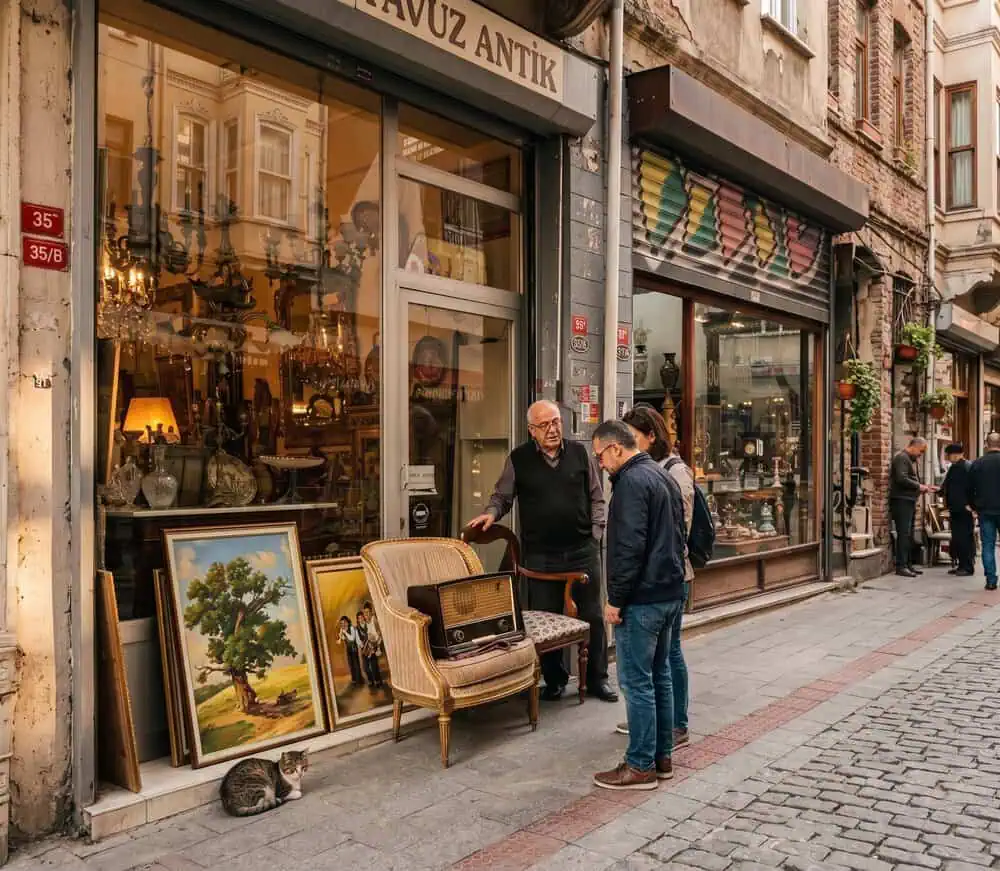
This is genuinely where Tellalzade shines (pun intended). Shop windows are stacked — sometimes precariously — with:
- Ornate brass and copper oil lamps
- Colorful glass gas lamps in every shape imaginable
- Chandeliers with layers of dust that somehow make them look more valuable, not less
- Retro desk lamps and industrial-style fixtures from mid-century Turkish households
The lighting fixtures here tend to have more character than what you’ll find at Istanbul’s bigger, more polished antique bazaars. Because Tellalzade caters less to bulk furniture dealers and more to individual pickers and collectors, the lamps you find often came out of a single old apartment rather than a wholesale lot — which means fewer duplicates and more one-of-a-kind pieces.
Everything Else Worth a Second Look
- Old telescopes, opera glasses, and pocket watches
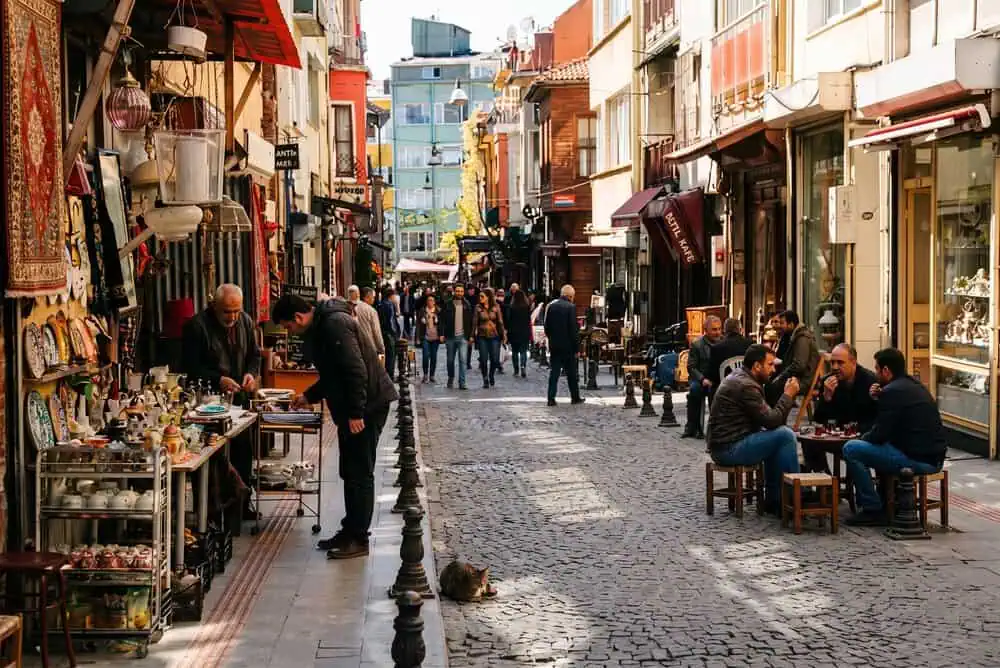
- Ornate porcelain and coffee cups (genuinely photogenic — bring your camera)
- Retro typewriters
- Hand-painted signs, posters, and antique toys
- Furniture ranging from carved Ottoman-style pieces to simpler mid-century items
One shop owner might specialize in furniture, the next in glassware, the next in a chaotic mix of everything — part of the appeal is that no two storefronts look alike.
A Rough Sense of Prices
Exact prices depend heavily on the individual piece, its condition, and how well you negotiate, but here’s a general feel for what to expect so you’re not caught off guard:
- Small decorative items (old postcards, single coffee cups, small trinkets): a few hundred lira or less
- Vinyl records: prices swing widely depending on rarity and condition — expect anywhere from modest souvenir-level prices to real collector’s prices for sought-after pressings
- Vintage lamps and lighting: this is where the range gets wide, from inexpensive small oil lamps to serious money for an ornate, restored chandelier
- Furniture pieces: generally the biggest investment on the street, and the category where bargaining and getting a second opinion matter most
Treat every number above as a starting reference rather than a fixed rate — this is exactly the kind of detail that shifts shop to shop and year to year, which is why asking directly and comparing a couple of stores before committing to a bigger purchase is worth the extra ten minutes.
Common Mistakes First-Timers Make
Honest Pros and Cons
No guide is worth reading if it only tells you the good parts. Here’s the balanced picture.
|
What works in Tellalzade’s favor:
|
What to keep in mind:
|
|---|---|
Pairing Tellalzade With the Rest of Kadıköy
Because the street is compact, it works best as one stop in a bigger Asian-side itinerary rather than a destination on its own. A few natural pairings:
- Kadıköy Fish Market: Right at one end of the street — worth a walk-through even if you’re not buying seafood, for the produce stalls, meyhanes, and general energy.
- Akmar Pasajı: A short walk away, this covered passage is Kadıköy’s real vinyl and secondhand book headquarters if the pickings on Tellalzade leave you wanting more.
- Kadife Sokak: Kadıköy’s “Barlar Sokağı” (bar street), good for an evening wind-down after a daytime browse.
- Moda: Continue toward the seafront for a walk along Moda Caddesi and the coastal park — a nice contrast after the dense, cluttered shop interiors.
Practical Tips at a Glance
- Best time to visit: Late morning to early evening; most shops run roughly 10:00 AM–7:00 PM, though hours vary shop to shop
- Payment: Bring cash (Turkish lira); not all vendors accept cards
- Language: Basic English is common among shopkeepers, but a few Turkish phrases help with bargaining
- Photography: Generally fine for street and window shots; ask before photographing inside a shop or focusing on a specific dealer’s stock
- Shipping: If you’re buying something large or potentially export-restricted, ask the shop directly about shipping and documentation before purchasing
A quick editorial note: prices, shop hours, and available stock on Tellalzade Street shift often since it’s made up of independent, small-scale dealers rather than a managed market. Treat the price ranges and hours above as general guidance and confirm specifics with shopkeepers on the day you visit.
Final Thoughts
Tellalzade Street isn’t going to blow you away with scale — it’s a narrow lane, not a sprawling bazaar. But that’s exactly the point. It rewards the kind of traveler who likes slowing down, poking through dusty shelves, and having an actual conversation with the person selling them a fifty-year-old lamp. If you’re heading to Kadıköy anyway for the ferry, the fish market, or a stroll through Moda, carving out an hour for this street is an easy, low-effort way to see a side of the neighborhood that most first-time visitors walk right past.