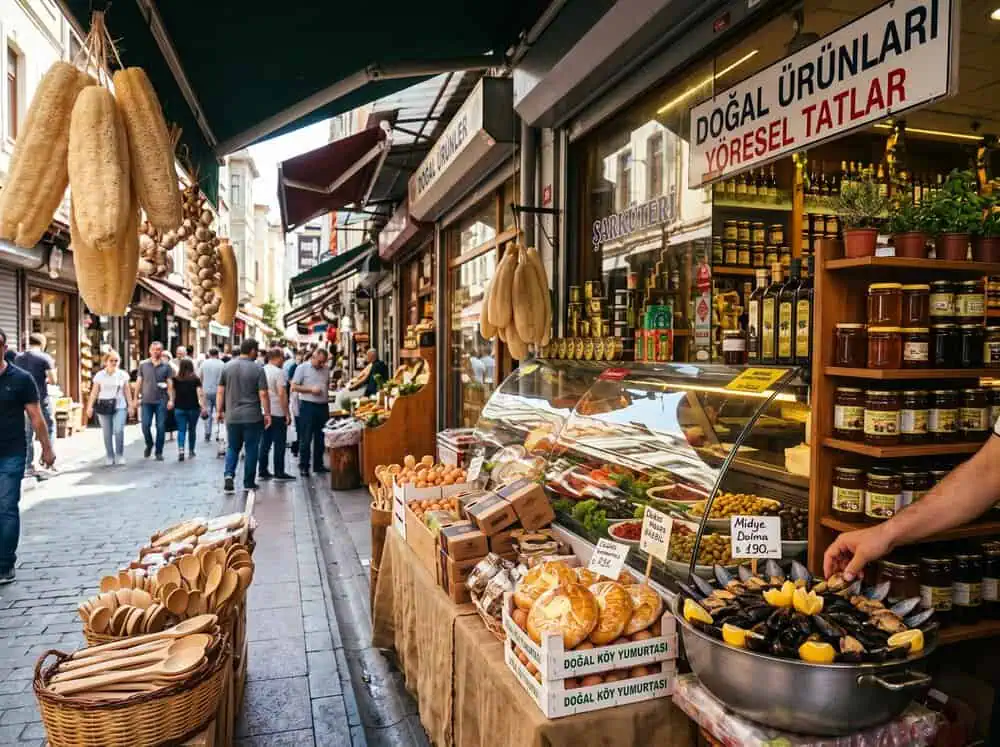
Here’s the first thing that trips people up: you go looking for the Kadıköy Balık Pazarı (fish market) expecting rows of glistening sea bass, and you get that — but the fish stalls are only one lane in a much bigger, much louder food bazaar. Ask any local where “the fish market” is, and they’ll point you toward Güneşlibahçe Sokak, a pedestrian street in the historic Kadıköy Çarşısı where fishmongers, pickle sellers, spice merchants, and — the reason you’re reading this — a cluster of century-old delicatessens (şarküteri) sit shoulder to shoulder.
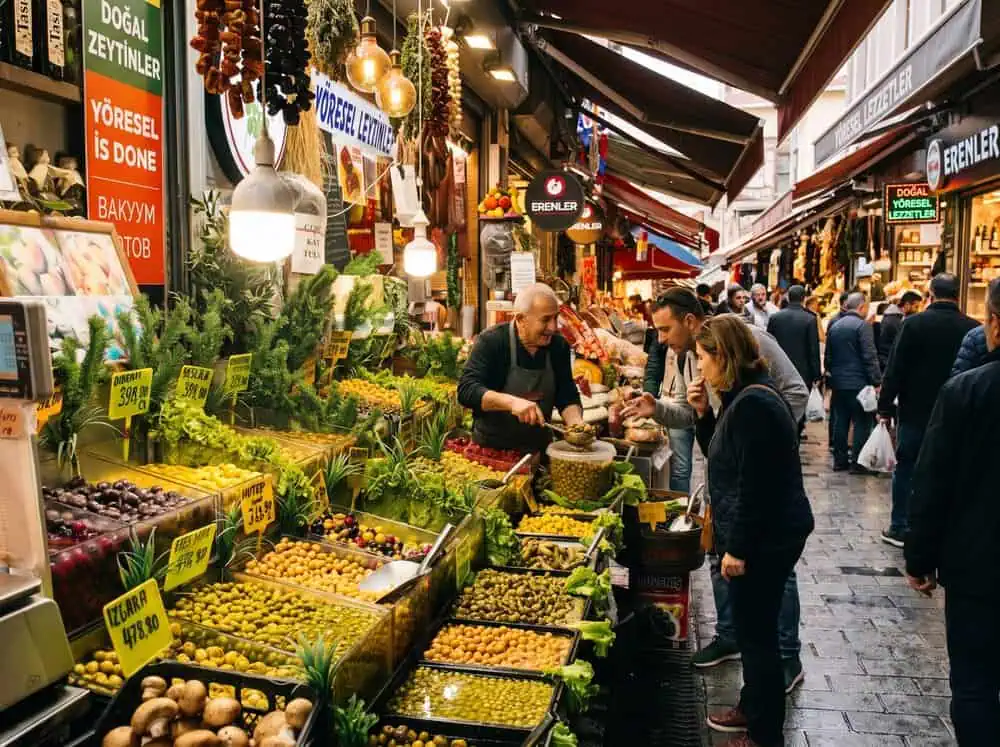
This is where “tadımlık” comes in. It roughly translates to “a little something to taste,” and in a Turkish şarküteri it’s not a gimmick — it’s how business has always been done here. You don’t buy 200 grams of a cheese you’ve never heard of on faith. You point, the man behind the counter slices a sliver off the wheel with a knife that’s seen forty years of use, and you taste it standing at the counter while he tells you where it’s from.
That’s the whole premise of this itinerary: five specific stalls, walkable in under an hour, built around Turkey’s regional cheese and olive traditions — not a generic “best of Kadıköy” list.
Before You Go: The Practical Stuff Generic Guides Skip
A few things that make or break this route if you don’t know them going in:
This article is a part of our big pillar page Istanbul for Foodies: Markets, Tours & Itineraries.
Choose best excursion in Istanbul
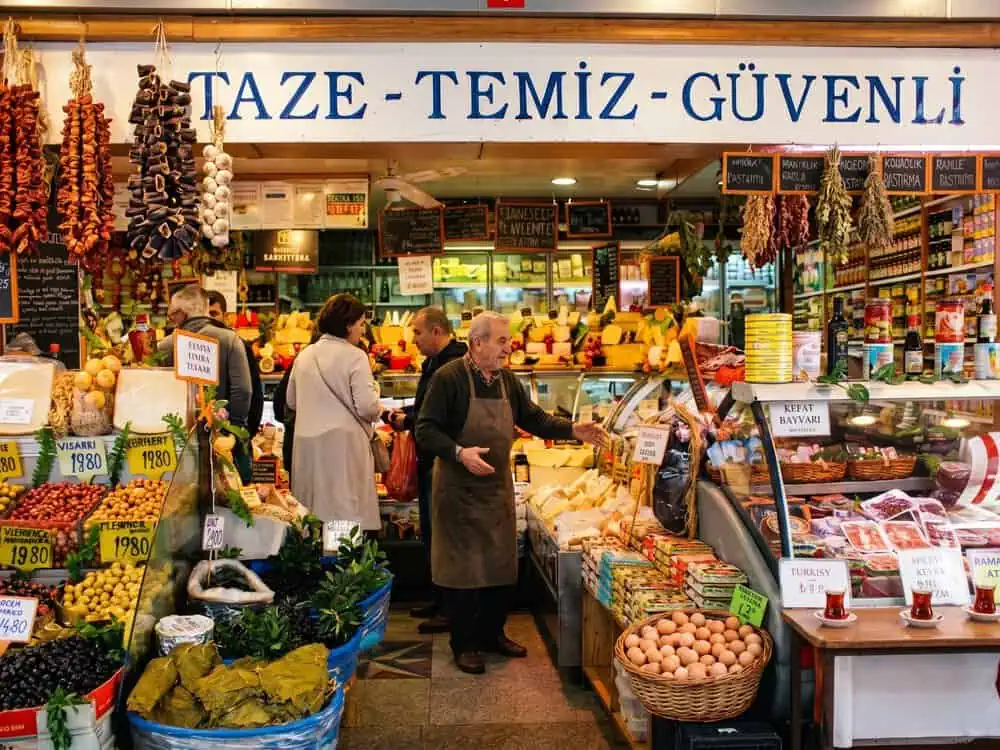
The Route: 5 Stalls, One Walkable Loop
All five stops sit within about 150 meters of each other along or just off Güneşlibahçe Sokak, inside the historic Kadıköy Çarşısı (Osmanağa/Caferağa neighborhood). You can realistically do this crawl in 45–75 minutes, longer if you get talking to anyone behind a counter — which, fair warning, is easy to do.
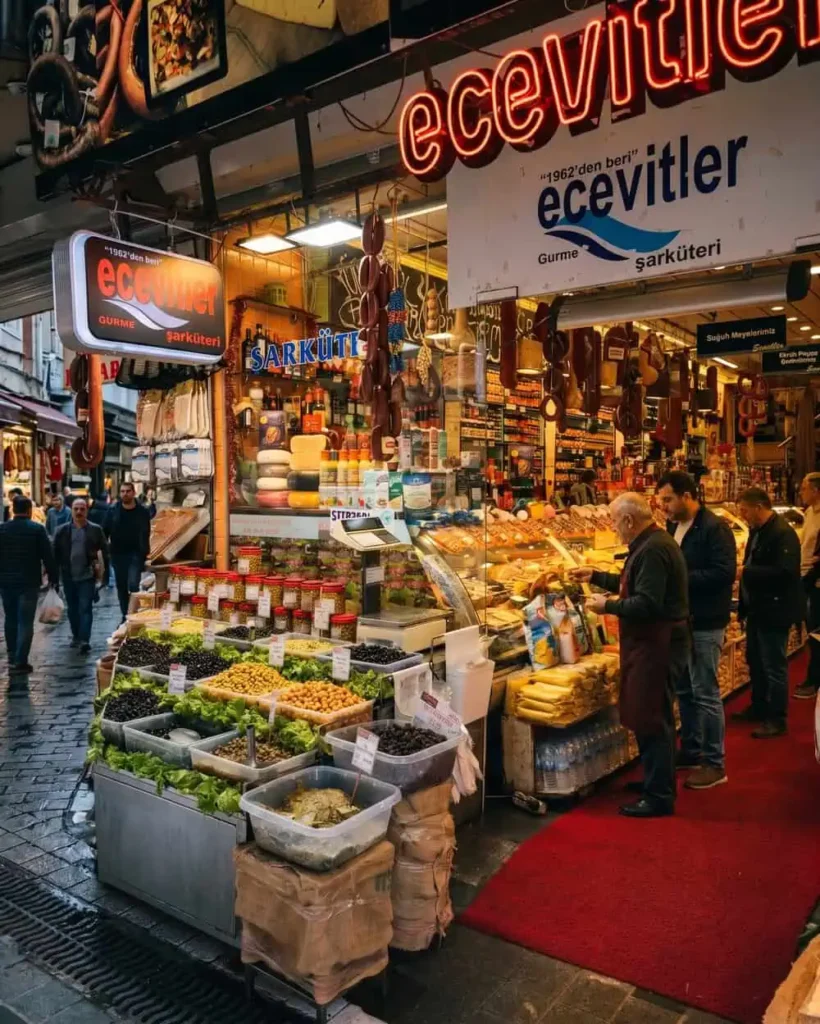
Stop 1: Ecevitler Şarküteri — The Anchor, Since 1968
Start here. Ecevitler has been trading on Güneşlibahçe Sokak since 1968, which in a market this old still counts as an institution, not just a survivor. It’s usually the shop with a small crowd spilling onto the pavement, which is your landmark.
What to taste: This is your baseline stop — a broad, well-curated spread of Turkish white cheeses (beyaz peynir), aged kaşar, and a wall of olive varieties from green-cracked to oil-cured black. Ask for a taste of their kaymak (clotted cream) too, even though it’s not cheese — it’s a good reference point for the richer cheeses you’ll try later.
The mistake people make here: Treating it like a quick photo stop and moving on. Ecevitler’s counter staff have decades of muscle memory about which regional cheese pairs with which olive — ask, and they’ll build you a mini tasting sequence unprompted.
Stop 2: Gözde Şarküteri — The Deep Dive Into Regional Cheese
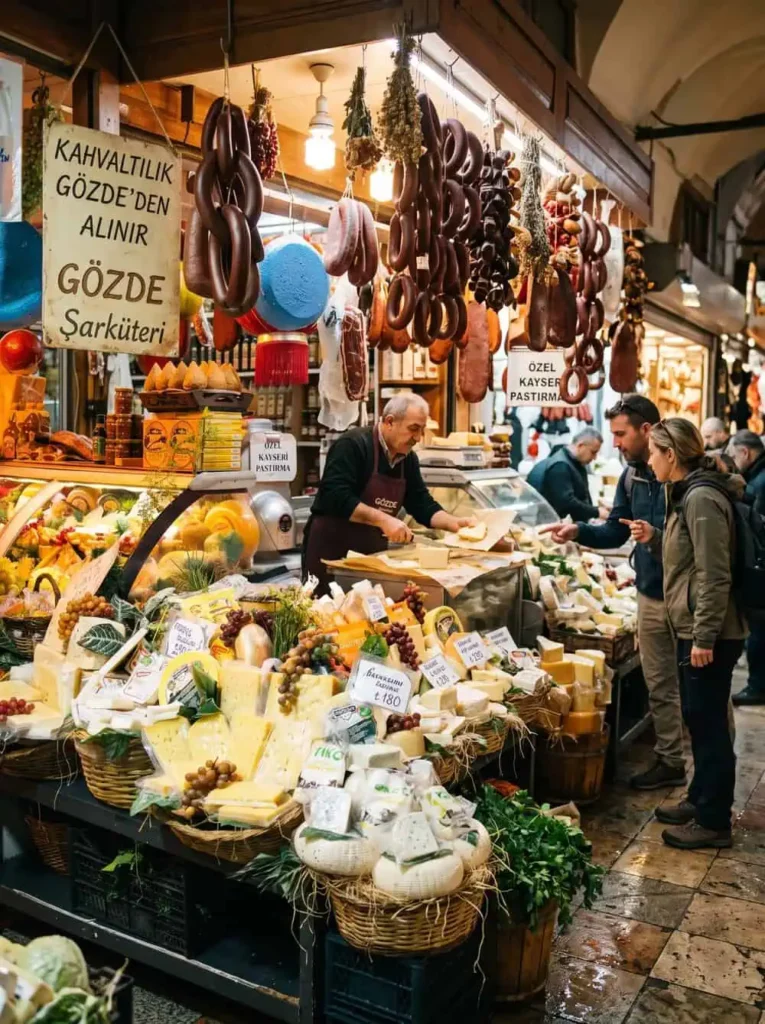
A few doors down, at No. 8 in the Balıkçılar Çarşısı, Gözde has been run by the same family since 1986, when Hüseyin Gündüz turned a street-vending meze business into a proper shop. This is the stop for going deep rather than wide.
What to taste: Gözde stocks close to a hundred cheese varieties and dozens of olive types, sourced from specific regions rather than generic “local cheese” bins. Food writers who cover this market consistently point to two things here: a genuinely good 100% goat cheese from Çanakkale (the Aegean coast region), and an aged kaşar from Thrace (Trakya) that’s sharper and more crumbly than the mild kaşar most visitors have tried on a simple breakfast plate. If you only taste two “new” cheeses on this whole route, make them these two.
Honest note: Gözde is popular enough that the counter can get three-deep on weekends. That’s a sign of quality, but if you’re short on time, this is the stop to hit first thing in the morning.
Stop 3: Altınoluk Zeytinyağları — When Olives Stop Being a Side Dish
Cross the street and you’ll find Altınoluk, a spotless shop with staff in white coats — a visual contrast to the open-air stalls around it that’s worth noticing, because it tells you this place treats olives as a serious product line, not a garnish.
What to taste: This is the stall where you understand olives aren’t one ingredient — they’re a whole pantry. Beyond the expected cracked and oil-cured varieties, look for zeyşe (a chewy olive candy made from reduced olive paste — genuinely strange the first time, genuinely good the second), olive marmalade, and cold-pressed olive oil you can dip bread into before committing to a bottle. They also carry sheep and goat cheeses and a fresh stretched cheese from the Antakya region (sıkma peyniri) that’s rarely stocked outside its home region.
Stay connected during your trip
The nuance generic guides miss: Olive quality in Turkey is regional the way wine is — Gemlik olives (Marmara region, the ones you’ll see most) are milder and meatier; Ayvalık and Edremit (Aegean) olives are smaller and more bitter-forward when green. Ask which region a batch is from before you buy; a good stall will always know.
Stop 4: Etabal — The Sweet Counterpoint
Right next to Altınoluk, Etabal is technically a honey specialist, not a cheese-and-olive stall — but it earns its place on this itinerary for one reason: kaymak with honey is the traditional palate cleanser after a run of salty cheese and brined olives, and doing it in that order genuinely changes how the next thing you taste lands.
What to taste: A spoonful of thick honey over fresh kaymak. It’s not subtle, and it’s not meant to be — it resets your palate for the last stop.
Why this matters for a “tadımlık” crawl specifically: Most self-guided lists skip the sweet stop entirely and just chain cheese shop to cheese shop, which is how your palate goes numb by stop three. Building in a sweet interruption is a small logistics trick that makes the whole crawl work better.
Stop 5: The Loose-Olive Barrel Row
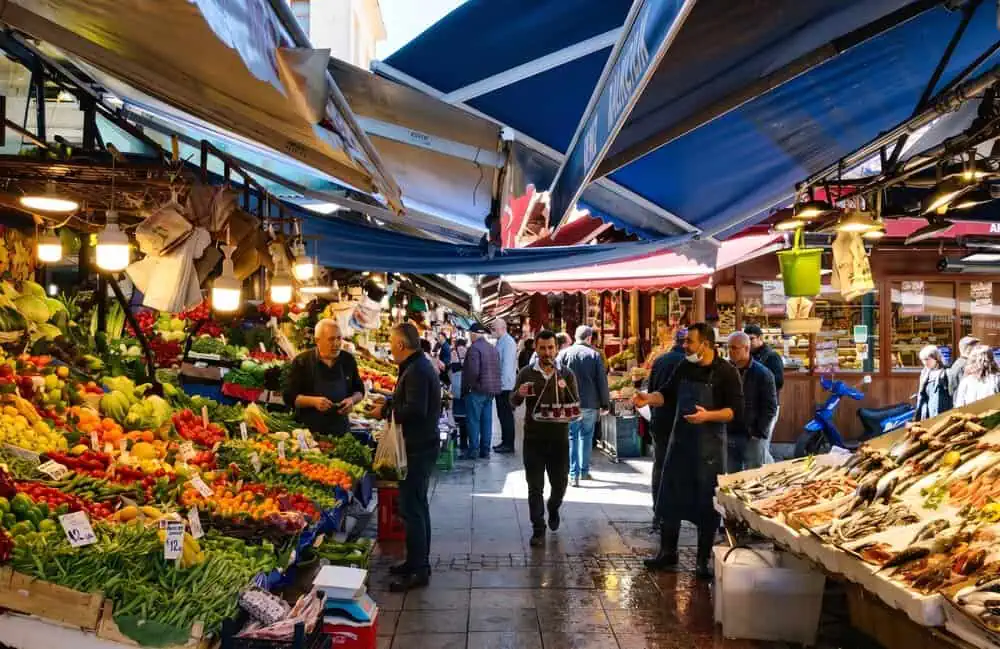
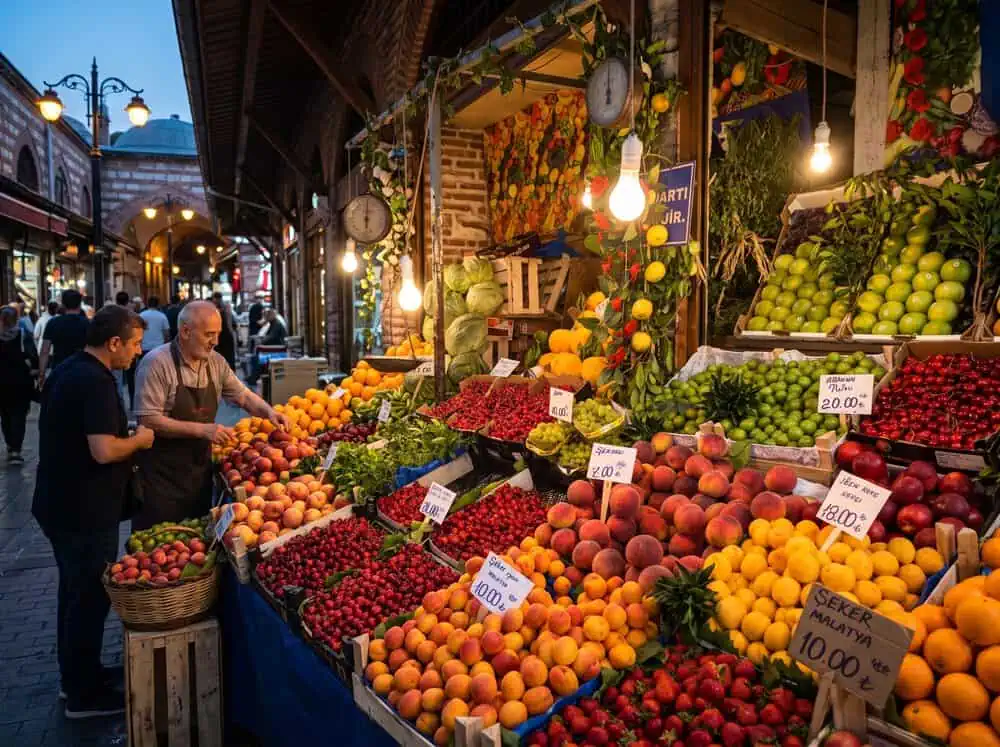
This last stop isn’t one named shop — and that’s deliberate, because pretending it is would be dishonest. Scattered along the alley near the produce stalls (closer to where Güneşlibahçe meets the fruit-and-vegetable section) are small, often unbranded vendors selling olives loose from open barrels — sometimes twenty or more varieties at a single table, no signage, no website, just a folding scale.
What to taste: This is where you’ll find the wrinkled, salt-cured black olives that never make it into a packaged jar, along with chili-spiced and herb-marinated varieties that change week to week depending on what the vendor picked up that morning. It’s the least polished stop on the route and, honestly, sometimes the most memorable one.
Why it’s here: A generic guide gives you shop names and stops. A market local will tell you that some of the best, most idiosyncratic olives in Kadıköy don’t have a shop name attached to them at all — they’re a guy, a table, and a scale, and that’s exactly the point.
Tadımlık Etiquette: What Locals Do Differently
A few unwritten rules that will make you look like you know what you’re doing (and, more practically, get you better samples):
- Taste before you commit to weight. Asking “biraz tadabilir miyim?” (“can I taste a little?”) is completely normal and expected — this is not a bakery where sampling is a special favor.
- Don’t sample and walk away empty-handed at every single stall. One or two “just looking, thank you” tastings are fine; doing it at all five stops in a row starts to feel like you’re working the system, and vendors notice.
- Buy in small quantities if you’re traveling. 100–150 grams of a cheese is enough to actually taste it properly without committing to a kilo you can’t finish before your flight.
- Ask where something is from, every time. It’s the single best way to learn the geography of Turkish cheese and olives, and vendors clearly enjoy explaining it — this market rewards curiosity.
- Watch for the market cats. They’re a fixture of every stall in this bazaar, generally well-fed and well-behaved, but don’t leave a half-eaten sample unattended on a low counter.
Honest Pros and Cons of Doing This as a Self-Guided Crawl
|
Pros
|
Cons
|
|---|---|
What This Actually Costs
Be skeptical of any article quoting you exact prices per kilo for Turkish cheese and olives right now — inflation has moved food prices in Istanbul substantially year over year, and a figure that was accurate a year ago can be stale by the time you read it. What’s consistent, though, is the structure of pricing here:
- Everything is sold by weight, typically per kilogram, with staff happy to weigh out small amounts (100–250g) for tasting-sized purchases
- Aged and imported-style cheeses (aged kaşar, goat cheeses) cost noticeably more than fresh white cheese or basic kaşar
- Specialty olive products (zeyşe, olive marmalade) are priced more like a confection than a pantry staple — expect to pay a premium versus plain table olives
- It’s completely normal to ask the price per 100 grams before you taste anything; this isn’t rude, it’s how the market functions
A realistic budget for tasting your way through all five stops and walking away with a small selection from two or three of them is the cost of a nice lunch in Istanbul — not a splurge, but not the few-lira snack some outdated guides suggest either.
Conclusion
The fish market in Kadıköy rewards exactly the kind of visitor who’s willing to slow down, ask questions, and taste before buying — which is, conveniently, also the most efficient way to actually understand Turkey’s regional cheese and olive traditions instead of just sampling whatever’s closest to the entrance. Five stalls, under an hour, and you’ll leave with a genuinely useful map of how Anatolian cheese-making and Aegean and Marmara olive traditions show up on one street. Go hungry, go on a weekday morning, and don’t be shy about asking where things are from — that’s the whole trick.