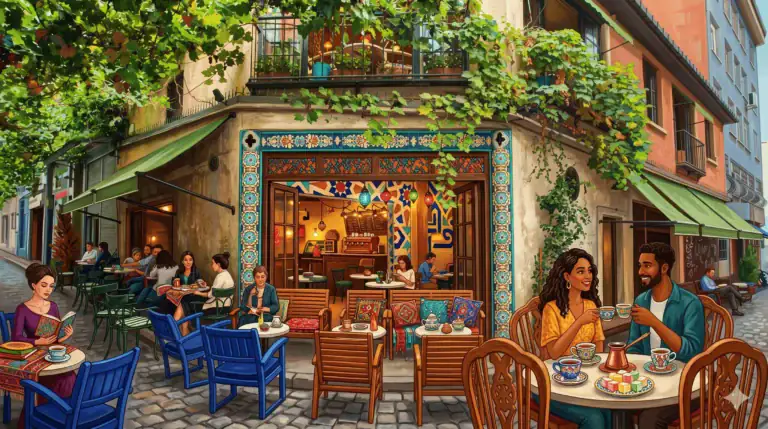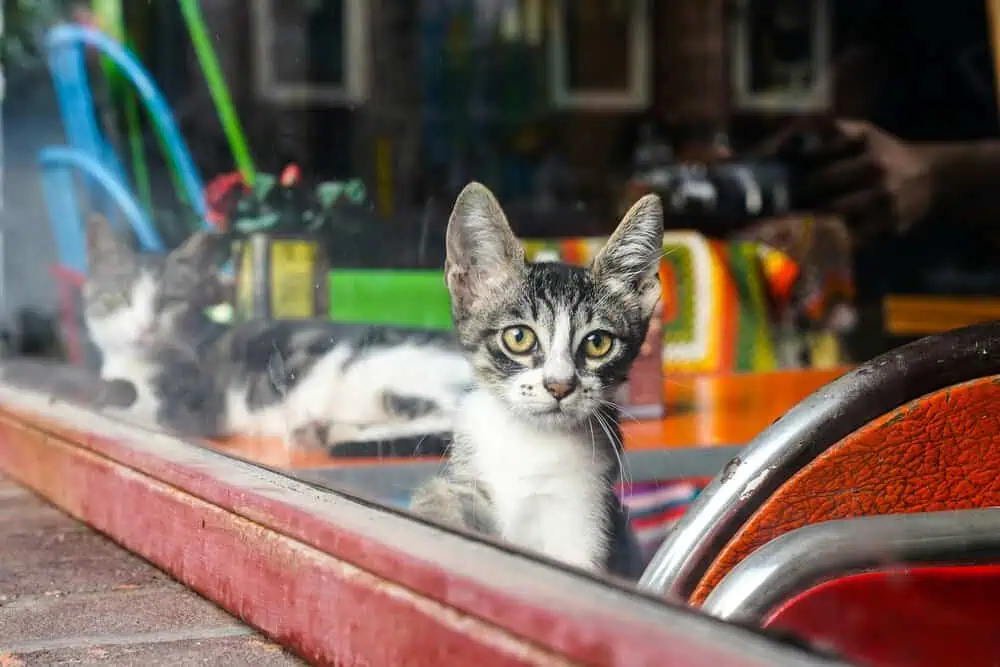
If you’ve typed “cat cafes Istanbul” into Google expecting something like Tokyo’s rent-a-cat lounges — glass rooms, entry tickets, staff with lint rollers — Cihangir is going to surprise you. There’s no ticket booth here. No “cat time slot” you book in advance. Instead, you’ll find something a lot less staged and a lot more Istanbul: ordinary neighborhood cafés where cats have simply moved in, claimed the best chair, and never left.
See our big guide – The Ultimate Istanbul Café Guide: Concept & Artistic Spots.
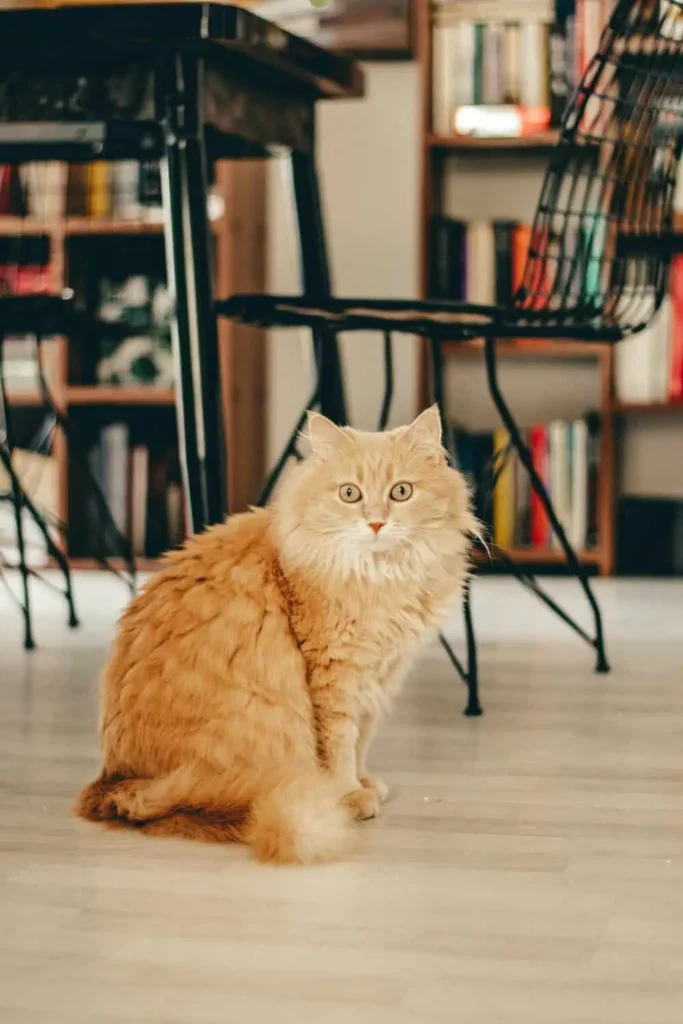
Cihangir, the hillside district tucked between Taksim’s noise and the antique shops of Çukurcuma, is widely considered one of the most cat-dense neighborhoods in a city that treats stray cats less like strays and more like unofficial residents. Walk its sloped streets for ten minutes and you’ll lose count of how many cats you’ve stepped around. Sit down for a coffee, and there’s a decent chance one will climb into the empty chair across from you before your order even arrives.
This guide covers where that actually happens — the specific cafés known for their resident and neighborhood cats — plus the etiquette, logistics, and honest pros and cons so you know what you’re actually walking into.
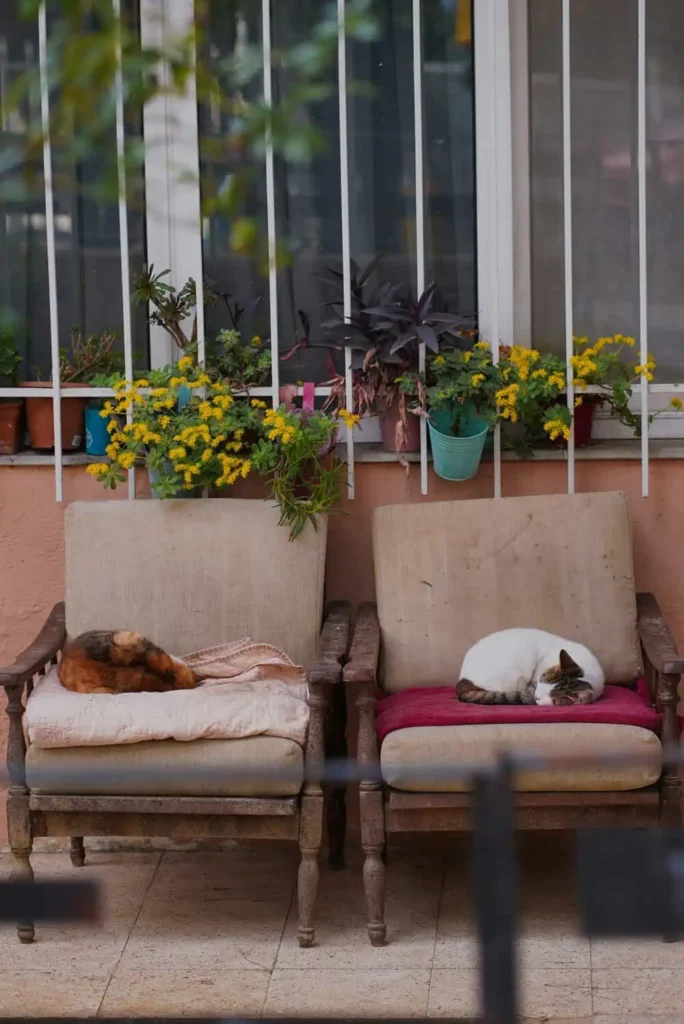
What “Cat Cafe” Really Means in Cihangir (And Why That’s a Good Thing)
Here’s the nuance most quick-hit travel articles skip: Cihangir doesn’t really have “cat cafés” in the commercial, cats-as-the-attraction sense that exists in East Asia. What it has is a neighborhood culture where cats are simply part of daily life, and cafés — being warm, food-adjacent, and full of soft laps — are where a lot of that life happens.
Choose best excursion in Istanbul
That distinction matters for your expectations. You’re not paying an entry fee to sit in a curated cat room. You’re having a normal Turkish breakfast or coffee at a normal café, and the cats are neighborhood regulars who wander in and out because someone always feeds them, someone always makes space, and nobody ever shoos them off with much conviction.
Is this a downside? Not really — if anything, it’s more authentic and it’s free. But go in knowing you might see one cat or six, indoors or only in the garden, depending on the hour, the weather, and honestly, the cats’ own mood. They’re not paid staff.
The Best Spots to Meet Cihangir’s Cats Over Coffee
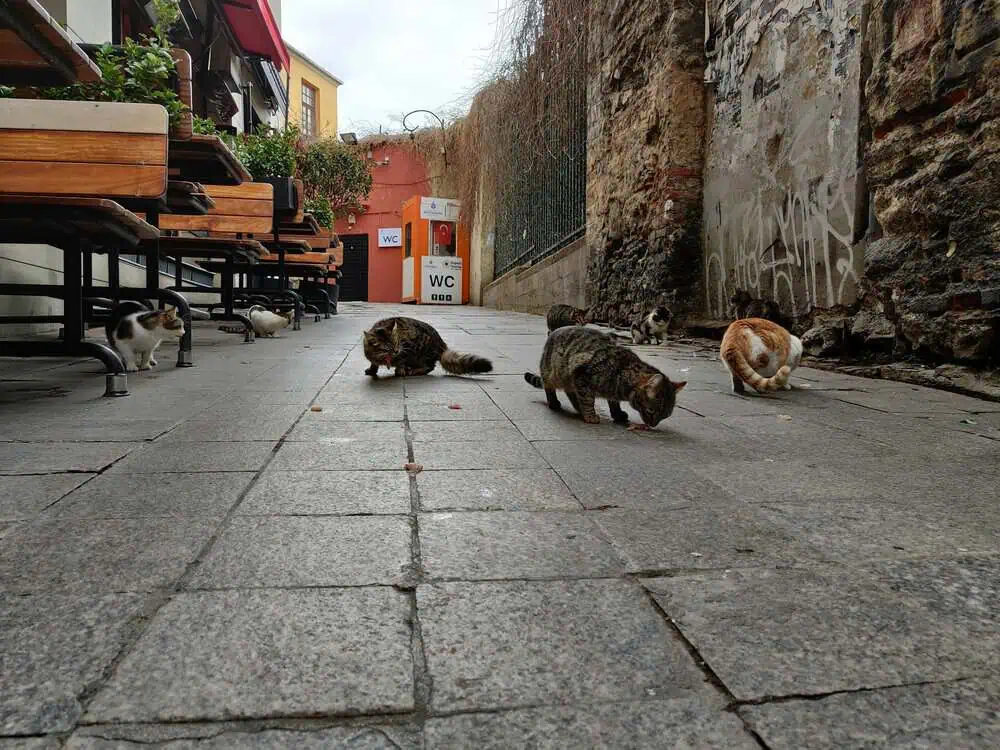
Kaktüs Kahvesi — the neighborhood’s unofficial “cat coffeehouse”
If one address in Cihangir has earned an actual reputation for cats, it’s Kaktüs Kahvesi at Cihangir Caddesi No:16/A. It’s been running since 1993, which makes it something of an institution in a neighborhood that turns over trendy spots every few years. Local reviewers on Turkish platforms have half-joked for years that it should be renamed “kedi kahvesi” — cat coffeehouse — instead of Kaktüs, because the cats are that much of a fixture.
What to expect: a shaded, leafy courtyard-style patio (indoor seating too, for colder months), a relaxed brasserie menu of breakfast plates, sandwiches, and cocktails, and a slower, more local crowd than the more Instagram-driven spots nearby. This isn’t a place that dresses itself up for tourists — it’s where longtime Cihangir residents go to read, work, or nurse a glass of hot wine in winter while a cat naps two feet away.
Good to know: it’s not marketed as a “cat experience,” so don’t expect any signage or gimmick. The cats are simply there because the staff and regulars feed and tolerate them, which, in Cihangir terms, is basically an invitation.
Tucked down Anahtar Sokak (No:13/A), Kahve6 looks like an unremarkable street-front café from the outside. Walk through the entryway, though, and it opens into a small garden courtyard with a fountain, gravel flooring, and a much quieter atmosphere than the street outside suggests. It’s built its name almost entirely around breakfast — organic, generous, Turkish-style spreads — and it’s been flagged repeatedly as one of Cihangir’s cat-friendly cafés.
What to expect: a slow-paced breakfast or brunch, mostly local and organic ingredients, and a garden setting where cats tend to settle in for the same reason people do — it’s shaded, calm, and food shows up regularly.
Good to know: service can run unhurried (in the pleasant, “nobody’s rushing you out” sense, not always in the “my order arrived fast” sense). Budget extra time, especially on weekend mornings when it fills with locals.
Beyond the two headliners: just keep your eyes open
This is the part standard guides gloss over — the real Cihangir cat experience isn’t confined to two named cafés. Nearly every small coffee spot, bakery terrace, or bar-café hybrid on streets like Akarsu Caddesi, Bakraç Sokak, and around the Cihangir Mosque has at least an occasional feline visitor. Cafés such as Smyrna (half café, half antique shop) and casual neighborhood bars like Bar 21 are regularly mentioned by residents alongside the cats, simply because that’s the texture of the district. Don’t fixate only on a checklist — a slow wander with a coffee in hand will do more for you than trying to “collect” every cat café on a map.
Stay connected during your trip
What the Streets Actually Feel Like
{Image: Narrow cobbled Cihangir street with cafés, hanging plants, and a cat on a doorstep}
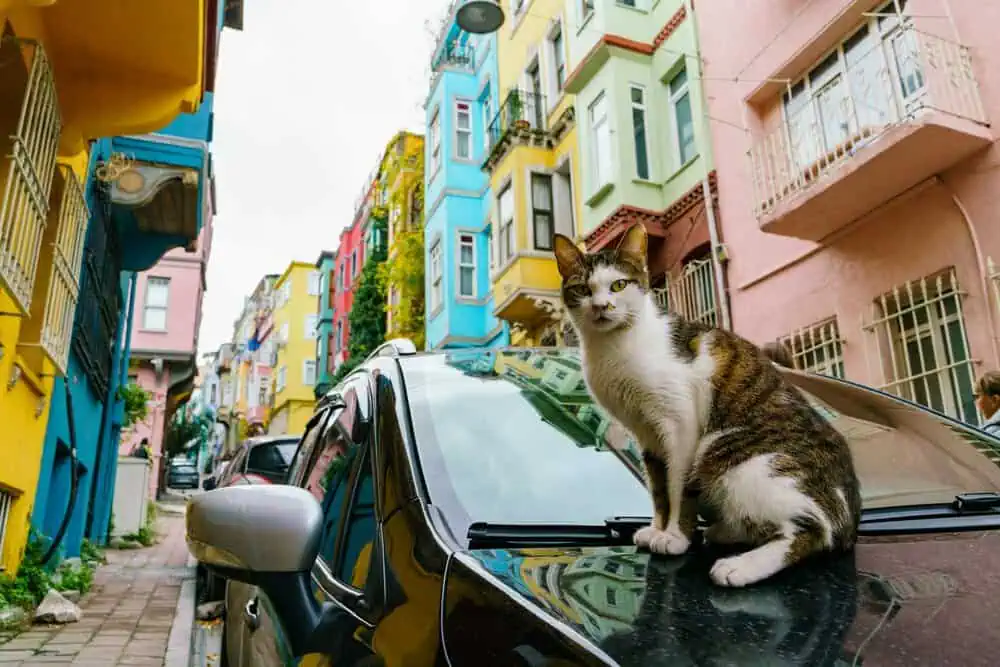
Before you even sit down anywhere, it’s worth knowing what Cihangir itself feels like, because the cats are really just one layer of a bigger atmosphere. The streets are steep and narrow, lined with low apartment buildings that have seen better decades of paint, ivy creeping over balconies, and secondhand bookshops wedged between art galleries. It’s quieter than İstiklal Caddesi just up the hill, and that quiet is exactly why cats gravitate here — fewer crowds, more sunbeams to nap in, more people who slow down enough to notice them.
You’ll hear a mix of Turkish, English, and often French or Spanish at café tables, since Cihangir has long been a magnet for expats, writers, and artists. Wooden cat houses — small painted shelters, sometimes no bigger than a shoebox — turn up on stairwells and beside shopfronts, built and maintained by residents rather than any official body. Bowls of water and dry food sit at the base of trees and along curbs, refilled quietly throughout the day. None of this is staged for visitors; it’s simply how the neighborhood functions, and stumbling into it feels less like sightseeing and more like being let in on a local habit.
Photographing the Cats Without Being That Tourist
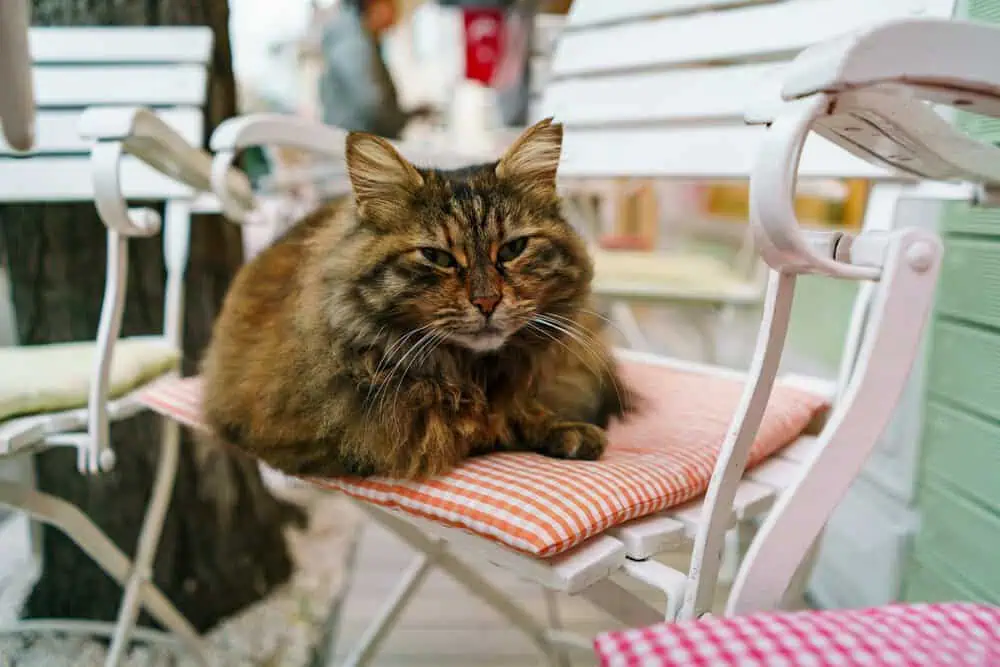
It’s tempting to treat every cat you see as a photo opportunity, and most are genuinely happy to oblige — but a few small habits will make the difference between a good photo and an annoyed cat.
- Get low instead of leaning over. Crouching to the cat’s eye level reads as far less threatening than looming above it with a phone, and you’ll get a better shot anyway.
- Skip the flash. It’s unnecessary in daylight and startling in the evening, when café lighting is usually soft enough to shoot in without it.
- Don’t chase a cat that’s walking away. If it’s leaving the frame, let it — there’s always another cat two tables over.
- Ask before photographing café staff or other patrons interacting with a cat. It’s basic courtesy, and Cihangir locals are generally warm about it if you just ask.
Meeting the People Behind the Cats
One thing that separates Cihangir’s cat culture from a curated tourist attraction is that it’s held together by actual people, mostly unpaid, who’ve made feeding and caring for these cats a quiet daily habit. Longtime local caregivers walk fixed routes through the neighborhood every day, refilling bowls and checking on sick or injured cats, funded almost entirely by small community donation boxes tucked into stairwells and shop corners — you’ll spot them if you look.
This matters for two reasons. First, it’s why the cats are as calm and human-tolerant as they are — they’ve been fed and handled gently by the same people for years. Second, if you want to actually contribute something rather than just enjoy the scenery, dropping coins or small notes into one of these donation boxes does more direct good than buying an extra pastry “for the cats” at a café.
You’ll also notice most cats have a small clipped notch in one ear. That’s not an injury — it’s the universal mark that a cat has been caught, neutered or spayed, vaccinated, and released as part of Istanbul’s long-running municipal and volunteer street-cat management programs. It’s a good sign, not a red flag.
Cat Café Etiquette: Common Mistakes First-Timers Make
Generic guides tend to stop at “cats are everywhere, go pet them.” Here’s what actually trips people up on the ground:
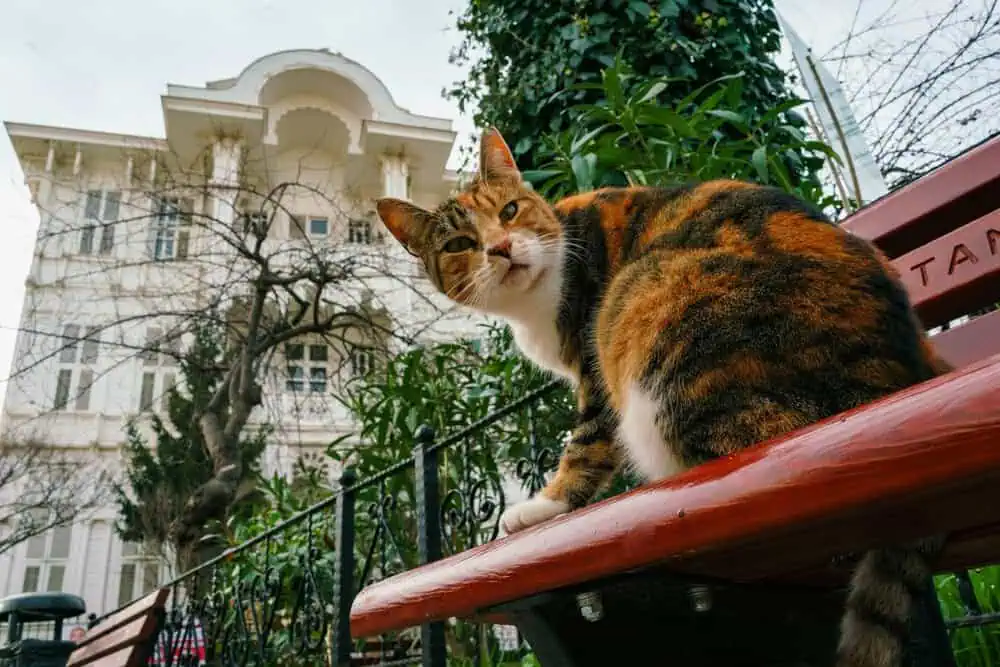
- Assuming every cat wants attention. Some will hop straight into your lap; others will side-eye you and stay put on their windowsill. Let the cat make the first move — reaching for a cat that’s backing away is the fastest way to get a firm “no thank you” swat.
- Feeding table food impulsively. Locals feed strays deliberately with appropriate food, not scraps of butter, cheese, or spiced dishes. A stray with an upset stomach isn’t cute for anyone, least of all the cat. If you want to feed one, buy actual cat food from a nearby market — it’s cheap and it’s what regulars do.
- Forgetting basic hygiene. These are street cats, however friendly. Carry hand sanitizer or wipes if you’re going to be petting several in a row, especially before you eat.
- Expecting a “cat café” experience like Asia’s. As covered above — there’s no entry fee, no guaranteed cat count, and no staff managing the animals for your visit. Manage your expectations and you’ll enjoy it more.
- Ignoring café etiquette because “it’s just for the cats.” These are working cafés with paying regulars. Order something if you’re sitting down, even if the cats are the real draw — it’s basic courtesy, and frankly, it’s how these places can keep affording to feed the cats in the first place.
Practical Logistics: Getting There, Timing, and Pricing Reality
Getting to Cihangir: The easiest approach is on foot from Taksim Square — it’s roughly a 10–15 minute walk downhill through Sıraselviler Caddesi or via Cihangir Caddesi itself. There’s no metro stop directly in Cihangir; the nearest options are Taksim (M2 line) or a funicular/tram connection via Kabataş if you’re coming from the Sultanahmet side, followed by a walk uphill.
Best time to visit: Late morning through early afternoon (roughly 10am–2pm) tends to be when cats are most visible and active — they’re less inclined to move once the afternoon heat sets in, and cafés are in full breakfast/brunch swing. Evenings are calmer and more atmospheric but cat sightings become more a matter of luck.
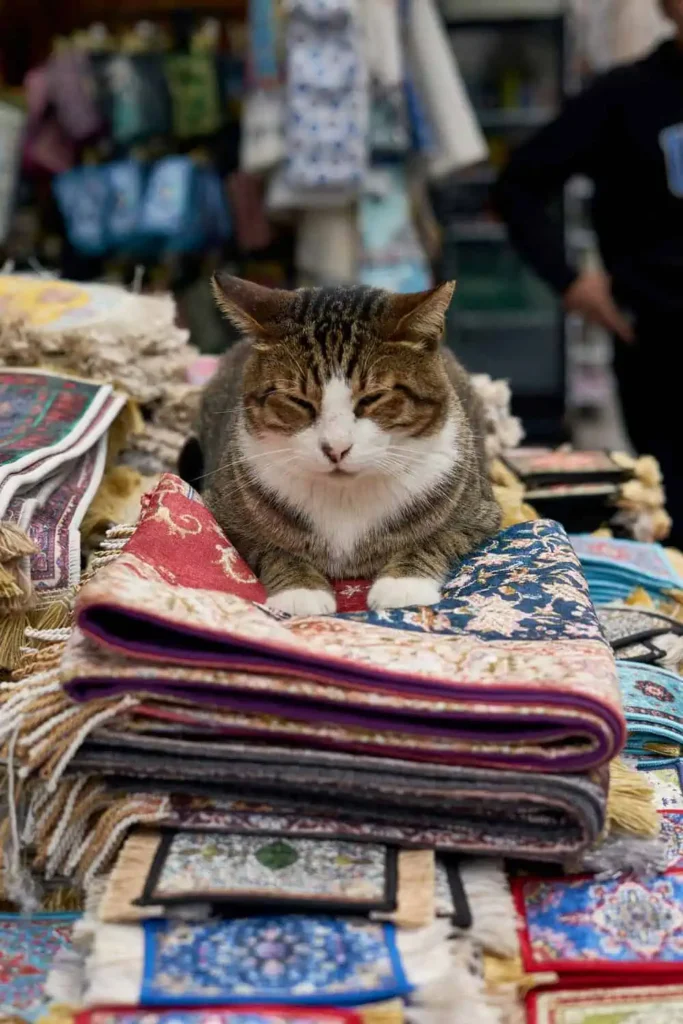
Pricing reality: A breakfast plate at Kaktüs Kahvesi or Kahve6 generally falls in the mid-range for Istanbul café standards — expect to pay more than a basic simit-and-tea stall, but noticeably less than the polished, design-forward cafés in nearby Beyoğlu or Nişantaşı. Given how quickly exchange rates and menu prices shift in Turkey, treat any specific lira figure you read online (including this one) as a rough guide only — check current menu pricing on-site or via the café’s own social media before you go.
No booking required: None of these spots take cat-specific reservations because, again, this isn’t a managed attraction. Regular table reservations for breakfast on busy weekends are a good idea, though, since both cafés get genuinely full with locals.
Honest Pros and Cons
Pros:
- Completely free to experience — no entry ticket, no minimum spend beyond your coffee
- Cats are relaxed and used to people, having been fed and handled gently for years
- You get a real neighborhood café experience alongside the cats, not a gimmick
- Cihangir itself is genuinely worth the visit regardless — bohemian, walkable, full of good coffee and Bosphorus glimpses
Cons:
- No guaranteed cat sightings — they come and go on their own schedule
- Not an accessible option for anyone with cat allergies; there’s no separated “cat zone” to avoid
- Some cafés (like Kaktüs) lean more toward locals than tourists, so don’t expect English-forward service everywhere
- If you’re hoping for the curated, hands-on Asia-style cat café format, you’ll likely be disappointed — this is a wilder, more authentic version
Final Thoughts
Cihangir won’t hand you a manufactured cat café experience, and honestly, that’s the whole appeal. What you get instead is a neighborhood that has quietly built cats into its daily rhythm — into its cafés, its stairwells, its donation boxes, and its slow mornings. Sit down at Kaktüs Kahvesi or Kahve6 with a coffee and no fixed agenda, and let the cats decide how the visit goes. That’s a far better souvenir than any staged photo op.