If you’ve spent any time wandering around Moda, you’ve probably noticed how the neighborhood wears its history quietly. There’s no giant sign shouting “attraction here.” That’s kind of the whole point of the Barış Manço Museum — it doesn’t need to shout. Everyone in Turkey already knows the name.
This is a part of our full guide Istanbul Museums & Historic Sites: The Complete Guide.
For visitors, though, that can be a problem. You might walk right past a beautiful 19th-century mansion on a quiet Moda side street and have absolutely no idea why locals treat it with such affection. So let’s fix that. This is your honest, practical guide to visiting the house Barış Manço called home until his final breath — what it actually costs, what you’ll actually see, and whether it’s worth carving out an hour of your Moda afternoon.
Who Was Barış Manço, and Why Does He Have a Museum?
Before you step inside, it helps to know why this house matters so much to Turks of a certain generation — and, honestly, to plenty of younger Turks too.
Barış Manço, born in 1943, was one of Turkey’s most important rock musicians and cultural figures. He didn’t just perform music; he built a whole identity around blending Anatolian folk sounds with rock and pop, decades before “world music” became a marketing term. Think of him as part David Bowie in terms of visual flamboyance, part Mister Rogers in terms of how gently he spoke to children, all wrapped into one mustachioed, jewelry-clad package that somehow made sense on Turkish television.
Choose best excursion in Istanbul
His long-running TV show, 7’den 77’ye (“From 7 to 77”), turned him into a household name across every age group — the title itself was a promise that the content spoke to everyone from small children to grandparents. If you ask a Turkish person over 35 about Barış Manço, don’t be surprised if their face lights up before you finish the sentence.
He passed away suddenly in 1999, and his family later opened his Moda home to the public as a way of keeping his memory alive — inspired, fittingly, by his own words: a person is only truly gone once their name stops being spoken.
The House Itself: A Piece of Istanbul History You Didn’t Expect
Here’s a detail that surprises most first-time visitors: the museum isn’t just about Barış Manço. The building has its own layered history that predates him by nearly a century.
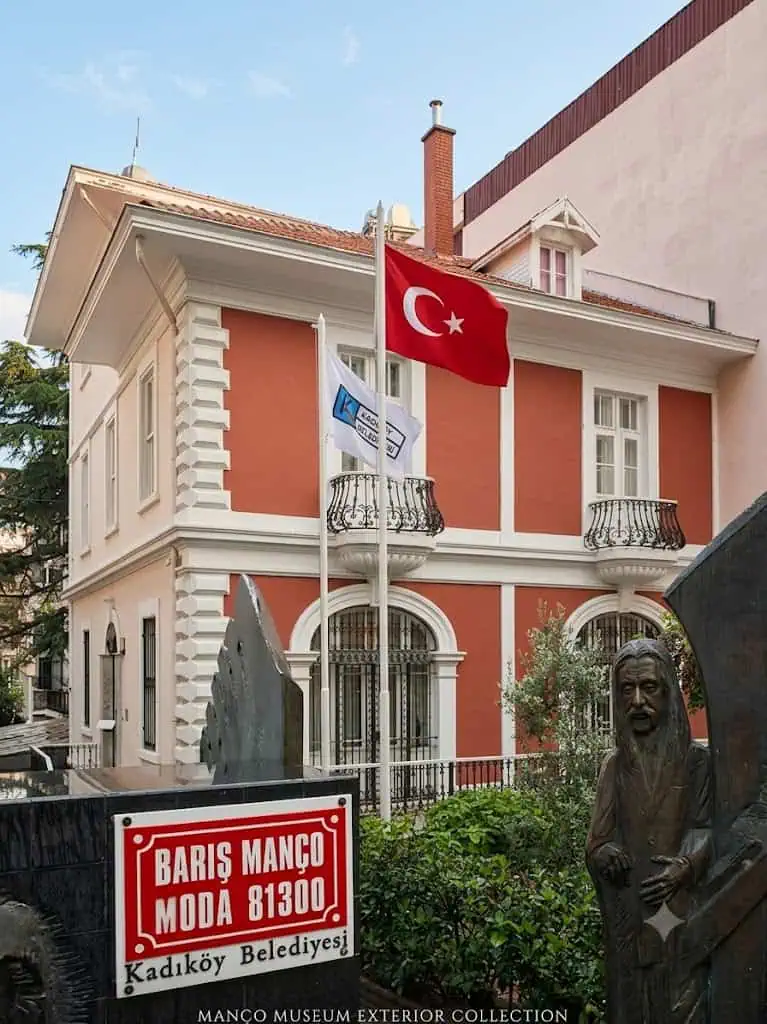
The mansion is known as the Whittall Köşkü, or Whittall Mansion, built between 1895 and 1900 for James William Whittall, a British businessman whose family had settled in the region generations earlier. The Whittall family held onto the property for decades before it eventually passed through other owners. In 1984, Barış Manço bought it, restored it, and lived there until his death in 1999.
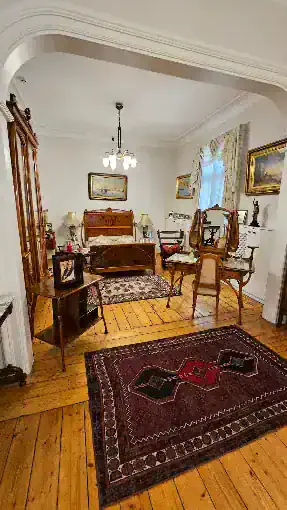
That’s part of what makes this stop worth adding to your Kadıköy–Moda itinerary even if you’ve never heard a single Barış Manço song. You’re not just visiting a celebrity home — you’re stepping into a genuine piece of late Ottoman-era residential architecture, complete with ornate woodwork and the kind of craftsmanship you don’t see in new construction.
The museum officially opened its doors on June 9, 2010, following a careful restoration.
Quick Facts: The Building
- Style: Three-story mansion (with basement and attic areas also arranged for viewing)
- Built: 1895–1900
- Original owner: James William Whittall
- Manço purchased it: 1984
- Opened as a museum: June 9, 2010
What You’ll Actually See Inside
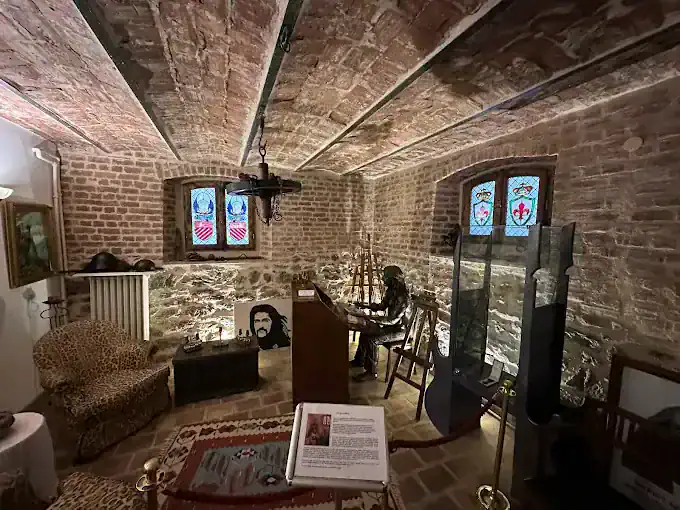
This is where the museum earns its reputation as a “must” for fans and a pleasant surprise for everyone else. It’s not a sanitized, roped-off exhibit — it genuinely feels like you’re walking through someone’s actual home, because you are.
As you move from room to room, Manço’s music plays softly in the background, which does a lot of heavy lifting for the atmosphere. It’s a small touch, but it changes the visit from “looking at old objects” to something closer to a tribute.
Here’s what’s spread across the rooms:
Stay connected during your trip
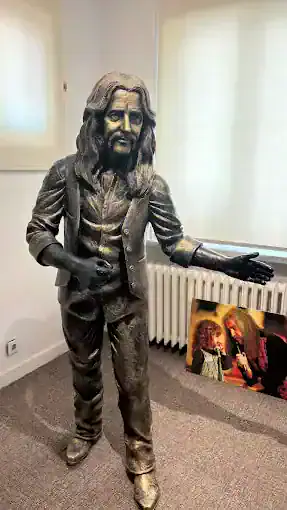
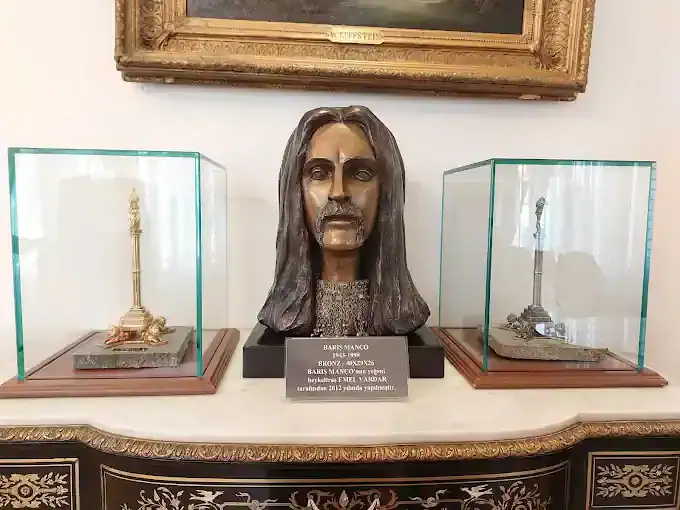
- A life-sized wax figure of Barış Manço, positioned beside his own piano in the ground-floor parlor — this is usually the first thing that greets you, and it’s a genuinely striking moment for anyone who grew up watching him on TV.
- Stage outfits and personal jewelry, reflecting his famously flamboyant style.
- Handwritten lyrics, compositions, and personal notes, which give a rare look into his creative process rather than just the finished product.
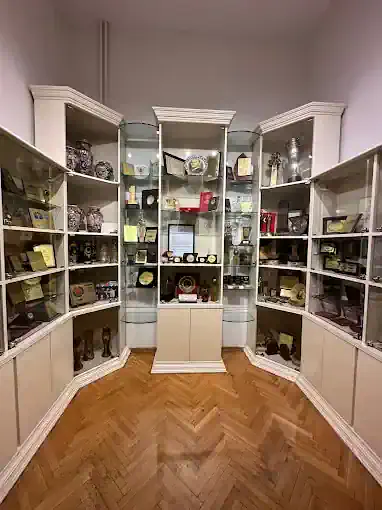
- A glass artifact collection gathered from his travels around the world.
- Cultural objects and souvenirs picked up on tours and trips abroad, hinting at how much of a global citizen he was for a Turkish artist of his era.
- Cameras and porcelain pieces from his personal collection.
- Awards and recognitions from his decades-long career.
A Nuance Most Guides Skip
Almost every write-up of this museum mentions the wax figure and the outfits. Fewer mention that all the museum’s signage and information is in Turkish. If you don’t speak Turkish, you’ll still get plenty out of the atmosphere and the visual experience, but you won’t get much written context unless you do some homework beforehand (which, hey, is exactly what this article is for) or travel with someone who can translate the key panels.
If you want more out of the visit, it’s worth reading a short bio of Manço on your phone before you go in — even five minutes of context will make the handwritten lyrics and awards feel far more meaningful than “old paper in a glass case.”
Practical Visitor Information
This is the part where a lot of articles get sloppy, so let’s be precise — and honest about where sources disagree.
Hours
The museum is closed on Mondays and public holidays. Most current sources list opening hours as 09:00–16:00, though a few list 09:00–17:00. Given that discrepancy, and because opening hours at small, family-run cultural institutions in Istanbul do shift seasonally, treat 16:00 as your safe closing-time assumption and don’t plan to arrive after 3 PM.
Tickets and Pricing
As of recent reporting, admission runs approximately:
- Full price: 82 TL
- Student: 49 TL
- Free: visitors with disabilities and those aged 65 and over
A few honest notes worth knowing before you go:
- Museum Pass Istanbul / museum cards are not accepted here. This one catches people off guard, especially if you’ve been using a museum pass elsewhere in the city.
- Tickets are commonly purchased through the Mobilet app rather than at a physical box office, so it’s worth downloading it and setting up payment before you’re standing at the gate.
- Turkish Lira prices move with inflation, so treat the numbers above as a ballpark, not gospel — confirm the current fee before you go, especially if you’re visiting more than a few months after reading this.
Location
The museum sits in the Caferağa neighborhood of Moda, within easy walking distance of Moda’s café strip and the seafront park. It’s genuinely one of those spots that fits naturally into a slow Moda afternoon rather than requiring a special trip across the city.
How Long Should You Spend Here?
Realistically, one to two hours is enough to see everything without rushing. It’s a house, not a sprawling national museum — you won’t need a full morning. That said, if you’re a genuine fan of Turkish music history, budget on the higher end of that range, since it’s easy to linger over the handwritten lyrics and personal letters.
Common Mistakes First-Time Visitors Make
A few small oversights can turn a smooth visit into a frustrating one:
- Showing up without the Mobilet app installed. Don’t assume you can just pay at the door.
- Visiting on a Monday. It happens more than you’d think, especially since many other Istanbul attractions are open seven days a week.
- Expecting English-language panels throughout. Come with a little background knowledge, or accept that some context will be visual rather than textual.
- Rushing it because it “looks small from outside.” The basement and attic levels add more depth than the façade suggests.
- Skipping it because you don’t know who Barış Manço is. Even without the nostalgia factor, the mansion’s architecture and the sheer intimacy of walking through a genuine artist’s home make it worthwhile.
Is It Worth Visiting If You’ve Never Heard of Barış Manço?
Honestly? Yes — with a caveat. If you’re the kind of traveler who enjoys house-museums for the atmosphere and architecture alone (think the Freud Museum in London or Casa Batlló in Barcelona, minus the crowds and the price tag), this delivers. The Ottoman-era mansion, the quiet Moda street it sits on, and the sheer specificity of walking through someone’s real, lived-in rooms all add up to something memorable even without the emotional nostalgia factor.
But if you’re choosing between this and, say, a major Sultanahmet landmark on a tight one-day itinerary, this is very much a “local color” stop rather than a headline attraction for international visitors. It shines brightest as part of a broader Moda wander — paired with a coffee at one of the neighborhood’s café strips and a walk down to the seafront.
Pairing It With the Rest of Moda
Since the museum sits right in the Caferağa pocket of Moda, it’s easy to fold into a longer neighborhood loop. A natural half-day flow looks something like:
- Morning coffee somewhere along Moda’s café-heavy backstreets
- A visit to the Barış Manço Museum (allow 1–2 hours)
- A slow walk down toward Moda’s seaside park for the view across to the historic peninsula
- An early dinner or ferry ride back toward the European side as the sun starts to set
This keeps the museum from feeling like an isolated errand and turns it into one stop on a genuinely enjoyable Asian Side afternoon.
Conclusion
The Barış Manço Museum isn’t going to compete with Topkapı Palace for scale or grandeur, and it’s not trying to. What it offers instead is something rarer in a city as historically dense as Istanbul: a genuinely intimate, unhurried look into one artist’s actual life, inside a beautifully preserved 19th-century mansion, tucked into one of the Asian Side’s most likable neighborhoods. Bring a little background knowledge, download the Mobilet app before you arrive, and give yourself an hour or two to wander through rooms that still feel lived-in. Whether or not you know his songs, you’ll leave with a better sense of why Moda locals speak his name with such warmth.


