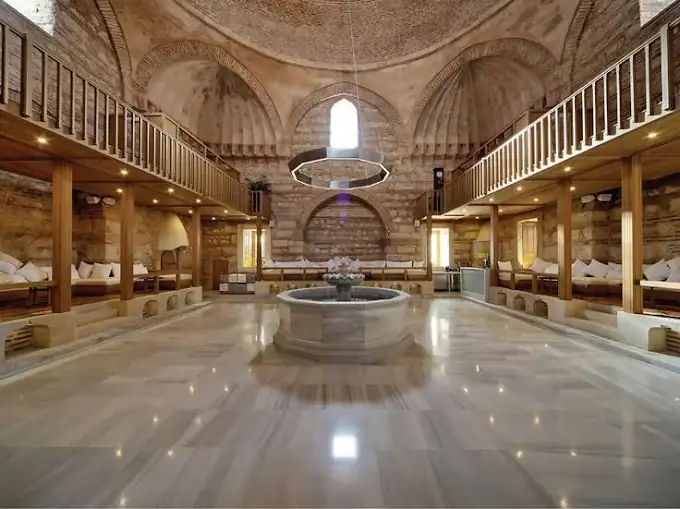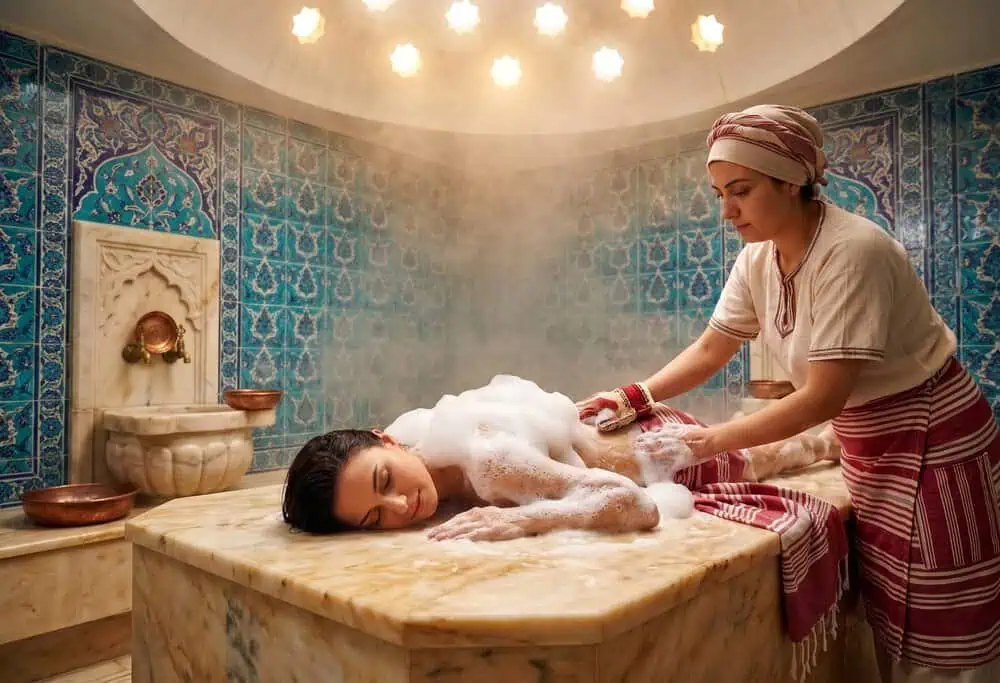
You’ve booked your first Turkish bath. You’ve seen the dreamy photos of marble domes and pillowy foam. And now, somewhere between excitement and mild panic, one question is looping in your head: do I take my clothes off or not?
Fair question. Nobody hands you a dress code when you book online, and the vague “wear whatever you’re comfortable in” advice you’ll find on most tour sites doesn’t actually tell you anything. So let’s fix that. This is the specific, no-guessing guide to what goes on your body, what comes off, and what actually happens once you’re wrapped in that famous checked cotton towel.
This is a part of our bigger guide – Istanbul for Women: Hamams, Beauty & Social Spots.
What a Traditional Kese Scrub Actually Involves
Before we get to wardrobe, it helps to know what you’re dressing for. A classic Istanbul hammam visit runs through a few clear stages:
- Warm-up on or near the göbek taşı, the heated marble “belly stone” in the center of the domed room, which opens your pores and gets you sweating
- The kese scrub, where an attendant works over your entire body with a coarse mitt to slough off dead skin
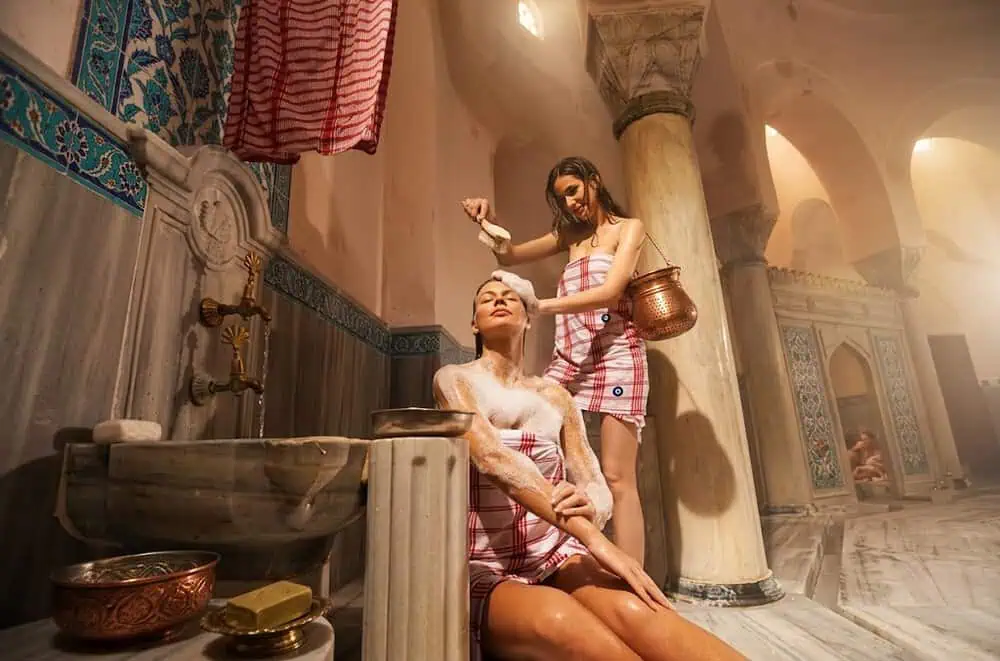
- Foam wash, a cloud of soap bubbles released from a cloth and rubbed over you, followed by a warm rinse
- Optional oil massage, usually booked as an add-on
- Cool-down, where you’re wrapped in dry towels and handed a glass of tea in a quieter lounge area
A no-frills visit takes about 45–90 minutes; add a massage and you’re closer to two hours. None of this requires you to be fully undressed at any point, which brings us to the actual question.
Choose best excursion in Istanbul

The One Rule Everyone Gets Wrong: Are You Naked or Not?
Short answer: no, you’re not naked, and full nudity isn’t the norm in Istanbul hammams. This surprises a lot of first-timers who’ve heard stories or seen European spa-culture videos where bathing is done bare. Turkish hammams, rooted in Islamic bathing customs, work differently — you stay at least partially covered the entire time, in front of staff and other guests alike.
What Women Should Wear
Here’s the specific breakdown, since this is where most of the confusion lives:
- You’ll be handed a peştemal, a thin woven cotton wrap, the moment you arrive
- Underwear generally stays on underneath it
- Your bra can come off — most women do remove it, since the wrap covers your chest anyway and a wet bra is not a fun thing to sit in for an hour
- Swimwear (a bikini or one-piece) is always an acceptable substitute if you’d rather not go without a bra at all
- Attendants (called a natır for women) are the same gender as you, and they’re genuinely unfazed by any of this — they scrub dozens of strangers a day and treat it as routine work, not a spectacle

What Men Should Wear
- Men are given a peştemal too, tied around the waist
- Underwear traditionally comes off underneath the wrap, though plenty of hammams are relaxed about tourists keeping swim shorts on if that’s more comfortable
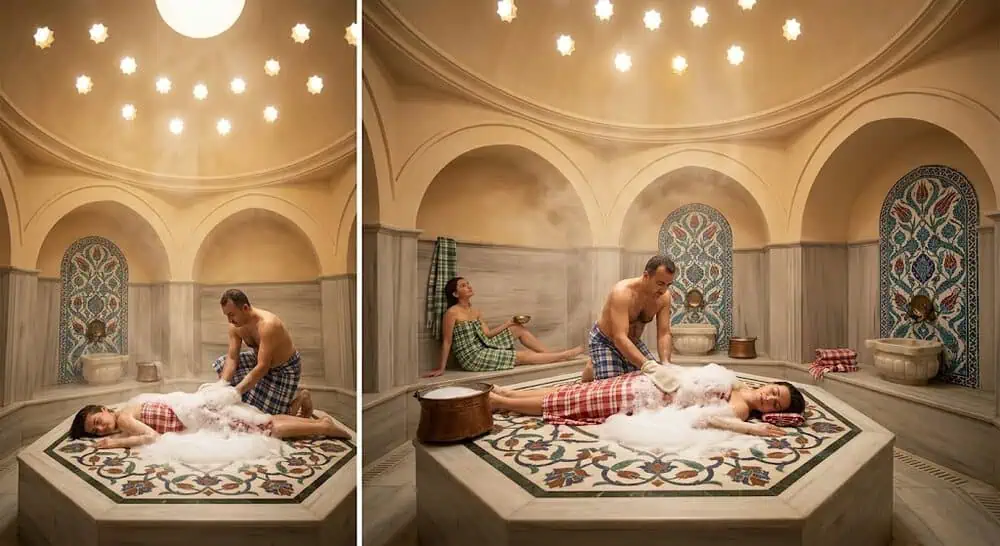
- The male attendant (the tellak) works around the wrap the same way the natır does for women
The throughline for both genders: the peştemal is doing the modesty work, not your body. You’re never sitting there fully bare with nothing between you and the room. If you’d feel more relaxed in a swimsuit under the wrap, wear one — nobody at a reputable hammam is going to comment on it either way.
The Peştemal: Your Only Real Wardrobe Decision
Once the wrap goes on in your changing cabin, it stays on through the warm-up, the scrub, and the wash. It’s not just a formality — it’s specifically woven thin enough that the attendant can still work through it during parts of the massage, while keeping you covered when you’re moving between rooms.
A few practical notes on it:
- You’ll tie it yourself, tucked at the chest for women or the waist for men — staff will show you if you’re unsure
- It gets soaked through during the scrub, which is normal and expected
- Some hammams provide a second, dry peştemal for the cool-down room so you’re not sitting in a wet one while drinking tea

What to Bring vs. What the Hammam Provides
This is where a lot of guides get vague, so here’s the actual packing list.
Provided by the hammam (almost always included in your entrance fee):
- Peştemal
- Soap
- Shampoo (not guaranteed at every hammam — check when booking if hair washing matters to you)
- Wooden or plastic clogs/slippers for the wet marble floor
- A kese mitt for the scrub (though some places charge a small extra fee for this or expect you to buy your own as a souvenir)
Worth bringing yourself:
- A change of dry underwear for after, especially if you went bare underneath
- Hair ties if you have long hair
- Flip-flops if you’re squeamish about communal footwear
- Cash for tipping, since attendants are usually tipped in person and not everyone accepts card tips
- A hair tie and a small bag for wet swimwear if you wore it
Leave at the hotel:
Stay connected during your trip
- Jewelry, watches, and anything valuable — steam, heat, and slippery marble are not friends with your grandmother’s ring
- Makeup, since it’ll come off in the steam room anyway
Common Mistakes First-Timers Make
This is the “expertise” section most generic hammam articles skip entirely, and it’s the part that actually saves your visit.
Booking right after a big meal. The heat is genuinely draining, and a full stomach combined with 40°C+ marble rooms is a fast track to feeling faint. Eat light, hydrate well beforehand.
Shaving or waxing the same day. Fresh, sensitized skin under a coarse kese mitt is unpleasant, sometimes to the point of stinging or minor irritation. Shave the day before, not the morning of.
Rushing straight to the scrub room. Skipping the warm-up stage because you’re impatient is a common first-timer move, and it’s also how people end up lightheaded. The warm room isn’t a waiting area — it’s doing actual work opening your pores before the scrub.
Assuming every hammam has the same rules. Some historic hammams are strict about the underwear-on-under-wrap rule; some smaller neighborhood ones are more relaxed. If in doubt, call ahead or ask at check-in rather than guessing.
Not clarifying the package before you start. Hammams typically offer tiers — self-service, traditional scrub-and-wash, and premium packages with massage or clay masks. Know what you’ve paid for before you’re lying on the marble, because upselling mid-session does happen at busier tourist hammams.
Treating it like a quick errand. The whole point is the slow unwind. If you’re checking your phone for time between the scrub and the massage, you’re doing it backwards — leave a buffer in your schedule so you’re not racing out the door.
A Few Things Women Specifically Ask About
Since this guide sits under our “Istanbul for Women” series, a few questions come up often enough that they deserve a direct answer rather than being buried in a general FAQ.
Can I go during my period? Most hammams don’t refuse entry, but it’s worth calling ahead, and many women simply prefer to reschedule for comfort reasons — the heat, the marble seating, and the scrub itself can feel like a lot on a heavy-flow day. A tampon or menstrual cup makes the visit more manageable if you decide to go.
Is it safe during pregnancy? The heat in a hammam’s warm room can climb high enough to be a concern in pregnancy, particularly in the first trimester. If you’re pregnant, check with your doctor before booking, and mention it to the hammam staff so they can adjust timing and avoid the hottest rooms.
Will the attendant judge my body? No, and this is worth saying plainly because it’s the single biggest anxiety first-timers describe. Natırs scrub bodies of every shape, age, and skin type all day, every day. It’s treated as ordinary work, not a moment of scrutiny.
Can I request a specific attendant? At some of the larger historic hammams, yes — you can ask for someone in particular if you’ve had a good experience before or if a friend recommends someone by name. At smaller hammams, you’ll simply be assigned whoever’s available.
Gender Separation and Who’s Actually in the Room With You
Nearly all traditional Istanbul hammams separate men and women completely — either through two identical, mirrored sections of the same building (this is the setup at most historic hammams in Sultanahmet) or through different opening hours for each gender. You will not be scrubbed by, or share a steam room with, someone of the opposite sex, and the attendant working on you will always match your own gender.
The one notable exception in the city is Süleymaniye Hamam, which runs mixed-gender sessions — worth knowing if that’s specifically what you’re after, and worth avoiding if it isn’t.
Pricing Reality Check
Prices vary a lot depending on which hammam you pick and which package you choose, so treat any single number online with some skepticism. As a general range for 2026:
- Self-service (you bring your own kese and do your own scrubbing): the cheapest option, often under €35
- Traditional scrub-and-wash with an attendant: typically €40–€65
- Premium packages with oil massage, clay mask, or extended treatment: often €70–€150+ at the well-known historic hammams
The most famous hammams — the ones every guidebook photographs — are also usually the priciest and the busiest, which doesn’t automatically mean the best experience. Reviews of some of the most Instagrammed hammams in Sultanahmet mention rushed, assembly-line service during peak tourist hours, especially with the higher-tier “VIP” packages that promise more than they deliver. If a slower, more personal scrub matters more to you than marble ceilings, a smaller neighborhood hammam with fewer tour groups is often the better call, even if it photographs less well.
Tipping is not built into the price and is expected on top, usually handed directly to the attendant in cash at the end.
Which Hammam to Choose for Your First Time
A few names come up constantly for good reason:
- Çemberlitaş Hamamı — Sultanahmet, built in 1584, centrally located and very used to first-timers and non-Turkish speakers, though it’s also the busiest and priciest option near the major sights
- Çağaloğlu Hamamı — quieter, historic, near the Grand Bazaar, generally a calmer experience with fewer crowds
- Kılıç Ali Paşa Hamamı — a beautifully restored option with separate men’s and women’s sections, leaning more toward the refined end of the spectrum. Explore our full guide Kılıç Ali Paşa Hamamı for Women: A Complete Guide to Istanbul’s Most Beautiful Female Hammam Experience.
If it’s your very first hammam ever and you’re nervous about the whole process, some hotel spas offer a gentler introduction — just know going in that hotel hammam experiences are a different, more diluted version of the real thing, not a substitute for a proper historic bathhouse.
Istanbul Hammam Experience: Guide to the Top 6 Turkish Baths
Step-by-Step: What Happens Once You’re in the Room
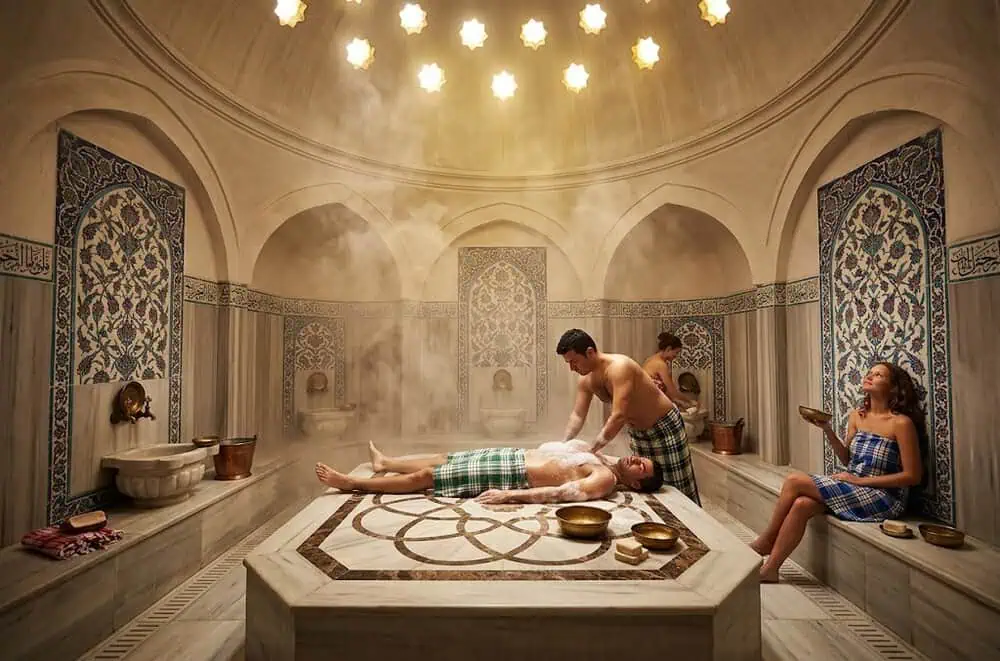
To take the mystery out of it completely, here’s the order of events once you’ve changed into your peştemal:
- Check-in and change, in a private cabin where you leave your clothes and put on the wrap and slippers
- Warm-up room, sitting or lying on heated marble for 10–20 minutes to work up a light sweat
- The scrub, on or near the göbek taşı, where the attendant works the kese mitt over your arms, legs, back, and torso — you’ll be repositioned a few times, and it’s completely normal for the attendant to guide your body directly
- Foam wash, a burst of soap bubbles poured over you from a cloth bag, followed by warm water rinses
- Optional massage, if you’ve booked one, usually with oil, done on the same marble slab or a separate table
- Cool-down and tea, wrapped in dry towels in a quieter lounge, where most hammams offer a complimentary glass of Turkish tea
At no point are you asked to remove the peştemal completely in front of others. The attendant works around it, lifting sections as needed rather than taking it away.
Conclusion
The nervousness around hammam etiquette almost always comes down to one unanswered question: how exposed will I actually be? The honest answer is: much less than you’re picturing. You arrive dressed, you leave dressed, and the peştemal does its job the entire time in between. Keep your underwear on if that’s your comfort zone, lose the bra if you want, bring a swimsuit if it settles your nerves — none of it changes the experience itself, which is really just steam, marble, warm water, and a very thorough scrub. Once you’ve done it once, the whole “what do I wear” panic seems almost funny in hindsight.