Let’s be honest for a second. Turkey doesn’t need another “top 10 things to see” list. What you actually need, especially before your first trip to Istanbul, is the stuff nobody tells you until you’ve already made the mistake. The dropped shoe brush. The “free” tea that turns into an hour-long sales pitch. The taxi driver who “doesn’t have change.” The mosque you can’t enter because you’re wearing shorts.
None of these things will ruin your trip. But they’ll absolutely put a dent in your day, your wallet, or your patience — and every single one of them is avoidable once you know the pattern.
This guide isn’t here to scare you off. Turkey, and Istanbul especially, is one of the most hospitable places you’ll ever visit. Most of what goes wrong for tourists isn’t crime in the traditional sense — it’s a handful of predictable scams and etiquette slip-ups that repeat themselves, tourist after tourist, year after year. Learn the pattern once, and you’re basically immune.
This is a part of Safety, Scams & Local Etiquette: Staying Smart.
Why “What Not To Do” Matters More Than “What To Do” in Turkey
Here’s the thing about Istanbul: it’s a city of roughly 16 million people, and the overwhelming majority of them are warm, honest, and genuinely proud to show you their city. But it’s also a place where a small number of people have built entire routines around predictable tourist behavior — politeness, curiosity, and the reluctance to seem rude in someone else’s country.
Choose best excursion in Istanbul
Think of it like walking through a market you’ve never been to before. You don’t need to memorize the whole map. You just need to recognize the three or four stalls that aren’t what they seem.

1. Don’t Assume Every “Accident” on the Street Is Actually an Accident
The single most talked-about scam in Istanbul is almost comically simple: a shoe-shiner walking ahead of you “accidentally” drops one of his brushes. You call out, he thanks you effusively, and — out of gratitude, apparently — insists on shining your shoes right there on the spot. A few minutes later, he’s asking for an inflated fee, and because he’s already done the work, most people just pay to avoid a scene.
What to do instead: If a brush, tool, or object “accidentally” drops in front of you near Sultanahmet, Taksim, or the Grand Bazaar, just keep walking. If you genuinely want a shine, walk into an actual shop and agree on a price first.
A close cousin of this is the “you dropped something!” approach, where a stranger rushes at you waving their hands. Nine times out of ten, you haven’t dropped anything — it’s just a moment of confusion designed to get you to stop and engage.
2. Don’t Get Talked Into “Free” Tea That Isn’t Really Free
Turkish hospitality is real, and tea culture (çay) genuinely is a huge part of daily life here — shopkeepers offering tea to browsing customers is completely normal and not inherently a scam. The nuance tourist guides usually skip is where this happens matters.
In a carpet or leather shop near a major landmark, the “come in, no obligation, just have a tea” invitation is often the opening move of a long, practiced sales pipeline — a friendly chat, a cup of tea, then increasingly pushy pressure to buy something you never planned on buying.
How to tell the difference: A small neighborhood shopkeeper offering tea while you browse is just being Turkish. A stranger who approaches you on the street near a tourist landmark and specifically invites you to “his cousin’s shop for the best carpets in Istanbul” is running a pipeline. Trust your gut, and remember that walking out of a shop empty-handed is completely acceptable — no purchase required, ever.

3. Don’t Accept a Drink Invitation From a Stranger You Just Met
This one deserves its own heading because it’s the most financially damaging scam tourists report. A friendly local strikes up a conversation — often near Taksim or Sultanahmet — and suggests grabbing a drink somewhere nearby. What follows is a bill for an eye-watering amount, sometimes running into the hundreds or thousands of dollars, for a round of drinks you didn’t realize were being charged at inflated, unposted prices.
The fix is simple: if someone you just met on the street invites you to a specific bar “they know,” decline. Pick your own venue, one you found yourself or that’s clearly reviewed online, and you’ll never run into this one.
Stay connected during your trip
4. Don’t Skip the Taxi Meter (or Trust a “Broken” One)
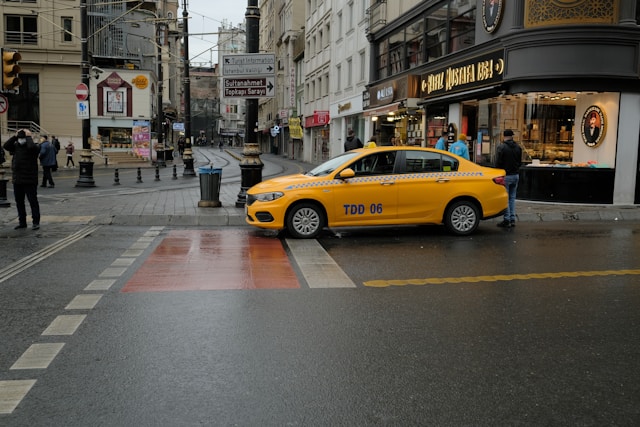
Istanbul taxi drivers are, on the whole, honest working people navigating brutal traffic. But taxi overcharging is consistently one of the top-reported issues, and it usually comes in one of three forms: taking a needlessly long “scenic” route, claiming the meter is broken and quoting a flat (inflated) rate, or the classic “wrong change” trick, where a driver swaps your large bill for a smaller one and insists that’s what you handed over.
What actually works:
- Use an app — BiTaksi, Uber, or iTaksi — rather than hailing from the street, especially near tourist zones or your hotel. All three connect you to the same regulated, metered taxis, but the app shows you the driver’s plate, photo, and route in real time, which removes almost the entire scam category in one step.
- If you do hail from the street, confirm the meter is running (it’s usually visible near the rearview mirror) as soon as you get in.
- When paying cash, say the denomination out loud as you hand it over — “elli lira veriyorum” (“I’m giving fifty lira”) — and hand bills over one at a time rather than as a stack.
- If you’re crossing a Bosphorus bridge or tunnel, the toll gets added to your fare automatically. That’s normal, not a scam.
Editorial note: taxi fares and specific tariff rates change periodically by municipal ordinance, so treat any specific lira figure you see online as a rough guide rather than gospel — check the current rate on the meter or in-app estimate at the time of your trip.
5. Don’t Walk Into a Mosque Dressed for the Beach
This is where a lot of well-meaning travelers get caught off guard, not because they’re being disrespectful on purpose, but because they simply didn’t know the rules going in.
The baseline dress code for both men and women:
- Shoulders and knees covered
- No shorts, no sleeveless tops, no low-cut necklines
- Women need to cover their hair with a scarf while inside
At major, heavily visited mosques like the Blue Mosque or Süleymaniye, attendants typically keep spare robes and scarves at the entrance for underdressed visitors, free of charge. But relying on borrowed communal garments means queueing and wearing something that may not fit or feel great. A lightweight scarf tossed in your day bag solves this instantly and costs you nothing in comfort.
A Few More Mosque-Specific Mistakes to Avoid
- Don’t visit right at prayer time. Most mosques close to sightseers during and shortly after the call to prayer (ezan), five times a day. Plan around it rather than showing up mid-prayer expecting access.
- Don’t wear your shoes inside. There’s almost always a shoe rack or shelf at the entrance — use it.
- Don’t walk in front of someone praying, even if it seems like the shortest path to a better photo angle.
- Don’t use flash photography. Photos are generally fine, but flash is considered disruptive.
- Don’t pay anyone at the entrance. Entry to Turkey’s major mosques is free. If someone near the door claims they can get you “fast entry” for a fee, that’s not an official service.
6. Don’t Assume Istanbul’s Dress Code Is the Same Everywhere
Here’s a nuance most generic guides completely miss: Istanbul is not one city with one dress code. It’s more like several cities stitched together. Modern neighborhoods like Karaköy, Kadıköy, and Beyoğlu are as relaxed as most of Western Europe. Sultanahmet, being both a historic and religious district, leans more conservative simply because of the density of mosques and older residents nearby. And the moment you leave Istanbul entirely for smaller, more traditional towns, the expectations shift again.
The practical takeaway: pack clothing that can flex. You don’t need to dress conservatively for your entire trip — you need the ability to layer up or cover up for specific moments.
7. Don’t Assume Every Price Is Fixed — Or That Everything Is Negotiable
This confuses more tourists than almost anything else on this list, because the rule genuinely changes depending on where you are.
Fixed prices (don’t bargain): restaurants, supermarkets, public transport, official museum and attraction tickets, most modern branded stores.
Negotiable prices (bargaining is expected and normal): the Grand Bazaar, the Spice Bazaar, independent souvenir stalls, and most small shops explicitly aimed at tourists in these markets. Vendors here often quote first prices that are meaningfully inflated, precisely because bargaining is baked into the culture of these specific spaces.
The mistake isn’t bargaining — it’s assuming the rule is the same everywhere. Trying to haggle at a supermarket checkout will just confuse everyone. Paying the first quoted price at the Grand Bazaar without a counteroffer means you’re almost certainly overpaying.

8. Don’t Buy “Antiques” or Get Pressured Into a Rushed Carpet Purchase
Two specific shopping traps deserve a direct callout. Near historical sites, you may be approached by someone showing you “ancient” coins or artifacts, supposedly from the Byzantine or Ottoman era, at a “discounted” price. These are virtually always reproductions — and it’s also worth knowing that exporting genuine antiquities from Turkey without proper documentation is illegal, so there’s no upside here even if the item were real.
Carpet and rug shopping is a legitimate, deep-rooted Turkish craft, and buying a handmade piece can be a wonderful souvenir — but not under pressure. If you’re guided into a shop, offered tea, and then walked through an increasingly theatrical presentation of “just one more” carpet while someone hovers nearby, take that as your cue to slow down. A reputable seller will let you leave, think it over, and come back. Anyone pushing you to decide on the spot is optimizing for their commission, not your satisfaction.
9. Don’t Ignore Basic Body Language Rules
This is the category standard tourist guides tend to gloss over, and it’s genuinely useful to know before you’re already mid-conversation.
- Never show the sole of your foot or shoe to someone. It reads as a sign of disrespect. This comes up most when sitting cross-legged, propping your feet up at a café, or sitting on the floor in someone’s home.
- Use your right hand (or both hands) when handing something to someone, receiving change, or eating — not just your left.
- Don’t point directly at someone with your finger; it’s considered impolite.
- Avoid loud, boisterous behavior in general, and especially near mosques or graveyards — Turkish public spaces tend to run a notch quieter than what many Western visitors are used to.
- Public displays of affection — holding hands is completely fine, but overt kissing or embracing tends to draw stares, more so outside cosmopolitan neighborhoods.
10. Don’t Refuse Tea Bluntly (Or Feel Obligated to Buy After Accepting It)
There’s a genuine cultural tension here worth explaining honestly. On one hand, accepting an offer of tea is a small, meaningful gesture of connection in Turkish culture, and an outright refusal can come across as cold. On the other hand, accepting tea does not create any obligation to buy anything — full stop.
If you truly don’t have time, a polite smile, a hand over your heart, and pointing toward your watch and the direction you’re headed communicates “thank you, but I have to go” without any awkwardness. If you do have time, having a cup costs you nothing and often leads to a genuinely nice, low-pressure conversation.
11. Don’t Eat or Drink Openly on the Street During Ramadan in Conservative Areas
Turkey is officially secular, and in cosmopolitan Istanbul you’ll find plenty of restaurants and cafés operating normally throughout Ramadan. That said, in more traditional neighborhoods, eating or drinking visibly on the street during fasting hours can come across as inconsiderate toward those observing the fast. It’s less a “rule” and more a matter of situational awareness — a quick glance at how busy and visibly open the food establishments around you are will usually tell you what’s appropriate.
12. Don’t Skip Getting an Istanbulkart
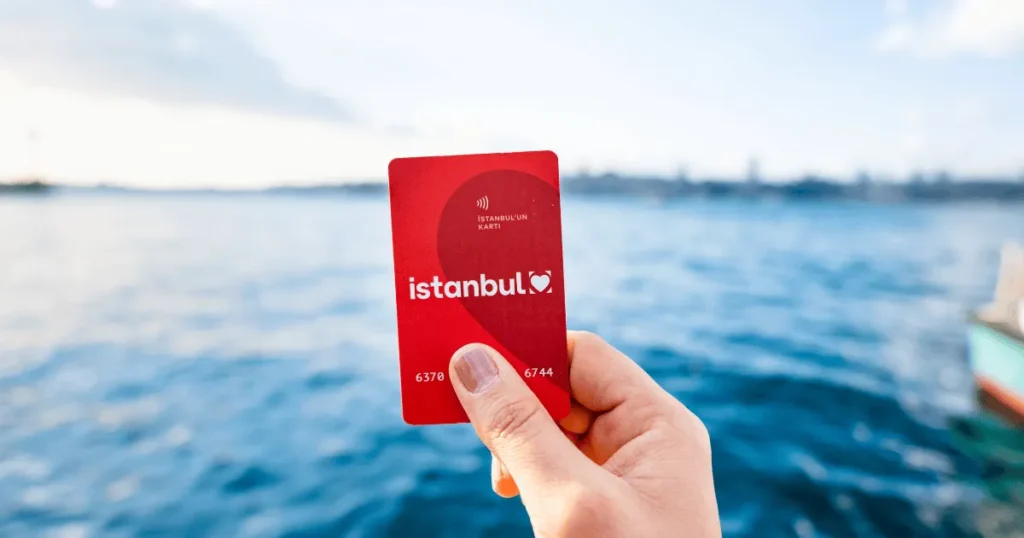
This isn’t a scam-avoidance tip so much as a “don’t make your life harder than it needs to be” tip. Istanbul’s public transport network — trams, metro, buses, ferries, funiculars — is genuinely excellent, and nearly all of it runs on the Istanbulkart, a rechargeable transit card. Paying by contactless credit card directly at the gates is possible on many lines now, but often costs meaningfully more per ride than using the card, and cash isn’t accepted at all on most modern lines.
Common tourist mistake: boarding a bus from the wrong door. On Istanbul buses, you enter from the front and exit from the middle or back — reversing this just creates a jam for everyone, including you.
13. Don’t Let Your Guard Down in Crowds
Pickpocketing is the most common actual “crime” tourists report, and it clusters almost entirely around the densest tourist areas — Sultanahmet Square, İstiklal Street, Taksim Square, and the Grand Bazaar. The classic setup involves a staged bump or distraction (sometimes a bracelet placed on your wrist, sometimes someone selling something directly in your face) while a second person works your bag or pocket from behind.
Practical habits that actually help:
- Keep bags zipped and worn across your body, not over one shoulder
- Keep phones and wallets in front pockets, not back pockets, in dense crowds
- Be extra alert the moment someone initiates unsolicited physical contact or a “distraction” conversation
14. Don’t Wander Into Unfamiliar Outer Districts at Night Without Knowing the Area
Istanbul’s core tourist zones — Sultanahmet, Beyoğlu/Taksim, Kadıköy — are safe for visitors, including solo travelers, by nearly every measure. Violent crime targeting tourists is rare. That said, a handful of outer districts on the city’s fringes have a reputation locals themselves treat with more caution after dark, generally due to poverty-linked petty crime rather than anything targeting foreigners specifically. If your evening plans take you somewhere off the typical visitor map, a quick check of what kind of neighborhood you’re heading into costs nothing and adds real peace of mind.
15. Don’t Assume “Rude” Behavior Toward You Is Personal
This last one is more of a mindset shift than a rule. Turkish social norms around directness, personal space, and gender-based interaction can read differently than what many Western visitors expect. For example, in more traditional settings, a male shopkeeper may address questions to a male travel companion rather than directly to a woman traveling with him — this is a cultural pattern rather than a personal snub. Understanding that a lot of what might initially feel “off” is simply a different social script, not rudeness, makes the whole trip far less stressful to navigate.
Frequently Asked Questions
The Bottom Line
None of this is meant to make you anxious before you land. Istanbul rewards curiosity, and the overwhelming majority of interactions you’ll have here — with shopkeepers, taxi drivers, waiters, and total strangers who just want to practice their English — will be warm and completely genuine. The handful of scams and etiquette slip-ups covered here are well-documented precisely because they’re repetitive and predictable, which is exactly what makes them easy to sidestep once you’ve read this once.
Walk in with a little awareness, a scarf in your bag for mosque visits, a taxi app on your phone, and the confidence to say “no thanks” to unsolicited invitations — and you’ll spend your energy on what actually makes this city special, instead of untangling avoidable hassles.


