This article is a part of our Istanbul Bazaars: Grand Bazaar, Spice Market & Traditional Crafts guide.
The Egyptian Bazaar — known just as often as the Spice Bazaar, or Mısır Çarşısı in Turkish — is one of those places every Istanbul list tells you to see. Fine. But almost none of those lists tell you what actually happens once you’re inside: which stalls are worth your lira, which ones are counting on you not knowing any better, and why the market’s own name is a bit of a historical red herring.
This guide fixes that. It also corrects a mistake in our own older coverage of this bazaar — more on that below — because getting the history right matters as much as getting the shopping tips right.
What the Egyptian Bazaar Actually Is
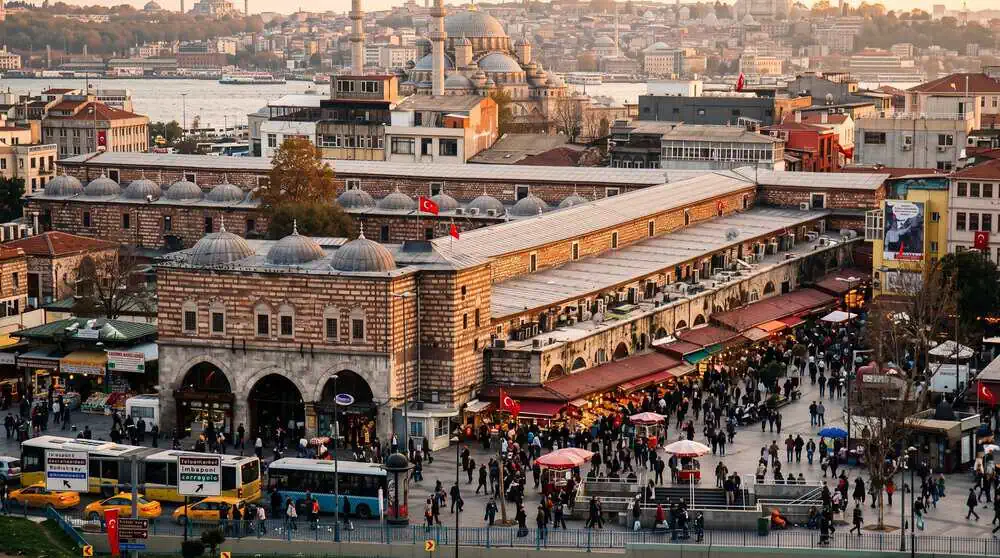
Strip away the poetry, and the Egyptian Bazaar is a 17th-century, L-shaped covered market in Eminönü, built as part of the New Mosque (Yeni Cami) complex. It’s smaller and more manageable than the Grand Bazaar — roughly 85 to 90 shops along two long, vaulted corridors, versus the Grand Bazaar’s thousands of stalls sprawling across dozens of streets. That size difference matters practically: you can walk the whole Egyptian Bazaar in 20 minutes, or spend two hours in it if you actually stop to smell, taste, and talk to people.
It was never built purely as a tourist attraction, and that’s still obvious in parts of it. The rent from these shops was originally meant to fund the upkeep of the New Mosque next door — its imam, its school, its hospital. That commercial-religious pairing was standard Ottoman city planning: build a mosque complex, attach a market to pay for it.
Choose best excursion in Istanbul
A Quick History
Here’s where we need to be upfront. An earlier version of this article stated that the bazaar was commissioned by “the mother of Sultan Mehmet III.” That’s not accurate, and we want to correct it rather than quietly delete it.
The real story is more tangled, and more interesting:
- Construction of the New Mosque complex began around 1597, ordered by Safiye Sultan, the mother of Sultan Mehmed III. She lost political influence after her son’s death in 1603, and the project stalled — for nearly six decades.
- The Great Fire of 1660 tore through the surrounding district and, oddly, created the opening for the project to restart. Hatice Turhan Sultan, the mother of Sultan Mehmed IV, took over the rebuilding.
- She had the mosque and its attached bazaar completed by 1663–1665. The bazaar itself is generally dated to 1660–1664.
So the Egyptian Bazaar is technically the product of two different Ottoman queen mothers, a fire, and a 57-year gap in construction — not one sultan’s mother, and not Mehmed III’s. Historians sometimes call this period the “Sultanate of Women,” when the mothers of reigning sultans held real political power, and this complex is one of the clearest physical monuments to that era.
Why “Egyptian” Bazaar at All?
The name has nothing to do with Egyptian merchants running the place. It comes from how the construction was financed: taxes levied on goods imported from Egypt helped fund the building. Over time, the name also stuck because so many of the spices sold here historically arrived via Cairo — shipped from India, Persia, and further east, then routed through Egypt to Istanbul. The bazaar became, in effect, the last stop of a very long spice road.
Getting There
The Egyptian Bazaar sits right at Eminönü, next to the Galata Bridge and directly beside the New Mosque. This is one of the easiest historic sites in Istanbul to reach, honestly:
Tram
Take the T1 line and get off at the Eminönü stop — the bazaar entrance is essentially across the square. From Sultanahmet, that’s about a 5-minute ride.
Ferry
Eminönü is a major ferry hub, so if you’re coming from the Asian side (Kadıköy or Üsküdar), a ferry ride drops you within a two-minute walk
Funicular + tram
From Taksim, take the F1 funicular down to Kabataş, then the T1 tram to Eminönü.
On foot
If you’re already exploring Sultanahmet or the Grand Bazaar, it’s a flat, roughly 15–20 minute walk downhill toward the Golden Horn
Stay connected during your trip
Bring a loaded Istanbulkart. You’ll want it for the tram either way, and it also works on ferries and buses if your route changes.
Opening Hours and When to Actually Go
Standard hours run roughly 8:00 AM to 7:00 PM daily, though you’ll see some sources list closing times as late as 7:30 PM in summer, and a handful of shops open a little later on Sundays. Individual vendors set their own hours within that window, so a shop can close early on a quiet winter evening even if the bazaar “officially” stays open.
Two things worth knowing that most guides skip:
- It’s genuinely closed — not just quiet — during Eid al-Fitr and Eid al-Adha. These religious holidays follow the lunar calendar, so the exact dates shift every year. If your trip lands during one of them, check the current dates before building your itinerary around this stop.
- Unlike the Grand Bazaar, it’s open on Sundays. This makes it the better weekend option if the Grand Bazaar’s Sunday closure has already thrown off your plans.
For crowds: weekday mornings, roughly 9:00–11:00, are noticeably calmer. By early afternoon and especially on weekends, the main corridor gets tight enough that browsing slows to a shuffle.
What You’ll Actually Find Inside
Spices
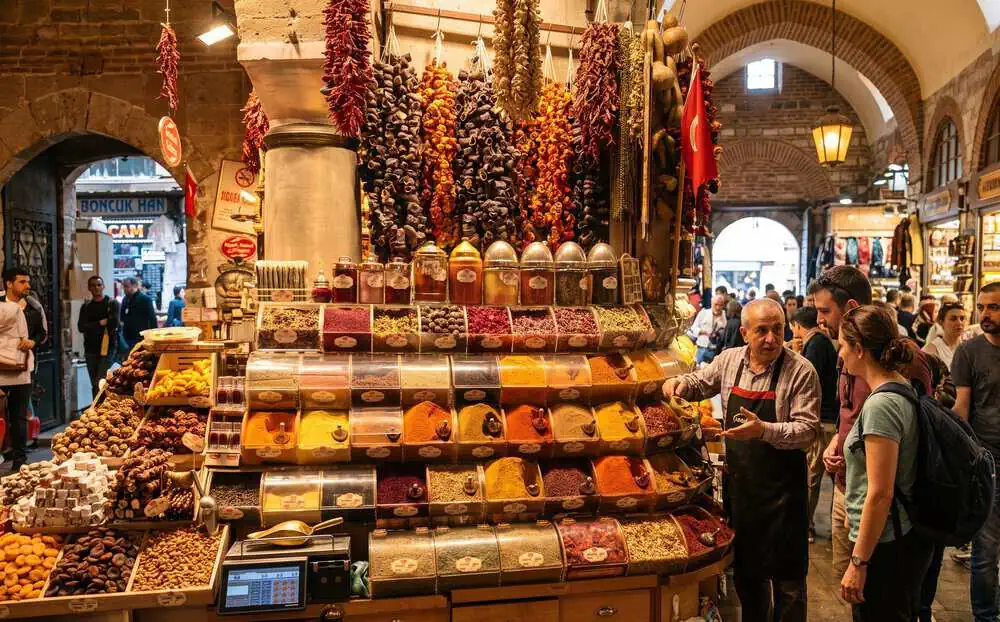
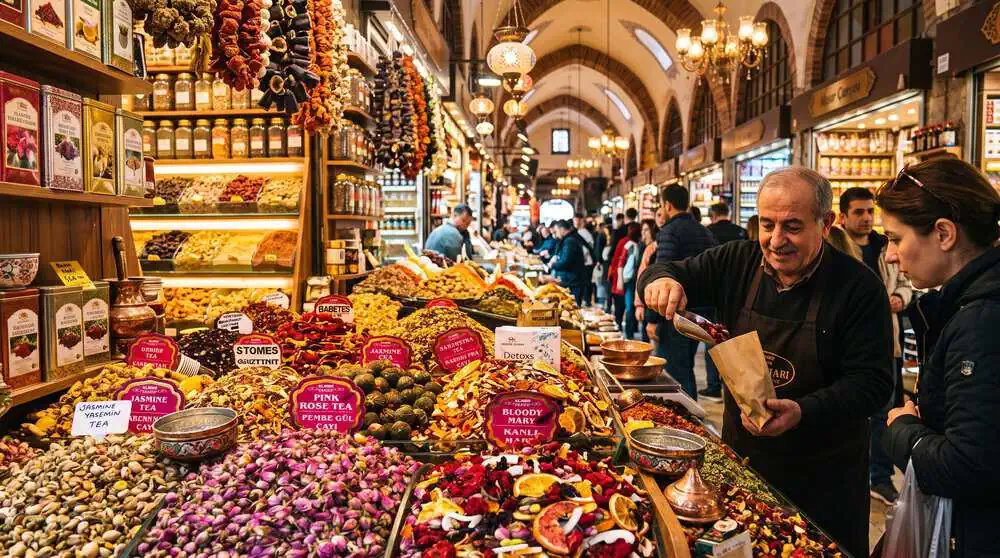
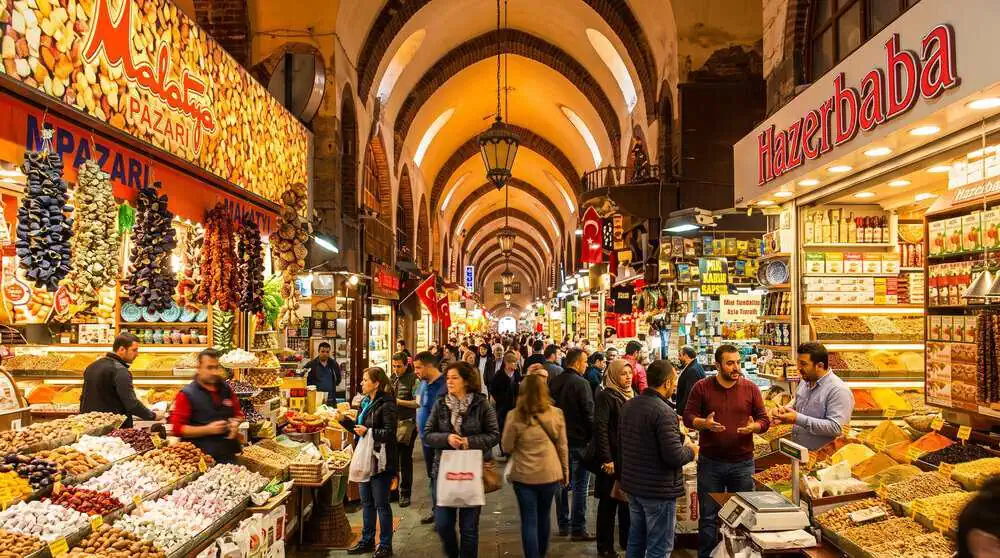
This is still the bazaar’s reason for existing. Expect pyramids of paprika, sumac, dried chili flakes, and turmeric, along with pre-mixed Turkish spice blends — look for köfte baharatı (meatball spice), tavuk baharatı (chicken spice), and balık baharatı (fish spice) if you want something that works straight out of the bag. Beyond the obvious, you’ll find mahlep (ground black cherry stones, used in Turkish and Greek baking) and mastic (a resinous, pine-like flavoring used in desserts and even chewing gum) — both distinctly Turkish pantry items that rarely show up in Western spice aisles.

Turkish Delight, Coffee, and Sweets
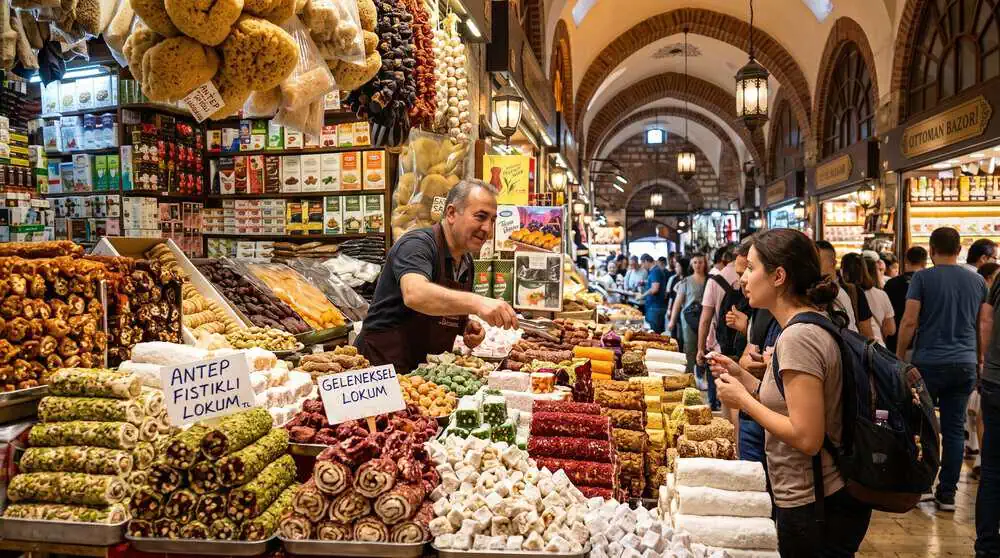
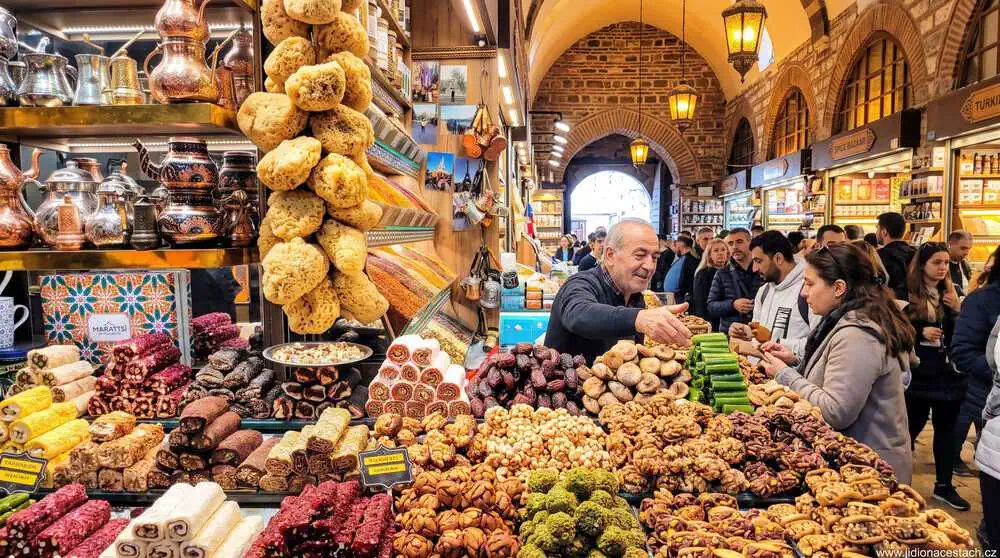
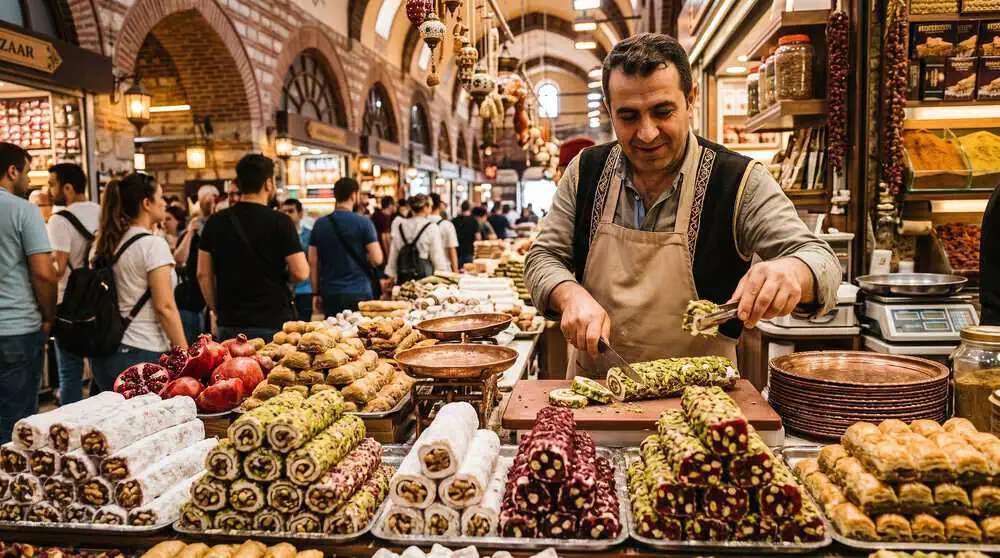
Lokum (Turkish delight) is sold everywhere here, in every imaginable flavor and filling, from classic rosewater to pistachio-stuffed and pomegranate. Turkish coffee, sold both as beans and pre-ground, is another staple — and just outside the bazaar’s main entrance, you’ll often find a line for Kurukahveci Mehmet Efendi, a well-known coffee roaster whose sealed bags travel well if you’re taking some home.
Helva (halva), made from sesame paste or pistachios, is also widely available and worth tasting before you buy — quality varies a lot between vendors.
Beyond Food
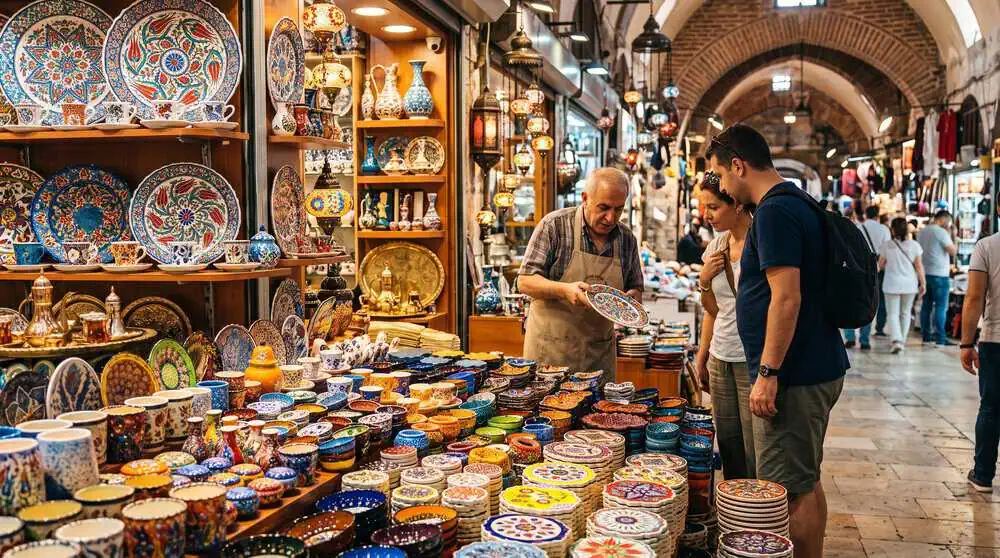
The bazaar also carries textiles, ceramics, jewelry, and small souvenirs, though this is genuinely not its strength — the Grand Bazaar does crafts and textiles better and in far greater volume. If rugs, leather, or jewelry are your priority, treat the Egyptian Bazaar as a food-first stop and save serious craft shopping for elsewhere.

One honest note on saffron: real saffron is expensive everywhere, not just here. If a stall offers you saffron at a price that seems too good to be true, it usually is — more on that in the scams section below.
The Experience: What It Actually Feels Like
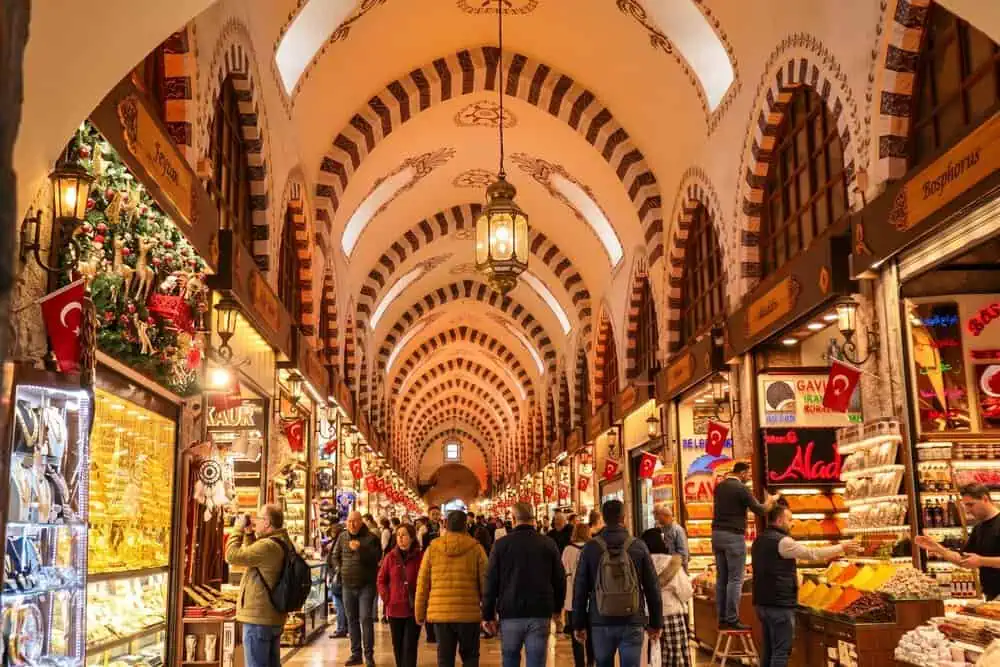
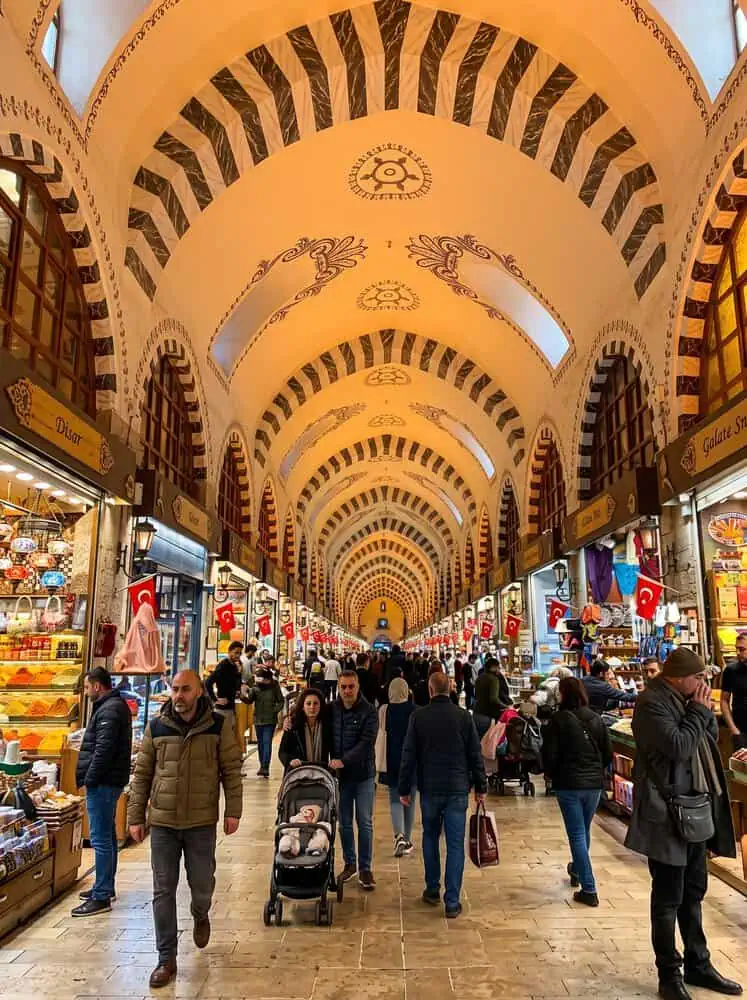
The corridors are covered by a series of domes, with painted vaults overhead that give the place a genuine sense of scale even though it’s compact compared to the Grand Bazaar. The air really does change as you walk — you’ll pick up cinnamon and cumin in one stretch, then dried fruit and rosewater a few stalls later. Vendors call out prices and offers; some will invite you to taste before you buy, which is normal here and not something to feel pressured by.
It’s louder and more visually dense than most Western markets, and it can feel like sensory overload in the first five minutes. That’s normal — give it a lap before deciding what’s worth your attention.
Common Mistakes and Scams to Avoid
This is the part most bazaar articles gloss over, and it’s where genuine local knowledge matters most.
Honest Pros and Cons
|
What’s genuinely good about it:
|
What to go in expecting:
|
|---|---|
What to Combine It With
Because it’s so centrally located, the Egyptian Bazaar pairs naturally with a few other Eminönü stops:
- New Mosque (Yeni Cami): Right next door, free to enter, and worth five minutes even if you’re not planning a full visit — the same royal patron built both.
- Pandeli Restaurant: A historic restaurant accessed via a staircase above the bazaar’s main entrance, known for its turquoise İznik tile interior. Worth knowing about even if you don’t dine there.
- Uzunçarşı Caddesi: Running alongside the bazaar, this street is used by actual Istanbul residents, not just visitors — a good contrast if the bazaar itself feels too polished.
- Mahmutpaşa Yokuşu: A steep shopping street just behind the bazaar, packed with small, inexpensive clothing and household shops. Not glamorous, but genuinely local.
- Kurukahveci Mehmet Efendi: The coffee shop just outside the entrance, usually with a short line, selling freshly ground and sealed Turkish coffee to take home.
Egyptian Bazaar vs. Grand Bazaar: Which Should You Prioritize?
If you only have time for one, here’s the honest breakdown:
- Choose the Egyptian Bazaar if: you want spices, sweets, and a shorter, more digestible visit — especially on a Sunday, when the Grand Bazaar is shut.
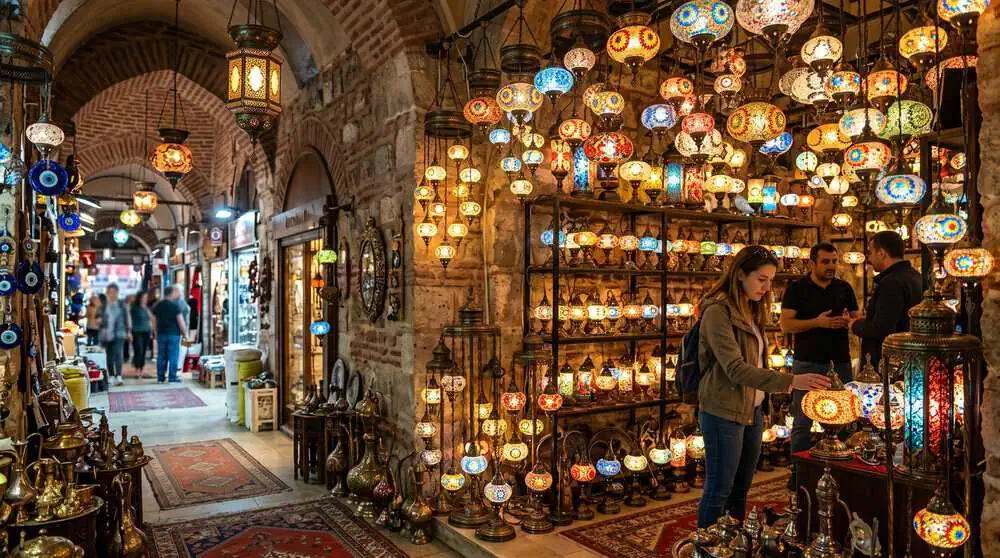
- Choose the Grand Bazaar if: you’re after textiles, leather, jewelry, ceramics, or just want the sheer scale and maze-like experience the Egyptian Bazaar doesn’t offer.
- Do both if you can: they’re about a 15–20 minute walk apart, and the contrast between them — food market versus craft-and-goods labyrinth — is genuinely part of understanding how Ottoman-era commerce was organized.
Practical Tips Before You Go
- Visit on a weekday morning if you want to actually browse instead of shuffling with the crowd
- Bring small bills — cash gives you more room to negotiate on smaller purchases
- Taste before you buy anything edible; almost every vendor expects and allows this
- Ask “what’s this per 100 grams?” before letting anyone weigh out spices or lokum for you
- Skip anyone offering an unsolicited free tour near the entrances
- Check card machine totals before entering your PIN
- Leave 30–45 minutes minimum; give yourself 90 if you want to actually taste, compare, and shop rather than just look
Final Thoughts
The Egyptian Bazaar earns its reputation, but not for the reasons most write-ups suggest. It’s not a mystical portal to the Ottoman past — it’s a working, 360-year-old shopping arcade that still does exactly what it was built to do: sell food, with a side of theater. Go in knowing the real history, knowing which stalls to be a little skeptical of, and knowing that a five-minute detour into the streets around it will show you a version of Eminönü that has nothing to do with tourism at all. That combination — the market and its surroundings — is what actually makes it worth the trip.
Frequently Asked Questions
Related articles:


