Have you ever experienced a food coma so profound, so utterly satisfying, that you completely questioned your itinerary for the rest of the day? If you haven’t, you simply haven’t eaten enough mantı in Istanbul yet.
See other food from Istanbul in the Turkish Food Guide: Traditional Dishes & Eat Like a Local.
Welcome to the ultimate carbohydrate showdown. If you’re wandering through the winding, vibrant streets of Istanbul, trying to “Feel the City Like a Local” (which is exactly what we do here at 2istanbul.com), you’ve probably noticed menus proudly boasting about their mantı. But here is the secret most standard tourist guides completely miss: not all Turkish dumplings are created equal. In fact, there is a fierce, unspoken regional rivalry happening right on your plate.
In one corner, we have the undisputed, deeply traditional heavyweight champion: the microscopic, painstakingly folded Kayseri mantı. In the opposite corner, the rebellious, indulgent, and wildly addictive challenger: the fried Sinop mantı, a crispy dumpling showered in walnuts that will make you rethink everything you know about pasta.
So, grab a glass of piping hot black tea, pull up a chair, and let’s dive deep into this delicious battle. Which one is right for you? What should you look out for? And most importantly, how do you eat these like a true Istanbulite without looking like a confused tourist?
What Actually is Turkish Mantı? (The Basics)
Choose best excursion in Istanbul
Before we start throwing punches in this regional battle, let’s get our facts straight. What exactly are we dealing with?
If you’re imagining a giant, fluffy Chinese bao or a delicate Japanese gyoza, hit the brakes. Turkish mantı is closer to a tiny, meat-filled ravioli or tortellini, but the preparation and presentation are entirely unique to Anatolia.
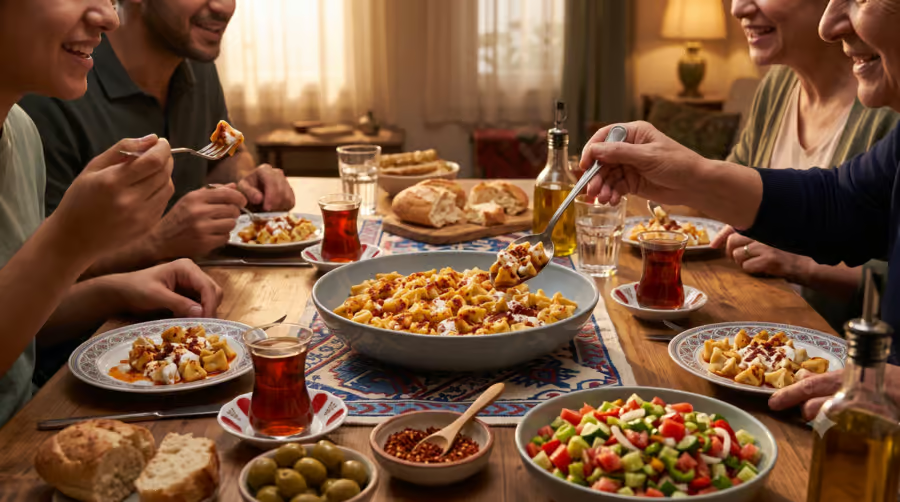
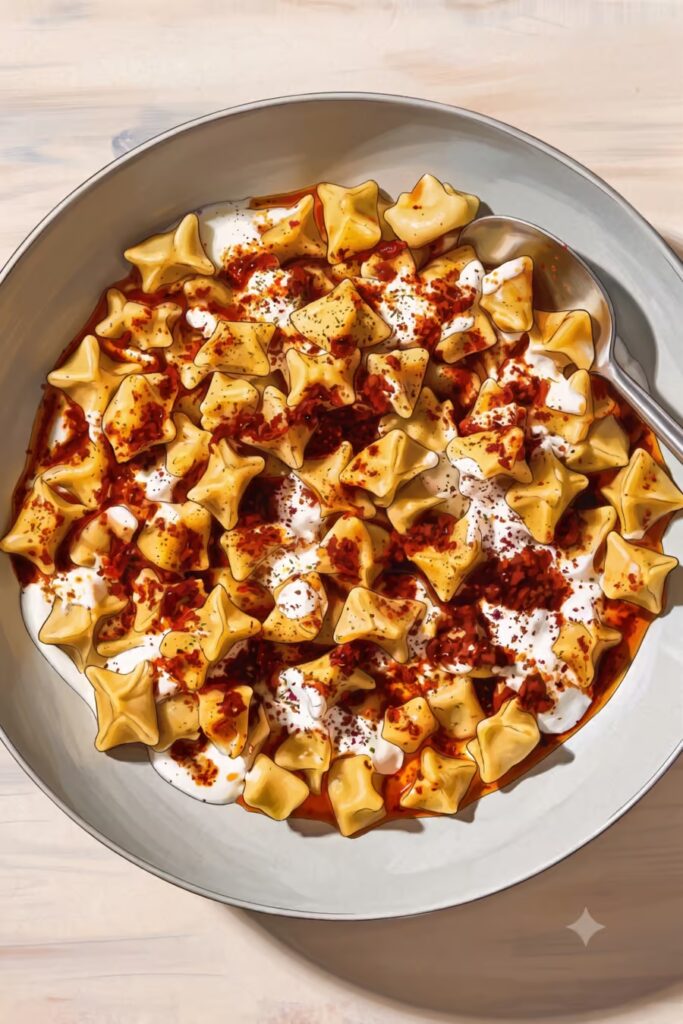
At its core, mantı consists of a simple, unleavened dough filled with a spiced mixture of minced meat (usually beef or lamb) and finely chopped onions. But the magic doesn’t happen inside the dumpling; it happens on the outside. Authentic Turkish mantı is always drowning—and I mean beautifully, luxuriously drowning—in a thick blanket of garlicky yogurt. Finally, it is crowned with a sizzling pour of melted butter infused with red pepper flakes (pul biber) and dried mint (nane).
It’s hot, it’s cold, it’s creamy, it’s spicy, and it’s acidic. It is, quite frankly, a flavor explosion. But how that base concept is executed changes entirely depending on whether you are eating the Kayseri style or the Sinop style.
In the Red Corner: The Microscopic Kayseri Mantı
Let me set the scene. It was a rainy Tuesday afternoon in Beşiktaş. The kind of day where the damp Bosphorus breeze chills you right to the bone. I ducked into a classic esnaf lokantası (a traditional tradesmen’s restaurant) with fogged-up windows and the hum of local chatter. I ordered the classic: Kayseri mantı.
The Experience: A Spoonful of Tradition
When the plate arrived, it looked like a bowl of tiny, edible pearls hidden under a snowy mountain of yogurt. Kayseri mantı is famous for its absurdly small size.
Legend has it that in the central Anatolian province of Kayseri, a prospective mother-in-law would judge a bride-to-be based on how small she could fold her mantı. The golden rule? You must be able to fit exactly 40 individual dumplings onto a single wooden spoon. Let that sink in. Forty dumplings. On one spoon!
Stay connected during your trip
When you take a bite, it’s soft, comforting, and incredibly juicy. Because they are boiled, the dough practically melts in your mouth, leaving you with the savory hit of the spiced beef inside. The contrast between the hot, buttery tomato sauce and the cool, sharp garlic yogurt is culinary poetry.
Hidden Nuances & Expertise
Here is a nuance most generic blogs miss: real, authentic Kayseri mantı isn’t just boiled in plain water. A true master boils the dumplings in water mixed with a little bit of tomato paste (salça), a touch of butter, and salt. This means the cooking broth itself becomes a rich, flavorful sauce that gets ladled directly into your bowl. If you are served Kayseri mantı that looks dry before the yogurt is added, you’re eating a shortcut version.
Furthermore, the secret ingredient that locals use to elevate this dish is sumac. This deep-red, citrusy spice cuts right through the richness of the butter and yogurt. If you don’t aggressively sprinkle sumac over your Kayseri mantı, are you even doing it right?
Pros, Cons, and Pricing Realities
The Pros:
- Ultimate Comfort Food: It’s soft, warming, and easy to eat. It feels like a hug from a Turkish grandmother.
- Balanced Acidity: The tomato-infused broth mixed with the yogurt creates a perfectly balanced tang.
- Widely Available: You can find excellent Kayseri mantı in almost every neighborhood in Istanbul.
The Cons:
- Texture Fatigue: Because everything is soft (soft dough, soft meat, liquid yogurt), you might miss a bit of crunch.
- The Garlic Factor: The raw garlic in the yogurt is potent. Do not eat this right before a romantic Bosphorus sunset date unless your partner is eating it too.
The Price: As of mid-2026, a high-quality, artisanal plate of Kayseri mantı in a good Istanbul neighborhood (like Kadıköy, Nişantaşı, or Beşiktaş) will run you anywhere from 300 to 450 TL (roughly $8 to $12). It is highly labor-intensive, so if you find a plate for 100 TL, run away—it’s likely frozen, factory-made dough with zero meat inside.
In the Blue Corner: The Heavyweight Fried Sinop Mantı
Now, let’s cross the Bosphorus to the Asian side of Istanbul. Picture a sunny Saturday in the trendy neighborhood of Moda, Kadıköy. I was sitting at a specialized Sinop mantı house, ready to try a dish that has been completely taking over the Istanbul food scene over the last few years. Enter: The Fried Sinop Mantı (Çıtır Sinop Mantısı).
If Kayseri mantı is a delicate pearl, Sinop mantı is a golden, crunchy flavor grenade.
Originating from the Black Sea coastal city of Sinop (which officially received a geographical indication for its mantı in 2020), this dumpling is entirely different from its central Anatolian cousin. First of all, the size. Sinop mantı is huge by comparison. The dough is rolled incredibly thin, filled with a generous amount of meat, and folded into large triangles or “ears.”
While traditional Sinop mantı is boiled and served “mixed” (half the plate covered in garlic yogurt, the other half completely smothered in crushed walnuts and brown butter), a modern evolution has stolen the hearts of locals: frying them.
The Experience: The Crunch Heard Around the World
When my plate of fried Sinop mantı was set down, the aroma of toasted walnuts and browned butter hit me before I even picked up my fork. The dumplings had been fried to a deep, golden-brown crisp.
When you bite into it, the audible CRUNCH gives way to the steaming, savory minced beef inside. Then, you drag that crispy shell through the cool garlic yogurt. But the absolute star of the show? The walnuts.
This isn’t a light dusting of nuts for garnish. We are talking about a thick, generous avalanche of finely ground, high-quality walnuts drenched in foaming hot, organic village butter. The earthy, nutty flavor of the walnuts combined with the fried dough creates a taste profile that feels almost entirely distinct from what you think “pasta” should taste like.
Hidden Nuances & Expertise
Why does the Sinop version taste so different? The secret lies in the dough and the resting process. Unlike standard dumpling dough, authentic Sinop mantı dough incorporates eggs and must rest for a minimum of three hours before it is rolled out. This resting period gives the dough a unique elasticity and allows it to crisp up beautifully when fried, without absorbing too much grease.
A common mistake tourists make is asking for just yogurt, skipping the walnuts because it sounds “weird” on a savory meat dish. Do not do this! The walnuts are the defining characteristic of the Sinop style. The oils from the walnuts mix with the hot butter to create a rich, pesto-like sauce that is to die for.
Pros, Cons, and Pricing Realities
The Pros:
- Textural Masterpiece: The contrast between the crunchy fried dough, the creamy yogurt, and the gritty, buttery walnuts is out of this world.
- Flavor Complexity: The nutty, earthy tones elevate the dish from a simple comfort food to a gourmet experience.
- Highly Instagrammable: The golden crispy dumplings look spectacular on a plate.
The Cons:
- The Calorie Bomb: This is fried dough, heavy meat, butter, and nuts. It is incredibly rich. You will absolutely need a Turkish coffee and a long nap afterward.
- Less Traditional: Purists will argue that frying the mantı strays from the historical boiled roots (though it is insanely delicious).
The Price: Because it utilizes premium ingredients like finely ground walnuts and copious amounts of village butter, Sinop mantı is noticeably more expensive. Expect to pay between 550 to 750 TL (around $15 to $20) for a proper plate of the fried, walnut-heavy version in Istanbul today.
Head-to-Head: The Ultimate Dumpling Showdown
So, how do they actually compare when we put them side by side? Let’s break it down into the metrics that actually matter to your stomach and your wallet.
- Texture: Kayseri is all about the melt-in-your-mouth softness. It’s slurpable. Sinop, specifically the fried version, is all about the aggressive, satisfying crunch.
- Flavor Profile: Kayseri relies heavily on acidity—the tang of the yogurt, the brightness of the tomato broth, and the citrus punch of the sumac. Sinop relies on richness—the deep, earthy umami of toasted walnuts mixed with browned butter.
- The “Heavy” Factor: Look, neither of these are diet foods. But Kayseri feels a bit lighter on the digestive system because it is boiled. The fried Sinop mantı is a heavy hitter. It’s the kind of meal you plan your entire afternoon around.
- Authenticity Vibe: Eating Kayseri mantı feels like you’ve been invited into a local family’s home on a Sunday. Eating fried Sinop mantı feels like you’ve discovered a trendy, insider-only culinary secret on the Asian side of the city.
The Best Way to Order? The “Mix” (Karışık)
Here is an expert, local tip that will change your life: When you visit a Sinop mantı restaurant, you don’t actually have to choose between boiled or fried. Ask the waiter for “Karışık” (Mixed).
A good establishment will bring you a plate where half the dumplings are the traditional boiled Sinop style, and the other half are the crispy fried ones. Then, they will top half the plate with the garlic yogurt, and the other half with the walnut-butter sauce. It allows you to cross-taste every single combination in one sitting. It is the ultimate local power move.
Practical Advice & Hidden Nuances for the Istanbul Traveler
If you are coming to Istanbul and want to embark on this mantı journey, here is some honest, practical advice to ensure you get the best experience possible.
1. Beware the Tourist Traps in Sultanahmet
While there are a few good spots in the historical peninsula, many restaurants catering heavily to tourists will serve frozen, factory-made mantı. How can you tell? The dough will be unusually thick and chewy, and the meat filling will be virtually non-existent (locals call this “eating empty dough”). To find the real deal, take the ferry to Kadıköy or head up to Beşiktaş and Nişantaşı. Look for places that specialize only in mantı (often called a Mantı Evi). If a restaurant sells kebabs, pizza, sushi, and mantı… run.
2. The Garlic Etiquette
Yogurt on mantı usually comes in two forms: Sarımsaklı (with garlic) or Sarımsaksız (without garlic). Unless you have a severe allergy, do not order it without garlic. The raw, sharp bite of the garlic is completely necessary to cut through the heavy fats of the butter and meat. Without it, the dish tastes flat. Just carry some mints in your pocket!
3. Spice It Up Yourself
When your mantı arrives, it will usually have a basic butter sauce on it. But on your table, you will find a holy trinity of spices: Pul biber (red pepper flakes), Nane (dried mint), and Sumak (sumac). Do not be shy. A liberal dusting of dried mint adds an incredible freshness, while the sumac provides a tangy, lemony zip that elevates the dish to the next level.
4. Don’t Ask for Ketchup
This might sound obvious, but it happens enough that restaurant owners complain about it. Mantı is not french fries, and it isn’t standard Italian pasta. Adding ketchup or mayonnaise to mantı is considered a culinary crime in Türkiye. Trust the yogurt and butter process!
Conclusion: Which Mantı is Crowned the Champion?
So, who wins the great regional battle? The tiny, perfectly balanced Kayseri mantı, or the massive, crunchy, walnut-drenched fried Sinop mantı?
Honestly, the winner depends entirely on your mood.
If it is a cold, rainy day and you want a dish that feels like a warm, nostalgic embrace, you cannot beat the traditional Kayseri mantı. The bright acidity of the tomato water, the cooling garlic yogurt, and the melt-in-your-mouth dough make it a timeless masterpiece.
However, if you are looking for an adventurous textural thrill, if you want a dish that makes you stop mid-chew and say “Wow,” then the fried Sinop mantı is the absolute victor. The combination of crispy dough, cold yogurt, and hot, buttery walnuts is a sensory revelation that you simply will not find anywhere else in the world.
My advice? You are in Istanbul. The city bridges two continents; you can absolutely bridge two dumplings. Eat the Kayseri mantı for lunch on Tuesday, and the fried Sinop mantı for dinner on Thursday. Your jeans might fit a little tighter by the time you fly home, but your tastebuds will thank you forever.
Welcome to the club. You’re eating like a local now.