Walk fast enough down İstiklal Caddesi and you’ll miss it completely. Sandwiched between souvenir shops selling evil-eye keychains and simit carts trailing sesame smoke, there’s a cream-colored Art Nouveau building that most tourists photograph from the outside and never think to enter. That’s a mistake, because behind that facade is one of the densest concentrations of contemporary art galleries anywhere in Istanbul — stacked floor on floor, inside a building with more history than most museums in the city.
This post is a part of our guide: Istanbul for Design Lovers: Studios, Concept Stores & Galleries.
This is Mısır Apartmanı — the Egypt Apartment — and if you actually care about art, design, or just want to see a side of Beyoğlu that most visitors never notice, it deserves a proper stop, not a passing glance.
A Building That’s Seen More Drama Than the Galleries It Houses
Before you even get to the art, it’s worth knowing what you’re walking into. Mısır Apartmanı was completed in 1910, designed by Ottoman-Armenian architect Hovsep Aznavur, and it’s considered one of the finest surviving examples of Art Nouveau architecture in Istanbul. The curved balconies, the wrought-iron details, the proportions of the facade — this was luxury apartment living for Istanbul’s elite in the final years of the Ottoman Empire.
The name comes from its original owner, an Egyptian prince, which is a fairly common pattern along İstiklal — a lot of the grand apartment blocks here were financed by wealthy families from across the former Ottoman territories.
Choose best excursion in Istanbul
What makes the building genuinely interesting, though, isn’t just the architecture — it’s who lived here. Mehmet Akif Ersoy, the poet who wrote Turkey’s national anthem, spent his final months in this building after returning from Egypt in 1936, and he died here. Writer Mithat Cemal Kuntay also lived and died in the building. Atatürk’s personal dentist had a clinic on one of the floors, which meant Atatürk himself would visit. This wasn’t just a residential block — for a stretch of the 20th century, it was practically a who’s-who address in Istanbul.
Fast forward to today, and the building still has residential apartments mixed in with all the galleries, plus a rooftop restaurant. It’s a working building, not a museum piece roped off for visitors, and that lived-in quality is part of what makes visiting feel different from a formal gallery crawl elsewhere in the city.
Finding the Entrance (This Trips Up Almost Everyone)
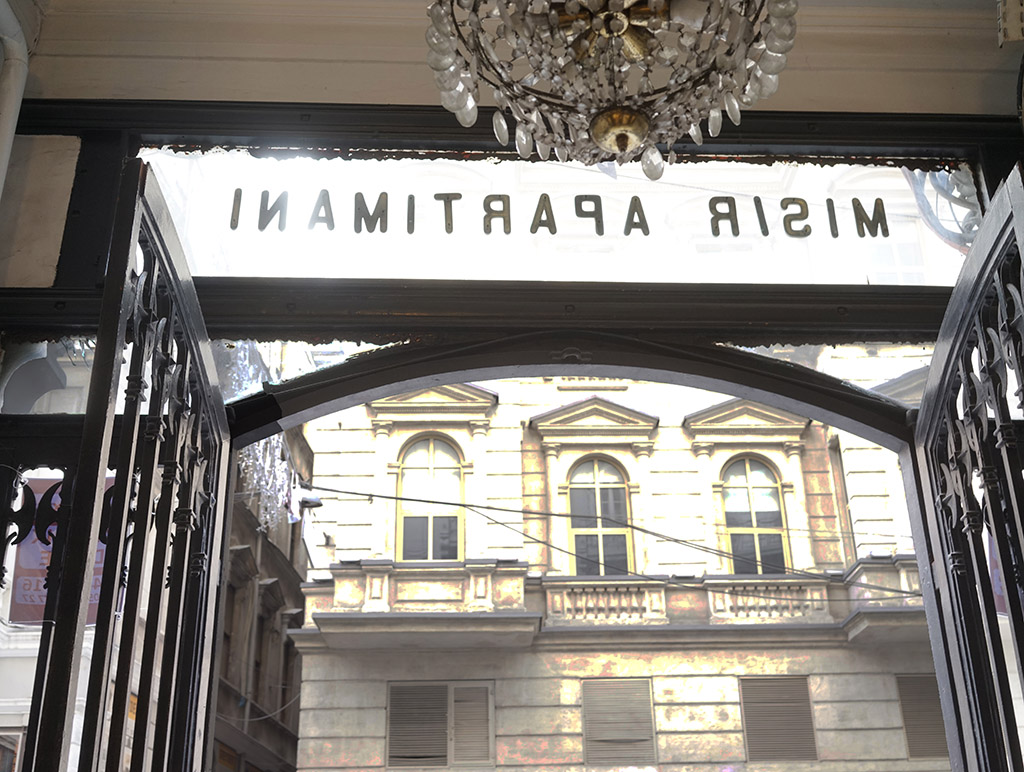
Here’s the first thing standard guides skip over: the entrance to Mısır Apartmanı is easy to walk right past. The address is İstiklal Caddesi No: 163, and the doorway sits at street level like any other shopfront entrance on the avenue — no big gallery signage out front, no banner announcing “art inside.” You’ll see a fairly modest doorway with a directory board listing the floors, and that’s genuinely it.
A few things that’ll save you time:
- Look for the door between the shopfronts, not a shop itself. It’s a residential-style entrance, similar to dozens of others on İstiklal that lead up to apartments, dentists’ offices, and small businesses.
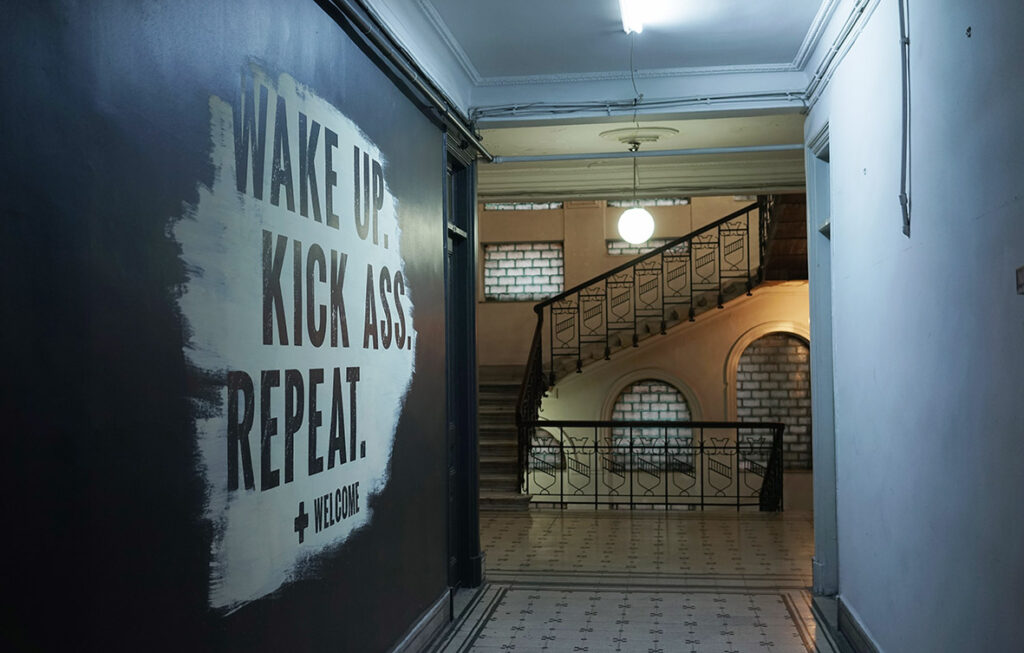
- There’s an old elevator inside, and it’s part of the charm — slow, a little clanky, definitely from a different era. You can also take the stairs, which double as an unofficial gallery in themselves since some floors display work in the stairwell landings.
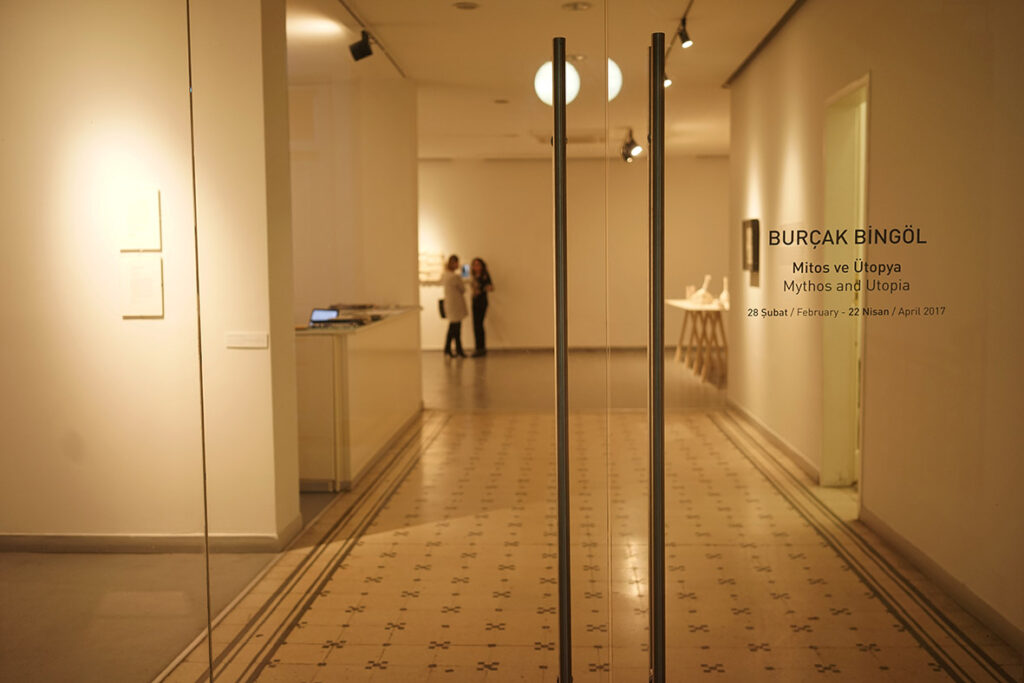
- Gallery entrances aren’t always obvious once you’re inside. Some are marked with small brass plaques, others just have a buzzer or a glass door with the gallery name in small lettering. If you’re not sure which floor you’re on, most galleries are happy to point you toward the others — the gallerists here know exactly who their neighbors are.
If you’re visiting for the first time, budget an extra five or ten minutes just for getting oriented. It’s not complicated once you’ve done it once, but on the first visit almost everyone spends a bit of time double-checking floor numbers.
The Galleries: Floor by Floor
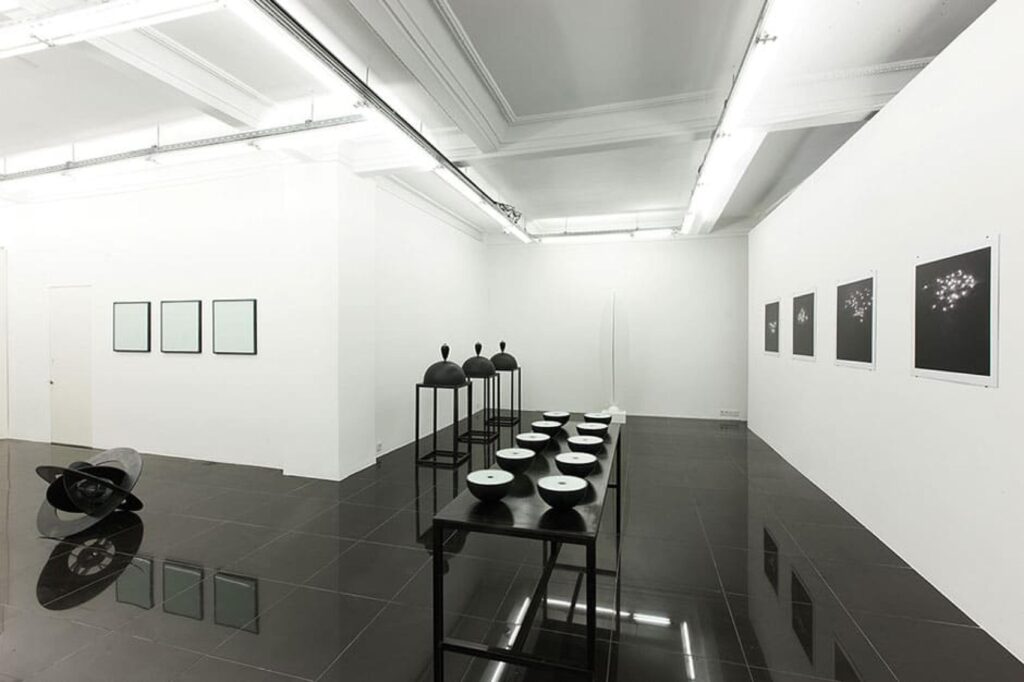
The lineup of galleries inside Mısır Apartmanı has shifted over the years — this building has been a hub for contemporary art for roughly two decades now, and tenants change as leases end and new spaces open. As of now, here’s what you’ll typically find:
Zilberman Gallery
Zilberman is arguably the most internationally recognized name in the building. <cite index=”4-1″>Founded in Istanbul in 2008, the gallery runs an energetic program with around 12 exhibitions each year across its Istanbul and Berlin spaces</cite>, and it occupies two separate floors inside Mısır Apartmanı. What’s nice about Zilberman is that it doesn’t just do openings and closings — <cite index=”4-1″>expect book launches, artist talks, and conferences that make the space feel like a genuinely active part of the city’s art scene</cite> rather than a static showroom.
Galeri Nev
If you want historical weight, Galeri Nev is the one to see. It’s one of Turkey’s most established contemporary galleries, tracing its roots back to Ankara in the 1980s before opening in Istanbul. It’s represented major Turkish artists over the decades and has a reputation among collectors as a serious, long-running institution rather than a trend-chasing space.
Art On
A smaller, more experimental platform, Art On focuses on interdisciplinary and contemporary approaches across different media. It tends to feel less formal than some of its neighbors — smaller room, closer to the art, less of a “gallery hush.”
Stay connected during your trip
Nesrin Esirtgen Collection and Pi Artworks
These two round out the building’s reputation as what’s often called the epicenter of Istanbul’s contemporary art scene. Nesrin Esirtgen Collection shows works from a private collection with a curatorial focus, while Pi Artworks (which also has a London branch) tends to show a rotating mix of Turkish and international contemporary artists.
Gallery lineups do shift — a space that’s occupied by one gallery this year might house a different one next year, so treat any specific list as a snapshot rather than gospel. The safest approach: check each gallery’s Instagram or website before you go, since most post current exhibitions and hours there faster than anywhere else.
What It’s Actually Like to Visit
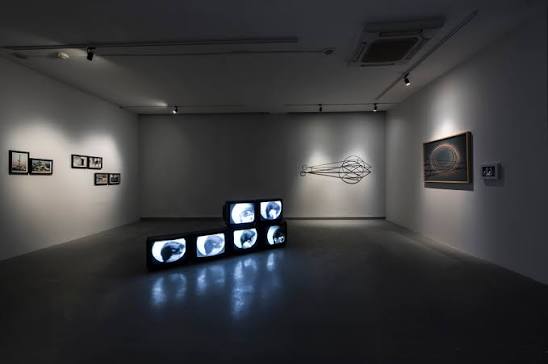
This isn’t a slick, air-conditioned gallery district like you’d find in some Western capitals. The building itself is old, and that’s exactly the point. Ceilings are high, some floors have beautiful original tilework or moldings that predate the art hanging on the walls by a century, and there’s a genuine contrast between the historic bones of the apartment and the very contemporary, sometimes provocative work on display.
A few honest observations:
- It’s quiet. Unlike İstiklal Caddesi itself, which is loud and packed most hours of the day, stepping into the building feels like stepping out of the noise entirely. The contrast is part of the appeal.
- Some galleries are genuinely small. Don’t expect Tate Modern-scale rooms. A few spaces are closer to a converted apartment room — intimate, sometimes with only a handful of pieces on show at once.
- Staff are generally low-key and helpful, not pushy. You won’t get a hard sell to buy anything. Most people working the galleries are happy to talk about the current exhibition if you show interest, but they’ll also leave you alone to browse if that’s what you want.
- It can be genuinely cold in winter and warm in summer, since the building’s climate control isn’t uniform across all the private gallery spaces. Dress accordingly if you’re visiting outside the mild months.
- Exhibitions rotate fairly often, typically every four to eight weeks depending on the gallery, so what’s on display can vary a lot between visits even a few months apart.
Common Mistakes to Avoid
A handful of things trip people up here that don’t get mentioned in typical guides:
Assuming it’s a single museum with one ticket. It’s not. Each gallery is independently run, and entry to all of them is free — there’s no combined ticket, no front desk to check in at. You just walk in, take the stairs or elevator, and enter whichever gallery door is open.
Going on a Monday. Several galleries in the building close on Mondays (and sometimes Sundays too), following a fairly common pattern for private galleries across Istanbul. Tuesday through Saturday, roughly late morning to early evening, is the safest window — but always double-check the specific gallery’s current hours before you go, since these shift.
Expecting English-language wall text everywhere. Some exhibitions are bilingual, others are Turkish-only with maybe a printed handout in English at the desk. If deep dives into artist statements matter to you, ask at the front desk — most galleries have an English press release or list available even when the wall text doesn’t.
Not looking up. Some of the building’s original architectural details — ceiling moldings, old ironwork on stair railings, transom windows — are easy to miss if you’re focused entirely on the art on the walls. Part of the value of visiting is the building itself, not just what’s currently hanging inside it.
Rushing through in fifteen minutes. Because there are multiple galleries stacked in one building, it’s tempting to treat this as a quick five-minute pass through everything. Give it closer to an hour if you want to actually absorb more than one exhibition properly — especially if a show happens to click with you.
Practical Information
- Address: İstiklal Caddesi No: 163, Beyoğlu, Istanbul (Tomtom Mahallesi)
- Cost: Free entry to all galleries
- Typical hours: Roughly 10:00/11:00 to 18:30/19:00, Tuesday through Saturday. Many galleries close Sunday and Monday, though this varies — check individual gallery Instagram pages before visiting.
- Getting there: Easiest via the M2 metro to Şişhane, then a short walk up onto İstiklal, or via the historic tramway (T2) to the Galatasaray stop, which is just steps away from No. 163.
- Best time to go: Weekday afternoons tend to be quieter than weekends, when İstiklal itself gets extremely crowded and noisy right outside.
- Photography: Policies vary by gallery — some are fine with quick phone photos of the space, others ask you not to photograph specific artworks. When in doubt, ask at the desk before shooting.
Beyond the Galleries: The Rooftop
Once you’ve made your way up through a few floors of art, the building has one more surprise at the very top: 360 Istanbul, a long-running restaurant and rooftop bar that takes up the entire eighth floor. It’s known for sweeping views across the Bosphorus, Hagia Sophia, and Galata Tower, and on weekend nights it shifts from restaurant mode into more of a club atmosphere with DJs.
Worth knowing before you go: this is a see-and-be-seen kind of place with prices to match, and it turns into a nightclub setting on weekends — so if you’re after a quiet drink with a view, an early evening weekday visit is a better bet than a Saturday night. It’s less about being a hidden local gem and more about being a genuinely spectacular vantage point layered on top of a genuinely under-the-radar art scene — which is exactly the kind of contrast that makes this building worth the detour in the first place.
Pairing This With the Rest of Your Beyoğlu Day
If you’re building this into a broader afternoon, Mısır Apartmanı sits right in the thick of İstiklal’s gallery-and-café cluster. Salt Beyoğlu, Pera Museum, and several independent galleries around Tepebaşı and Tomtom are all within a ten-to-fifteen-minute walk, which makes it easy to string together a genuine gallery-hopping route rather than a single stop. Pace yourself, though — trying to hit everything in one afternoon usually means rushing past the parts that actually deserve a slower look.
Final Thoughts
Mısır Apartmanı is one of those places that rewards curiosity over checklist-ticking. It won’t take all day, it costs nothing to walk through, and it puts you in direct contact with both a piece of early-20th-century Istanbul architecture and the current pulse of the city’s contemporary art world — all in one unassuming doorway that most people on İstiklal walk straight past. If you only have time for one gallery detour in Beyoğlu, this building, on its own, gives you several.